





- Mihajlo Borozanov and His Journey at Makpetrol
- The Challenge of Digital Transformation: Making Change Without Disrupting Business
- Looking Beyond Sales: How Mihajlo Borozanov Measures Business Performance
- What Young Finance Professionals Should Learn Before Chasing Senior Positions
- AI in Finance: Mihajlo Borozanov on What Comes Next
- The Values Mihajlo Wants to Pass On
- About Mihajlo Borozanov
Numbers can tell you how a business is performing. But they don’t always tell you why.
A company might be selling more, reporting stronger revenue and appearing to move in the right direction. But there may be questions about margins or cash flow or decisions that will shape its future behind those numbers.
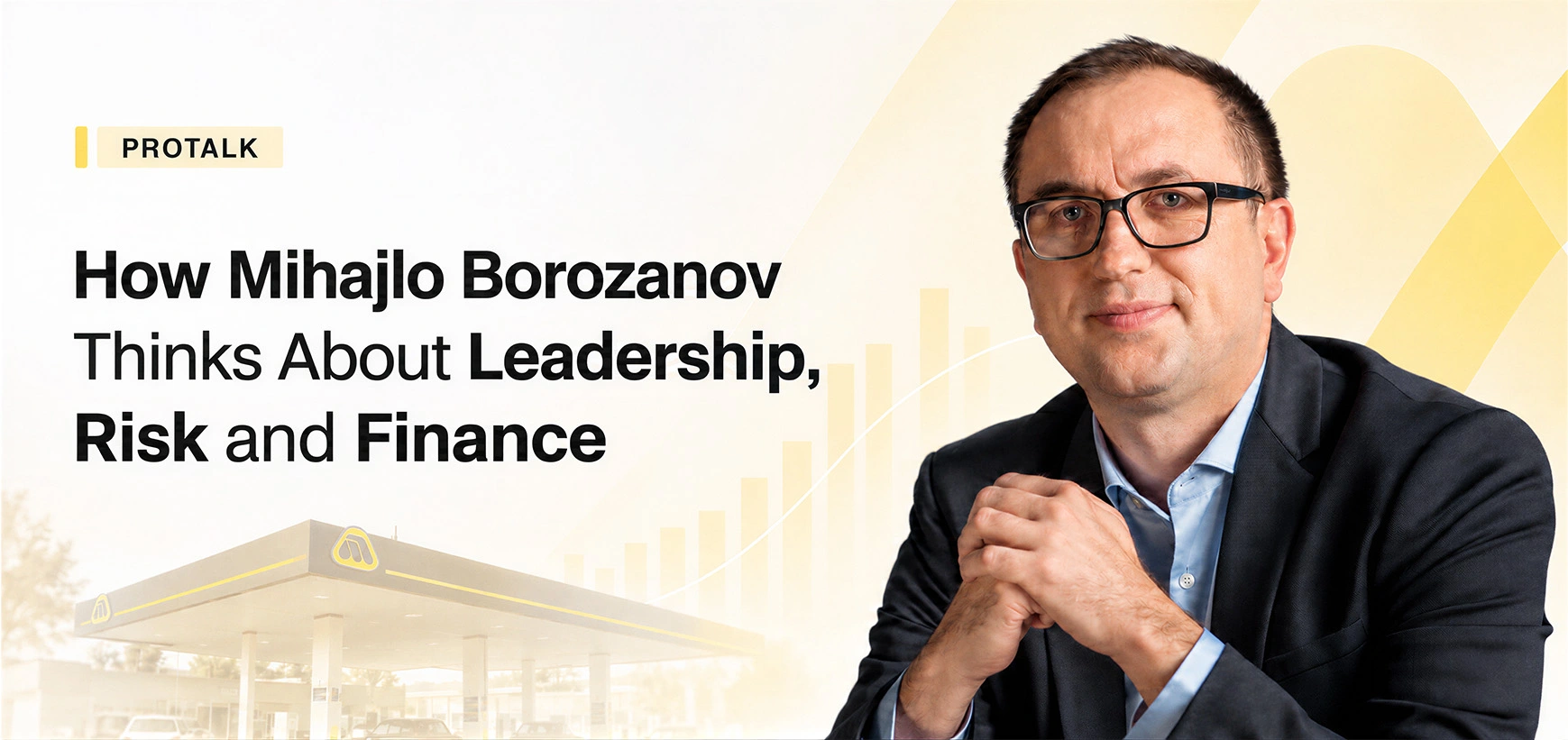
For Mihajlo Borozanov, Chief Financial Officer and Member of the Management Board of Makpetrol AD Skopje, the answers to those questions are the core of financial leadership.
He has more than 20 years of experience in corporate finance and has developed a method that combines financial expertise with thoughtfulness, accountability and business understanding.
But what makes his perspective interesting is the way he simplifies complex duties. He does not believe that technology is the solution to every problem, nor does he believe that a financial report is the last word. Instead, he is focused on figuring out what is going on, listening to people and making decisions that can be examined.
In this KOLEKR ProTalks episode Mihajlo speaks about his professional experience in leadership, making hard decisions, introducing digital technology and preparing for the future with artificial intelligence in finance.

Mihajlo Borozanov and His Journey at Makpetrol
Mihajlo Borozanov joined Makpetrol in 2004 and climbed the career ladder in the various finance sectors, before taking the position of Director of Finance and a member of the company’s Management Board.
His professional expertise includes financial planning, international payments, taxation, cost management, and evaluation of liquidity and investments. In each of these roles, he has learned how financial decisions affect the wider business.
Currently, he is CFO and Management Board Member at Makpetrol AD Skopje, one of the well-established energy companies in North Macedonia, with activities related to petroleum products, fuels and related services.
He is also a member of the Management Board of the Economic Chamber of North Macedonia and contributes to the wider business community in the country.
For someone at this level, finance is much more than preparing budgets or looking at reports. These decisions can impact commercial relationships, operational priorities and the longer-term direction of the company.
Mihajlo places great emphasis on the quality of those decisions. He cares about understanding not just what a business wants to achieve, but what a particular decision could mean for cash flow, financial risk and future performance.
It is a perspective shaped by years of working with the practical side of business, where numbers matter, but so does everything happening behind them.
Making Better Business Decisions Starts With Asking Better Questions
Every business leader faces moments when a decision has to be made without knowing exactly how things will turn out. There may be a new investment to consider, changing commercial conditions or a financial risk that needs attention. Reports and forecasts help, but they rarely provide complete certainty.
So how does Mihajlo approach an important decision? He starts by questioning what he knows. “Before a major decision, I start with first principles: what we know, what we assume and what we are trying to achieve.”
It’s a straightforward idea, but an important one.
Business discussions can sometimes move quickly from identifying a problem to deciding on a solution. Mihajlo prefers to understand the assumptions behind the proposed decision before concluding.
He then considers the impact on cash flow, the possible downside and what new information might change his view.
Perhaps the most revealing part of his approach is his willingness to challenge his own reasoning. Rather than becoming attached to an initial conclusion, he believes in changing his position when the facts change.
He also recognises that good decisions rarely come from one person working alone. He appreciates the different experiences and viewpoints his colleagues bring to the table when evaluating business issues. He’s lucky he’s with a great group. He hopes his colleagues feel comfortable questioning assumptions and highlighting problems early.
It’s a reminder that seasoned leadership is not having the answer all the time. Sometimes it’s just the willingness to ask another question before you make the final call.
The Challenge of Digital Transformation: Making Change Without Disrupting Business
Digital transformation sounds promising when discussed in a meeting. Implementing it while keeping a finance department running reliably is another matter.
One of the biggest professional challenges Mihajlo has had to face has been implementing digital solutions without endangering the day-to-day financial operations.
Finance teams deal with responsibilities that cannot simply stop because a new system is being introduced. Payments, reporting, approvals and financial controls still need to work. And even when a new technology offers improvements, getting people comfortable with a different way of working can take effort.
Mihajlo’s response has been to focus on three things: simplifying processes, clarifying responsibilities and involving the people who will actually use the systems.
He believes technology should solve a practical problem, not introduce unnecessary complexity. As he explains:
“Technology creates value when people adopt it, and their work becomes simpler, more reliable and easier to control.”
He wants to see a practical benefit from any finance change: time saved, fewer errors, stronger controls or better cash flow.
A company can invest in sophisticated software, yet still struggle to see the expected benefits if employees find it difficult to use or responsibilities remain unclear.
Mihajlo’s experience points towards a more practical way of thinking about digital transformation. Before businesses can ask what a new system is able to do, they need to find out how people work now, where the problems are and what needs to be improved. He believes that the success of technology is dependent on whether it helps people do their jobs better.
Why People Still Matter in a Technology-Driven Workplace
When we talk about digital transformation, it’s easy to get lost in the automation, the dashboards, the new features.
But someone still has to understand the process, interpret the information and be responsible for the result. Mihajlo’s approach is one of technology and people working together.
Systems are easier to manage when responsibilities are clear. Getting employees involved can highlight issues that otherwise might not be seen. Value can also come from simplifying existing processes as part of the transition to digital instruments.
The broader lesson is relevant beyond finance. Technology works best when it supports the people using it rather than expecting people to adapt to unnecessary complexity.
Looking Beyond Sales: How Mihajlo Borozanov Measures Business Performance
One of the most interesting examples Mihajlo shares comes from something quite ordinary: a monthly business review.
Many companies look at sales performance to understand whether a particular business line is doing well. Higher sales volumes are often a good story, especially when measured against a prior reporting period.
But sales figures have to be viewed against other metrics, Mihajlo says.
In his monthly reviews, the team examines four connected indicators:
| Business indicator | What it helps the team understand |
| Sales volume | How much the business is selling and how volumes are changing |
| Total margin | Overall margin generated by those sales |
| Margin per unit | How much margin is generated for each unit sold |
| Working Capital and Cash Conversion | How much cash is tied up in operations and how quickly sales turn into cash |
Looking at these figures together provides a clearer understanding of commercial performance.
For example, increasing sales volume does not automatically mean that margins are improving. Equally, a change in margin per unit may reveal something that sales figures alone would miss.
By examining the relationship between these measures, the team can better understand what is driving results and use that information when reviewing commercial terms.
Mihajlo summarises the purpose neatly: “For me, a useful report makes the economics clear enough to support the next decision.”
That sentence says a lot about how he views financial reporting.
A report shouldn’t exist simply because it is scheduled every month. It should help someone understand what is happening and decide what needs attention. The real value isn’t necessarily in how much information a report contains. It’s in whether the information helps the business make a better decision.
What Young Finance Professionals Should Learn Before Chasing Senior Positions
When asked what advice he would offer someone building a career in finance, Mihajlo doesn’t begin with qualifications, software skills or job titles.
He begins with understanding how a business actually works. His advice is to spend time with the people who buy, sell and manage operations before jumping to conclusions from financial reports.
That means looking beyond spreadsheets and understanding the everyday activities that produce the numbers.
A finance professional might notice a change in costs or margins, but the people working directly with suppliers, customers or operations may be able to explain what caused it. Listening to those perspectives can make financial analysis far more useful.
Mihajlo also encourages young professionals to ask what the numbers might be missing. He believes accuracy matters, but so does explaining your reasoning clearly and treating people respectfully.
“Be precise with numbers, clear about your reasoning and respectful with people.”
It’s practical career advice, particularly for those who hope to move into leadership roles. Technical knowledge is important, but professional judgement grows when people understand how different parts of a business connect.
AI in Finance: Mihajlo Borozanov on What Comes Next
Artificial intelligence is already changing how organisations think about financial processes, reporting and analysis.
Mihajlo expects AI to take on more routine work in finance over time. But he doesn’t believe that using AI removes the need for experienced professionals.
In fact, he sees the ability to question AI-generated answers as an increasingly important skill. Someone using an AI tool may receive a convincing explanation or a detailed financial analysis. That doesn’t automatically make the output correct or suitable for a business decision.
The person reviewing it still needs to understand the underlying business, recognise questionable assumptions and determine whether the information can be trusted.
For Mihajlo, three priorities remain key: reliable data, strong controls and clear accountability. Such principles are even more important when organisations start using AI to support more activities.
AI may reduce the effort involved in preparing information, but responsibility for decisions cannot simply be handed over to a system.
Mihajlo believes professionals who understand their business and know their craft will be better prepared to work with emerging technologies. His position is clear, anyone making an important decision should be capable of explaining the reasoning behind it and accepting responsibility for the outcome.
It’s a useful perspective at a time when discussions about AI often focus more on what technology can produce than on how people should evaluate its work.
The Values Mihajlo Wants to Pass On
Much of Mihajlo’s professional thinking revolves around responsibility. He values sound judgement, curiosity, fairness and the willingness to question assumptions. But those principles are not limited to his work.
When asked about the legacy he hopes to leave, his answer moves away from financial performance and professional achievements.
Instead, he talks about his daughters.
“I want my daughters to see the value of taking work seriously, staying curious and treating people fairly. That is the example I’m trying to set, at work and at home.”
It’s a personal reflection that offers another perspective on his approach to leadership. Professional success is important, but so is the way someone acts while working for it.
The example Mihajlo sets with his daily actions seems just as important to him as the responsibilities that come with his post.
And maybe that’s why his leadership philosophy is consistent. Whether he is talking about financial decisions, technology or family, the same ideas are echoed: think carefully, stay open to learning, treat people fairly.
Leadership Is About the Decisions We Take Responsibility For
Mihajlo Borozanov’s story is not of one dramatic turning point, or one defining achievement. Instead, it reflects something less visible, but equally important: the discipline of consistently making thoughtful decisions.
His time at Makpetrol illustrates how financial leadership connects numbers to business realities, how digital transformation is dependent on people and why good judgement still has value even with more advanced technology.
He doesn’t present AI as a replacement for professional knowledge or financial reports as substitutes for understanding a business. What matters to him is whether the information is reliable, whether the reasoning makes sense and whether the person making a decision is prepared to stand behind it.
For the next generation of finance professionals and business leaders, his perspective offers a useful reminder. Learn the business, question your assumptions, listen to others and keep improving your judgement.
Because in the end, leadership is not simply about having access to better numbers.
It’s about knowing what to do with them, and taking responsibility for what happens next.
About Mihajlo Borozanov
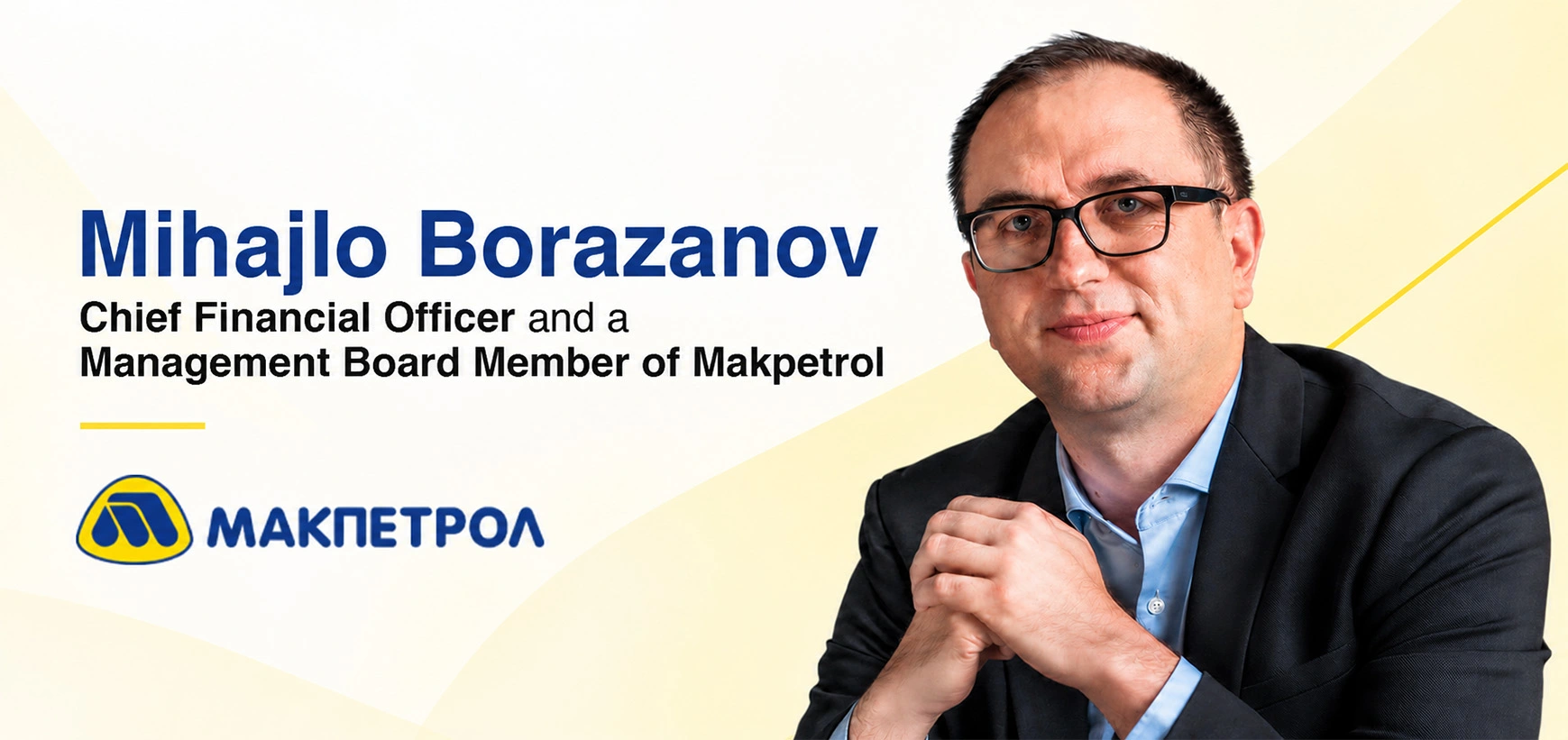
Mihajlo Borozanov is the Chief Financial Officer and a Management Board Member of Makpetrol AD Skopje, North Macedonia. He has more than two decades of experience in corporate finance, financial management, strategic planning and risk management. He also serves on the Management Board of the Economic Chamber of North Macedonia.


Connect with Mihajlo Borozanov
Interested in working with or consulting with this expert? Submit your details below.