





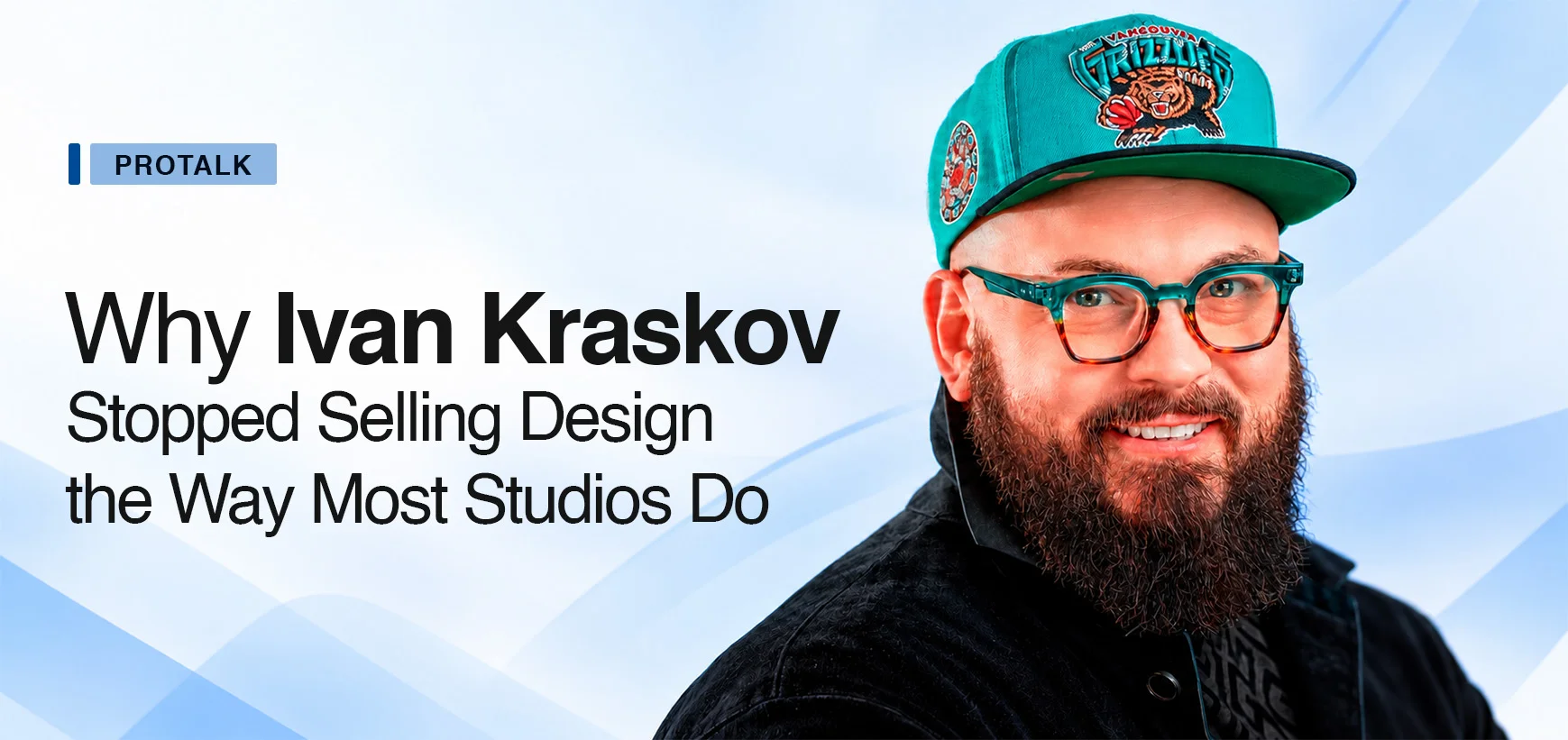
- Two Decades in Design Led Ivan Kraskov to Question a Familiar Approach
- Starting Spirixx: Twenty Years of Experience, but No Studio Track Record
- The Metric-First Approach: Connecting Product Design to Business Performance
- Five Practical Lessons Ivan Kraskov Shares With Startup Founders
- AI Is Changing Product Design, but Ivan Believes Judgement Still Matters Most
- Build Less, Measure More: The Philosophy Behind Spirixx
- About Ivan Kraskov
Meet the co-founder of Spirixx (a product design studio based in Poland) who believes good design should be judged on the business outcomes it generates rather than the number of screens a team can produce.
A startup raises funding, hires designers, builds its product, and launches new features. From the outside, everything seems to be moving forward. But when founders look at activation rates, customer conversions, or retention figures, the results sometimes tell a different story.
Ivan Kraskov, who has more than 20 years of experience working with technology companies and startups, has seen this phenomenon happen many times.
And the design work might be notable. The product might seem polished. But the most important business figures for investors are still largely the same.
Ivan says that the problem often starts with the way organisations do design. Teams get caught up in delivering features, clearing backlogs and meeting deadlines, without pausing to consider whether these efforts will improve the experience that actually matters to customers.
That observation eventually led to Spirixx, the product studio Ivan and Valeria Shumska founded together in Poland.
At Spirixx, we begin with a specific business problem and design solutions to solve it. We don’t measure success by how much design work we produce.
That sounds easy. But creating a company based on that philosophy required Ivan to rethink how design services are sold, how clients evaluate their value and what makes a young studio trustworthy.

Two Decades in Design Led Ivan Kraskov to Question a Familiar Approach
Working with startups for more than two decades gave Ivan a close view of how product teams make decisions under pressure.
Many early-stage businesses operate with limited budgets and ambitious development schedules. They have investors to satisfy, customers to attract and product roadmaps that seem to grow faster than their teams can deliver.
In that environment, building more features can feel like progress. But Ivan noticed that companies sometimes reached their next funding stage with plenty of completed design work and disappointing product metrics.
The underlying issue was not necessarily poor design execution. It was that nobody had clearly connected the work to a measurable business outcome.
He also pointed out how often teams tried to attack too many problems at a time. But the average customer was looking for something simpler: a reliable answer to a specific problem, without any unnecessary friction.
One project with a satellite communication company helped crystallise this belief.
The Project That Changed How Ivan Thought About Product Design
Technicians had to fill out five long forms with configuration settings while installing satellite communication equipment. Ivan and Valeria studied the process, which looked complicated, and discovered something important. The same settings were appropriate in approximately 95% of installations.
Instead of redesigning all five forms, they reconsidered why technicians needed to complete them in the first place.
Their solution allowed technicians to apply the standard configuration with a single button. If the setup failed, the software performed a self-check and displayed a shorter form with fixes relevant to that installation.
The result was a simpler process built around how the system was actually used. What stayed with Ivan was where the improvement originated. It wasn’t that they had to do more engineering work. It was because of thoughtful design decisions made upfront before they even started to develop.
That experience reinforced a principle he would later carry into Spirixx: sometimes the most valuable design decision is deciding what users should no longer have to do.
Starting Spirixx: Twenty Years of Experience, but No Studio Track Record
Ivan and Valeria established Spirixx in December 2025.
Although Ivan brought more than 20 years of professional experience, the new business faced a challenge familiar to many founders. Spirixx had no established track record under its own name.
Its founders had relevant expertise, but prospective clients still needed a reason to trust a newly launched studio with important product decisions. For the first three months, he was doing business the old-fashioned way. He presented portfolios, took people through the design process and talked about his hourly rates.
Potential clients often responded favourably, but discussions rarely resulted in projects.
Finally, one of the founders explained. The client thought the design studios sounded very similar. Their proposals blurred the lines between providers since they offered similar services and results.
Generative AI had made that problem more noticeable. When proposals used similar language and claims, price often became the easiest point of comparison. Ivan realised that presenting better work samples was not enough. He needed to change the conversation itself.
Instead of beginning discovery calls by asking what a client wanted designed, he started asking about the business metric their next investor would examine.
That question introduced a different discussion.
Rather than debating screens, deliverables and hourly costs, founders began considering the financial consequences of poor activation, conversion or retention.
For Ivan, it changed how he explained the value of design. “Founders do not buy design. They buy a lower risk on their next round.” The idea became central to how Spirixx positioned its services.
Why Spirixx Chose to Become an NDA-First Product Studio
Another important decision came directly from a client conversation.
An early customer appreciated how Ivan and Valeria had handled confidential work from their previous careers. He asked whether his own project could remain private too.
His concern was practical.
As a smaller startup, his team had limited development resources. There could be a considerable gap between completing a design and bringing the finished product to market.
Publishing detailed case studies during that period could reveal commercially valuable ideas to competitors with larger teams and budgets.
Ivan began asking other prospective and existing clients whether they shared this concern. According to him, the responses confirmed that confidentiality mattered.
Spirixx consequently adopted an NDA-first approach, keeping client work confidential rather than treating every successful project as an opportunity for public promotion.
The decision created a different challenge for a young studio. Portfolios and public case studies traditionally help agencies demonstrate credibility.
Spirixx had to establish trust through the experience of its team, the quality of its thinking and the business problems it could help clients understand.
Today, the studio works on SaaS products, mobile applications, websites and design systems, serving funded startups across the US, UK, UAE and Europe. Its focus includes B2B SaaS, FinTech, AI-SaaS and HealthTech companies, particularly those between Seed and Series B funding stages.

The Metric-First Approach: Connecting Product Design to Business Performance
At Spirixx, Ivan describes the working philosophy as metric-first scoping. The idea is to establish which business outcome matters before deciding how much design work is required.
His approach follows four questions:
| Question | Why it matters |
| Which metric matters most to the next investor? | Establishes the primary business priority |
| How does performance compare with the category benchmark? | Identifies the gap against comparable businesses |
| What is the financial value of that gap? | Helps assess the commercial opportunity |
| Which part of the product contributes most to the gap? | Defines where design attention should go |
For a B2B SaaS company, the chosen metric might be activation, trial-to-paid conversion or net revenue retention.
Ivan believes comparing performance only with the previous quarter can be misleading. A company might celebrate improvement while remaining significantly behind the businesses investors consider comparable.
He uses a hypothetical example involving 1,000 monthly sign-ups, an activation rate five percentage points below benchmark and a $6,000 annual contract value.
That difference represents 50 additional activated accounts per month. If all 50 became paying customers at the assumed contract value, the annualised opportunity from one month’s cohort would be $300,000. Across twelve such cohorts, it would represent a theoretical $3.6 million in new annual recurring revenue.
Actual revenue would depend on how activation translates into paying customers, retention and other commercial factors.
The exercise is intended to make the size of a product-performance problem easier to understand. For Ivan, the design budget should follow that analysis, rather than dictate the scope from the beginning.
How a FinTech Startup Improved Onboarding Without Redesigning Its Entire Product
One of Ivan’s examples illustrates how this approach works in practice.
Spirixx worked with a UK-based Series A FinTech company preparing for another funding round approximately ten months later. The company had an onboarding completion rate of 41%, while comparable products were performing closer to 60%, according to Ivan.
At first, it demanded a total overhaul of the product. But the team found that 62% of the drop-offs were happening at a particular point in the onboarding journey: identity verification on the first screen.
Users needed to provide a lot of personal information before the product showed its value. The team concentrated on that one interaction, not redesigning the whole system.
Full identity verification was moved to a later point in the experience, after users had received their first result. The initial sign-up process was simplified to three fields with smart defaults.
Six weeks after release, onboarding completion had increased from 41% to 58%.
Onboarding completion: Client-reported results
Ivan estimates that the improvement could represent approximately $1.2 million in annual recurring revenue at the client’s operating volume. That figure is an estimate, not a confirmed revenue result.
For the client, the improved onboarding metric also became part of its investor presentation. The project reinforced Ivan’s view that a smaller, carefully selected design scope can sometimes create more value than an extensive redesign.
Five Practical Lessons Ivan Kraskov Shares With Startup Founders
Ivan believes founders can begin improving how they approach product design without immediately hiring an external team.
His recommendations focus on understanding the product experience before committing resources to changing it.
- Put one measurable outcome in every design brief. If a team cannot explain which metric the work should improve, the brief needs more thought.
- Identify the weakest point in the customer journey. Rather than trying to solve five problems at once, discover where the biggest drop-off is.
- Measure time to first value. Understand how long new users must wait before the product does something genuinely useful for them.
- Compare performance against relevant competitors. Internal improvement matters, but category benchmarks help show how much progress is still required.
- Keep experienced people involved in critical decisions. Ivan believes senior judgement is especially valuable when a small number of product decisions have a disproportionate effect on business performance.
The common theme is focus. Some features are more important than others, and some design problems don’t need a big project.
AI Is Changing Product Design, but Ivan Believes Judgement Still Matters Most
Ivan believes that artificial intelligence will revolutionise the speed of design and development of digital products. Interfaces and functional prototypes that once required substantial production time can increasingly be created within hours.
But faster execution introduces a different challenge. When building screens becomes easier, teams still need to decide which screens are worth building.
At Spirixx, AI is used for early exploration and rapid prototyping, while experienced designers remain responsible for the important decisions.
Ivan expects that product teams will come under more scrutiny around their business performance. In his view, investors are increasingly interested in activation, retention, payback periods and capital efficiency at earlier funding stages.
For AI-powered products, he identifies trust as another important design consideration. Users may be reluctant to trust automated decisions if they do not understand how they were arrived at.
He also points out that EU legislation on accessibility and AI means it’s better for companies working in the EU to build transparency, accessibility and regulatory obligations into their product development from the outset rather than trying to bolt them on afterwards.
His main point is that products are not successful on the basis of technical capabilities alone. Knowing your users, making informed decisions and connecting product improvements to business performance remains very important.
Build Less, Measure More: The Philosophy Behind Spirixx
If we look back, Ivan’s entrepreneurial style is rooted in the lessons he learned as a designer.
The launch of Spirixx meant challenging traditional agency sales approaches, establishing credibility without a public portfolio, and developing a service centred on tangible client priorities. It also meant accepting that recommending less work can sometimes be the more valuable advice.
For founders preparing for a funding round, Ivan suggests a simple exercise: identify the metric investors are likely to examine first, compare it with an appropriate benchmark and estimate what the performance gap means financially.
That exercise may reveal a problem worth investigating. It may also reveal that design is not the main issue. Ivan says he is comfortable telling prospective clients when design is unlikely to be the right solution.
His philosophy can be summed up in three words: “Build less, measure more.”
For Ivan Kraskov, successful product design is not about creating the most impressive portfolio. It is about making decisions that help businesses deliver value to customers and improve the numbers that matter to their future.
And for a startup approaching its next funding round, knowing what not to build may be just as important as knowing what comes next.
About Ivan Kraskov
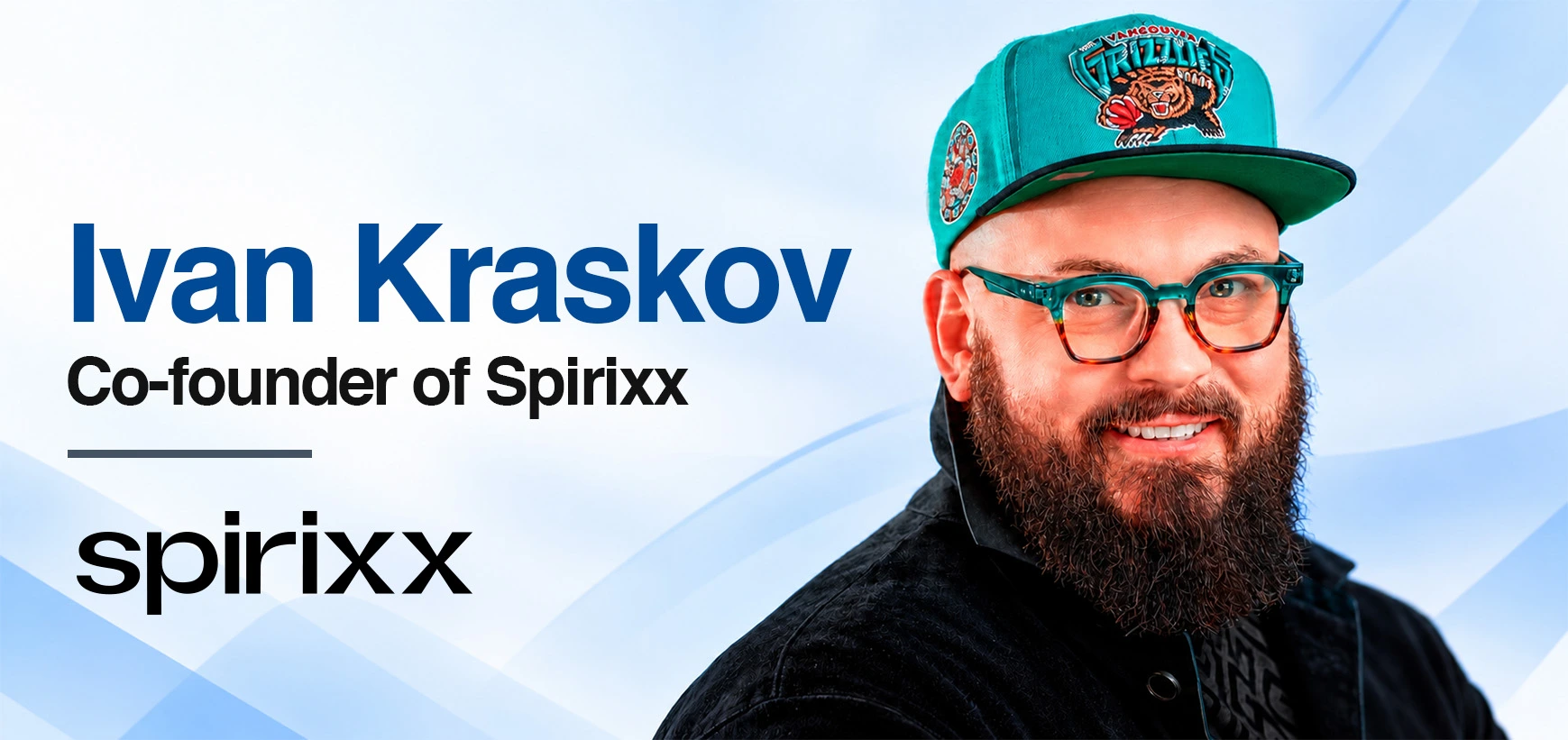
Ivan Kraskov is the co-founder of Spirixx, a senior-only, NDA-first product design studio based in Poland. With more than 20 years of experience designing for startups and scale-ups, he works with funded B2B SaaS, FinTech, AI-SaaS and HealthTech companies to connect product design decisions with measurable business outcomes.


Connect with Ivan Kraskov
Interested in working with or consulting with this expert? Submit your details below.