





- Start With the Patients and Treatments That Matter Most
- Build the Patient Acquisition Funnel Before Increasing the Budget
- Google Business Profile and Reviews: Fix Local Discovery First
- Local SEO: Create Pages Around Real Patient Questions
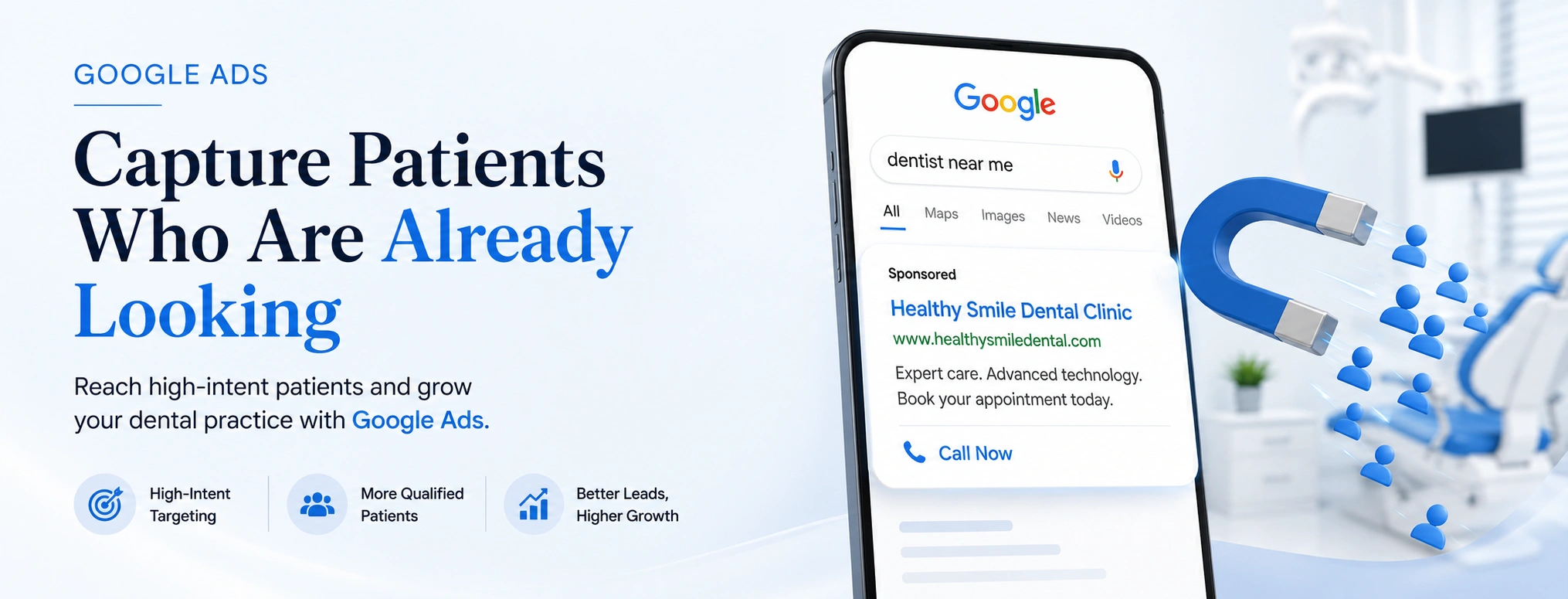
- Google Ads: Capture Patients Who Are Already Looking
- Landing Pages Should Help Patients Decide, Not Just Capture Details
- The Front Desk Is Part of the Marketing Funnel
- WhatsApp and CRM: Turn Enquiries Into a Managed Pipeline
- Social Media and Video: Build Familiarity Before the Patient Needs You
- Retention and Referrals: Do Not Keep Paying to Replace Existing Patients
- What About International Patients and Dental Tourism?
- Example: A €5,000 Monthly Dental Marketing Plan
- Example Patient Acquisition Funnel
- A Practical 90-Day Plan
- What Should a Clinic Owner Review Every Month?
- Final Takeaway
From Google Maps, SEO, Advertising to WhatsApp, CRM, reviews, referrals and overseas patient acquisition, learn here how dental clinics can improve their patient acquisition funnel.
By Vikas Kolekar | ProTalks
Last updated: August 2026
A dental clinic can have excellent doctors, modern equipment and a convenient location and still struggle to attract enough patients. In many cases, the problem is not the quality of treatment. Patients simply cannot find the clinic easily, do not have enough information to trust it, or enquire but never move forward to an appointment.
That is why dental marketing should not be treated as a collection of separate activities such as posting on Instagram, running Google Ads or asking for reviews. A stronger approach connects local discovery, paid acquisition, trust, enquiry handling, appointments, treatment conversion and patient retention into one system.
For doctors, clinic owners and agencies, the most useful patient journey to measure is:
Discovery → Enquiry → Appointment → Attendance → Consultation → Treatment → Review → Repeat Visit or Referral
When each stage is visible, it becomes much easier to understand where marketing is working and where patients are being lost.
Start With the Patients and Treatments That Matter Most
Before deciding how much to spend on Google or social media, a clinic should decide which patients it wants to attract. An emergency dental patient has very different needs from someone considering implants, aligners or cosmetic dentistry.
A general dentistry patient may prioritise location and convenience, while an implant patient may compare the dentist’s experience, treatment process, reviews, financing options and total cost before booking. Marketing becomes more effective when those differences are reflected in the message.
| Patient Type | What Usually Matters Most |
| General dentistry | Location, trust, convenience |
| Emergency dentistry | Availability, proximity, quick response |
| Dental implants | Expertise, outcomes, treatment plan, cost |
| Clear aligners | Experience, aesthetics, treatment timeline |
| Cosmetic dentistry | Results, credibility, before-and-after work |
| Paediatric dentistry | Trust, child-friendly experience |
| Family dentistry | Convenience, reviews, long-term care |
For most clinics, promoting every treatment equally is unnecessary. Choosing two or three priority services makes it easier to create stronger landing pages, more relevant ads and clearer reporting.
Build the Patient Acquisition Funnel Before Increasing the Budget
One of the biggest mistakes in dental marketing is stopping the report at leads. A clinic may celebrate 100 enquiries without knowing how many patients actually booked, attended or started treatment.
A more useful dashboard looks at the entire journey.
| Stage | KPI | What It Tells You |
| Discovery | Search / Maps visibility | Can local patients find the clinic? |
| Interest | CTR | Are people interested enough to click? |
| Enquiry | CPL | What does each enquiry cost? |
| Contact | Contact rate | Is reception reaching the patient? |
| Booking | Appointment rate | Are enquiries becoming bookings? |
| Attendance | Show-up rate | Are patients actually attending? |
| Treatment | Treatment-start rate | Are consultations converting? |
| Economics | Cost per new patient | Is acquisition commercially viable? |
| Retention | Repeat / recall rate | Are patients returning? |
This distinction matters because a clinic with strong lead generation but poor appointment booking has a different problem from a clinic that receives fewer enquiries but converts most of them into treatment.
Google Business Profile and Reviews: Fix Local Discovery First
For a local dental clinic, Google Search and Google Maps should be treated as core patient-acquisition channels. Google says local rankings are mainly influenced by relevance, distance and prominence, while complete business information and reviews can help a profile become more useful and visible to searchers.
An ideal clinic profile must contain accurate contact information, operating hours, types of treatments offered, a booking link, and quality images of the clinic and the staff. The management of reviews is critical since, according to Google, the number of reviews and ratings is one of the factors that determines local presence.
Reviews must seem natural and not pushy. Once a client leaves the clinic satisfied from an appointment or a treatment, it is appropriate to request that he or she provide an unbiased opinion regarding the service and give him or her a link to the review.
Local SEO: Create Pages Around Real Patient Questions
A dental website should not have one generic page that lists every treatment. Someone searching for implants, emergency dentistry or paediatric care should be able to land on a page specifically designed around that need.
Useful pages could include:
- Dental implants in [location]
- Emergency dentist in [location]
- Clear aligners in [location]
- Root canal treatment in [location]
- Cosmetic dentist in [location]
- Paediatric dentist in [location]
- Dentist in [neighbourhood]
The aim is not to repeat keywords unnaturally. A useful page should explain the treatment, who it may be suitable for, the dentist’s expertise, what the consultation involves and how to book.
This approach also supports longer-term visibility. Paid advertising stops when the budget stops, while useful local treatment pages can continue attracting patients through organic search.
Google Ads: Capture Patients Who Are Already Looking
Search advertising can work particularly well for dental services because many searches have high intent. Someone looking for an “emergency dentist near me” or researching dental implants is already much closer to booking than someone who simply sees a clinic video while scrolling social media.
WordStream’s 2025 benchmark, based on more than 16,000 US search campaigns, reported 5.44% average CTR, $7.85 CPC and $83.93 CPL for Dentists & Dental Services. These are US benchmarks, not targets for Europe, India or any individual clinic, but they illustrate how competitive dental search advertising can become.
The clinic should therefore judge a campaign against the value of the treatment, not simply the cost of the lead. A more expensive implant enquiry may still be commercially attractive if it produces a consultation and treatment, while the same CPL may not work for a lower-value service.
Separating campaigns by treatment also gives much clearer information. Implants, aligners, emergency dentistry and cosmetic dentistry can have different keywords, landing pages, budgets and expected patient values.
Landing Pages Should Help Patients Decide, Not Just Capture Details
A patient who clicks an implant advertisement should not arrive on a generic homepage showing every service the clinic offers. The landing page should match the treatment and answer the questions the patient is likely to have.
A useful treatment page may include:
- A clear treatment explanation
- Dentist qualifications and relevant experience
- Clinic photographs
- Treatment process
- Suitability information
- Genuine patient reviews
- Before-and-after cases where appropriate and permitted
- Price or financing guidance where appropriate
- FAQs
- Appointment form
- Call or WhatsApp option
The tone matters. Dental treatment is a healthcare decision, so the page should educate and reassure rather than create unnecessary pressure.
The Front Desk Is Part of the Marketing Funnel
A clinic can spend thousands on advertising and still lose good patients because phone calls are missed, WhatsApp messages are ignored, or reception staff do not know how to handle treatment enquiries.
If a patient contacts three clinics on the same day, the clinic that replies clearly, answers the patient’s questions and offers suitable appointment options may have an immediate advantage. This is why front-desk performance should be measured alongside advertising.
A simple follow-up process can include:
Enquiry received → patient contacted → treatment interest confirmed → appointment offered → reminder sent → patient attends → treatment follow-up recorded
Reception staff should also record why patients do not proceed. Price, appointment availability, location, uncertainty about treatment or poor follow-up can all provide useful information for improving the clinic’s marketing.
WhatsApp and CRM: Turn Enquiries Into a Managed Pipeline
WhatsApp can be useful because many patients have questions before they are ready to book. They may want to know what the consultation involves, whether a particular treatment is available or what information they should bring.
The conversation should remain personal and helpful rather than becoming a stream of automated promotional messages. A CRM can then make sure these conversations do not disappear when lead volume increases.
A simple CRM pipeline could be:
| CRM Stage | Meaning |
| New enquiry | Patient has just contacted the clinic |
| Contacted | Team has spoken with the patient |
| Appointment booked | Visit scheduled |
| Attended | Patient came to the clinic |
| Treatment proposed | Treatment plan discussed |
| Treatment started | Patient converted |
| Recall / follow-up | Relationship continues |
Because healthcare-related advertising can involve sensitive information, clinics and agencies also need to understand platform restrictions. Google classifies health as a sensitive interest category and restricts the use of advertiser-curated audiences for personalised advertising in those categories.
This means healthcare marketers should not assume that every retargeting or audience tactic used in ecommerce or real estate is appropriate for a dental clinic.
Social Media and Video: Build Familiarity Before the Patient Needs You
Social media is often more useful for dental clinics when it builds familiarity rather than constantly pushing offers.
Doctor-led educational content can answer questions patients already have, such as:
- Implant vs bridge: what is the difference?
- Why do gums bleed?
- What happens during root canal treatment?
- Are clear aligners suitable for everyone?
- When should children first visit a dentist?
- What happens during an implant consultation?
Seeing the dentist explain a treatment clearly can help reduce uncertainty before the first appointment. Video can also be used to demonstrate the surroundings of the clinic, acquaint the patient with the staff and thus make the visit less alienating.
In Europe, online ads continue to thrive, with the total spending on them increasing by 10.5% to €131 billion in 2025, whereas social media ads grew by 19.2% and video ads grew by 19.6%. These figures are not dental-specific, but they underline why video and social formats continue to matter in the wider digital landscape.
Retention and Referrals: Do Not Keep Paying to Replace Existing Patients
A clinic’s patient database is already a valuable growth asset. Existing patients may need regular check-ups, hygiene appointments, follow-up treatment or care for other family members.
Useful recall opportunities include:
- Six-month check-ups
- Hygiene appointments
- Incomplete treatment follow-up
- Children’s recall appointments
- Post-treatment reviews
- Appropriate referral requests after a positive experience
Retention should not become aggressive marketing. The aim is to make appropriate follow-up part of the patient experience and reduce the clinic’s dependence on constantly buying new enquiries.
Referrals also remain important because healthcare decisions involve trust. A recommendation from an existing patient can carry more weight than an advertisement, especially for higher-consideration treatment.
What About International Patients and Dental Tourism?
For clinics serving international patients, the acquisition journey is longer because the patient may be comparing several clinics and even several countries before making a decision.
The funnel may look like:
Search → treatment page → enquiry → WhatsApp / video consultation → treatment estimate → travel planning → appointment → treatment → aftercare
International patients often need more information before they travel, including doctor credentials, treatment timelines, approximate costs, accommodation options, transport guidance and what happens after they return home.
For clinics, agencies and medical tourism businesses, useful international KPIs include qualified overseas enquiries, virtual consultations booked, treatment estimates issued, travel-confirmed patients, treatment starts and cost per international patient.
This is also where multilingual landing pages, strong testimonials, video consultations and clear travel information can become more valuable than simply increasing ad spend.
In addition to clinics that cater to foreign patients, there are many commonalities when it comes to other areas of health care industry – you can find more information about healthcare marketing and medical tourism in our guide.
Example: A €5,000 Monthly Dental Marketing Plan
There is no universal marketing budget because a neighbourhood clinic, an implant centre and a multi-location group have very different economics.
An illustrative €5,000 monthly plan could look like this:
| Channel | Example Budget | Main Purpose |
| Google Search Ads | €2,000 | Capture active treatment demand |
| Local SEO & content | €1,000 | Build organic visibility |
| Social / video promotion | €500 | Awareness and education |
| Landing-page optimisation | €500 | Improve conversion |
| CRM / review / follow-up tools | €400 | Improve patient handling |
| Creative / testing | €600 | Test messages and formats |
| Total | €5,000 |
This is a planning example rather than a recommended market benchmark. The right allocation depends on treatment value, local competition, appointment capacity and how effectively the clinic converts enquiries.
Example Patient Acquisition Funnel
Suppose the €5,000 investment produced:
| Funnel Stage | Illustrative Result |
| Marketing Spend | €5,000 |
| Enquiries | 80 |
| CPL | €62.50 |
| Leads Contacted | 65 |
| Appointments Booked | 40 |
| Patients Attended | 32 |
| Treatment Starts | 20 |
| Cost per Treatment-Starting Patient | €250 |
These figures are illustrative, not industry averages.
The key question is whether the treatment contribution from those patients justifies the acquisition cost. This is much more useful than looking only at CPL because the clinic can see the relationship between marketing spend and actual treatment starts.
A Practical 90-Day Plan
Month 1: Fix Discovery and Follow-up
Start with the Google Business Profile, treatment pages, enquiry tracking and front-desk process. Choose two or three priority treatments and make sure every phone call, form submission and WhatsApp enquiry can be tracked through to an appointment.
Reputation is equally important in the field of health care aside from search visibility. According to Pasquale Minasi, reputation is important in healthcare while creating an international healthcare business.”
Month 2: Build Consistent Patient Acquisition
Launch high-intent Google Search campaigns, continue improving local SEO and begin publishing useful educational content. Ask satisfied patients for genuine reviews and make sure all leads enter a structured follow-up process.
Month 3: Optimise Around Treatment Starts
Compare channels by appointments, attendance and treatment starts rather than CPL alone. Increase investment where the economics are working, improve weak pages and investigate why qualified patients are dropping out before spending more.
What Should a Clinic Owner Review Every Month?
A useful clinic dashboard does not need dozens of marketing metrics.
| KPI | Why It Matters |
| Marketing spend | Total acquisition investment |
| Enquiries | Demand generated |
| CPL | Cost per enquiry |
| Contact rate | Front-desk performance |
| Appointments booked | Lead conversion |
| Show-up rate | Appointment quality |
| Treatment starts | Commercial outcome |
| Cost per new patient | Acquisition efficiency |
| New reviews | Reputation growth |
| Returning patients | Retention |
The most useful report is the one that connects marketing activity with what actually happens inside the clinic.
Final Takeaway
Dental marketing in 2026 should not be about being visible on every platform. It should make it easier for the right patient to find the clinic, understand the treatment, trust the doctor and take the next appropriate step.
Google Maps and local SEO support discovery, while paid search can capture immediate demand. Reviews, education and video add to the credibility of the brand, while landing pages, WhatsApp, CRM and reception ensure conversions from interest to appointments. Retention and referrals then reduce the need to continually replace patients through paid acquisition.
For doctors, clinic owners and agencies, the biggest improvement is often changing what marketing success means. Followers, traffic and CPL can all be useful signals, but the business outcome is better measured through appointments booked, patients attending, treatment starts, cost per acquired patient and retention.
When marketing, reception and clinical teams can see the same patient journey, dental marketing becomes less about random campaigns and more about building a predictable patient-acquisition system.
Methodology & Data Note
Google Business Profile guidance referenced in this guide is based on Google’s current documentation on relevance, distance and prominence in local search.
Paid-search benchmarks use WordStream’s 2025 dataset of more than 16,000 US search campaigns. The Dentists & Dental Services category reported 5.44% CTR, $7.85 CPC and $83.93 CPL. These figures are US-based and should not be treated as standard performance targets for clinics in Europe, India or other markets.
The €5,000 budget, patient funnel and cost-per-treatment-start figures are illustrative scenarios. Actual results depend on treatment type, location, competition, clinic reputation, pricing, appointment capacity, advertising quality and the team’s ability to convert enquiries.
About the Author
Vikas Kolekar is a digital growth and performance marketing expert and Business Director at iDigitalise. He has worked across healthcare, real estate and service-led industries, helping businesses build measurable acquisition systems through SEO, paid media, CRM, lead management and digital strategy.
By using ProTalks, Vikas imparts practical business insights on how to grow the business beyond clicks and leads, with a focus on acquiring patients, converting them and retaining them.
Connect with Vikas Kolekar
Interested in working with or consulting with this expert? Submit your details below.