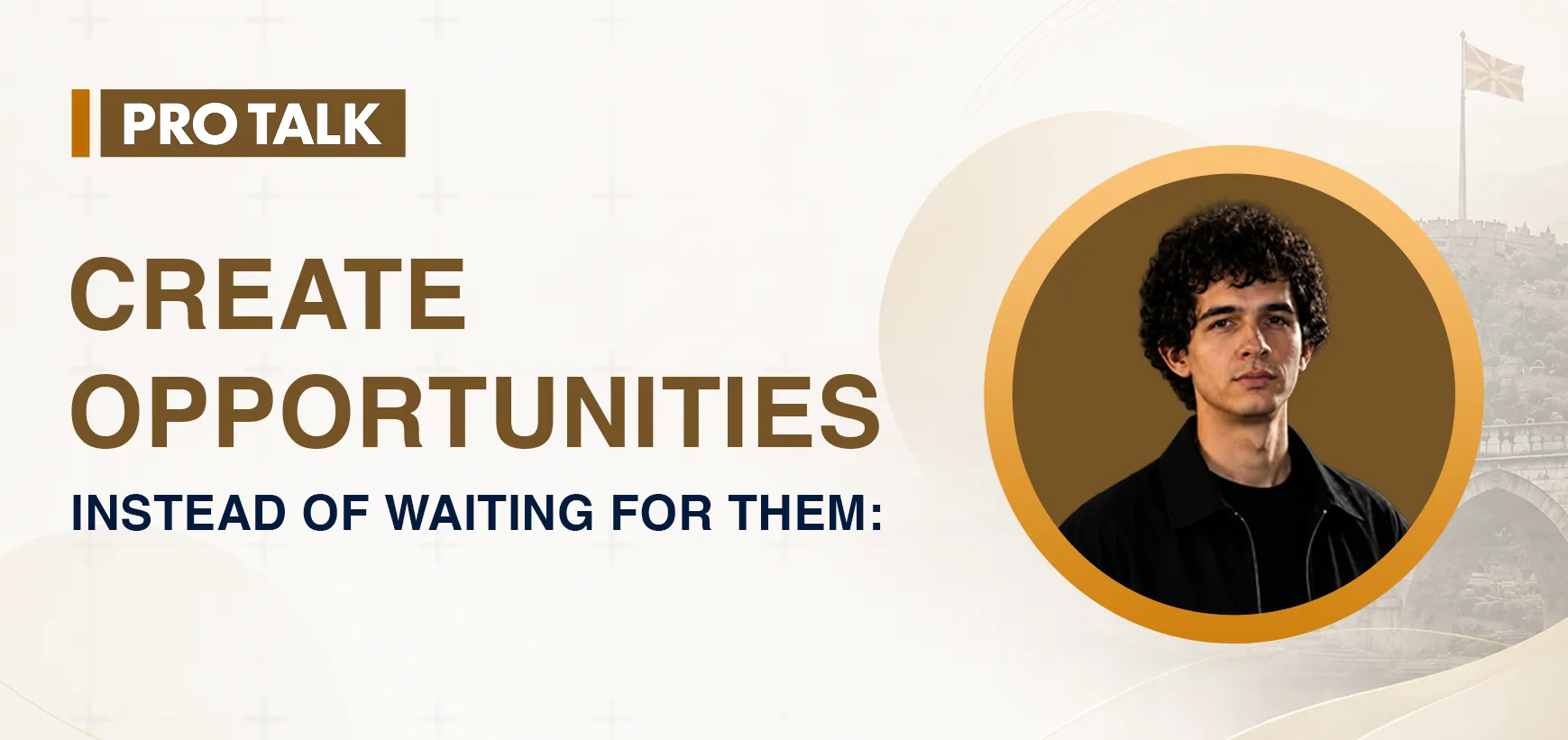







Ejon Duka, co-founder of Sorsend, is applying his skills and knowledge in construction project management to tackle an all-too-familiar problem within the industry – the tracking of tasks, deadlines, and approvals amidst many emails for each project. This is the story of why solving real problems, listening to customers, and mastering the fundamentals of running a company are what turn an idea into a business.
Construction projects require constant communication between clients, subcontractors, planners, and project managers. Updates, changes, and distribution of responsibility take place constantly via email, with many critical tasks and deadlines mixed within the hundreds of emails.
For Ejon Duka, this was not just an everyday issue. It was the problem he faced firsthand when working on construction projects in Austria. After studying Civil Engineering at TU Graz and working as a site and project manager, he understood how difficult it could be to keep track of everything happening across a project.
Instead of accepting this as an unavoidable part of construction, Ejon decided to explore a better way. Together with two co-founders, he started Sorsend, an Austrian startup developing an AI-powered platform that turns project emails into structured, trackable tasks for construction and engineering firms across the DACH region.
The idea grew from practical experience, but building a company around it required a different set of skills. Ejon had to balance a full-time engineering role with startup responsibilities, learn from unsuccessful customer outreach and make decisions without knowing what the outcome would be. His story offers a look at how firsthand industry knowledge can become the starting point for entrepreneurship.
Turning a Construction Challenge into a Business Idea
Ejon’s experience in construction helped him recognise a problem that could easily become part of a team’s daily routine. Project managers must coordinate people, monitor schedules and respond to changing requirements, while important information arrives through multiple email conversations.
A single message might contain an approval request, a new deadline or an action that someone needs to complete. When those details remain scattered across inboxes, identifying responsibilities and following up can require considerable time and attention.
For Ejon, the opportunity was to help construction professionals spend less time organising email communication and more time managing their actual projects. Sorsend aims to turn information within project emails into structured tasks that teams can track, bringing greater clarity to everyday coordination.
His method involved analyzing the problem first before trying to create technology to solve it. Being an insider in the business, he knew that whatever software was developed had to be functional and useful in the context of what construction experts were doing in their jobs.
This shows that one of the things that can be learned by entrepreneurs looking to develop software for any industry is the importance of insider knowledge of the problems that people face. It helps to understand what people do in order to build software that works for them.
Building Sorsend While Working Full-Time
There was a time when Ejon was working as a site engineer on one hand and constructing Sorsend on the other hand. Both were tough tasks, but it was more difficult to get used to the uncertain nature of entrepreneurship.
When constructing something, there is always a plan, schedule and end result which guides the process. However, creating a startup is much more unpredictable as it involves making decisions regarding the development of the product, customer needs, investors and funding without being sure of the outcome.
According to Ejon, one of the toughest aspects of his entrepreneurial experience is the uncertain nature of the process. Instead of waiting for all the answers to be known, he tried to make small steps. That meant talking to potential customers, validating individual features and accepting that decisions did not always have to be perfect. They needed to create opportunities to learn.
This was a defining moment in how he perceived resilience. To Ejon, resilience is not about being certain about what will come next. Resilience entails persisting in asking the right questions and making moves despite not having clear answers.
His story also provides an important lesson to budding entrepreneurs. Progress does not always come from making one major decision correctly. Often, it comes from testing an idea, understanding the result and using that information to make the next decision better.
Why Customer Feedback Shaped the Early Journey
When the Sorsend team began approaching construction company owners across the DACH region, they chose to test the market directly rather than spend too long developing the product in isolation.
Their first cold outreach messages received very few replies. Instead of treating this as a reason to abandon the approach, they experimented with shorter emails, a more direct, peer-to-peer tone and messaging that focused on the outcome for the customer rather than the underlying technology.
The change reflected an important principle in business communication. Prospective customers need to know why a product is significant for them and not how the product functions. In the case of Sorsend, they had to describe the need to solve the problem of email management and task tracking.
These endeavours were helpful in gaining two Austrian construction companies as pilot partners. Moreover, Sorsend managed to enter into the Plug and Play accelerator program and received cloud credits from Microsoft and Google.
These achievements provided Sorsend with the possibility of developing further; however, during the process, the founders realized how much they were able to learn about the market. The feedback from every attempt at reaching out made them realize how to improve their message.
According to Ejon, it is crucial for founders to talk to customers even before they try to improve the product. It will give them an opportunity to find out whether the problem is important, how it is managed by people, and whether the suggested solution solves the problem of people.
Treating Rejection as Information
Persistence is the essence of Ejon’s entrepreneurial model; however, he considers persistence as something beyond doing everything irrespective of the result. Every refusal provides an entrepreneur with some information which helps to make the following attempt more successful.
If a potential client doesn’t react to an idea or an opportunity turns out to be unreal, then the founder may think over what has happened and whether there is something wrong with communication, strategy or assumptions. It is possible that there is nothing to learn from failure, but taking the problem with curiosity leaves much space for learning.
Moreover, he stresses the importance of making little consistent steps in the right direction. Founders are prone to be overwhelmed by the whole task of building a company while thinking only about the result. Therefore, it is easier to divide the process into smaller steps like communicating with a potential client or perfecting one aspect of the product.
Also, it is necessary to have several people who would support you. The right people may inspire the founder, check assumptions and provide him/her with another viewpoint on the problem. A good attitude becomes helpful in case it is reinforced by the right habits and experience in the area.
What Founders Should Understand Before Building a Product
Among the suggestions that Ejon makes for future entrepreneurs is to talk to at least five people about your idea before you start coding anything. The conversations should center on learning about how people currently solve a particular problem, what steps become hard and what should be done.
Another suggestion from Ejon is to watch customers at work rather than listening only to what they say. Watching the process will help to identify things that customers do many times and things that they have invented themselves as workarounds.
In the case of Sorsend, it is necessary to learn how the people working in the construction industry communicate via email and how they follow through with the decisions made. In other industries, this concept remains the same: A founder must know about the customers before creating something.
Ejon believes that listening should continue after a product reaches the market. Founders should pay attention to whether customers find the product useful, enjoy using it and recommend it to others. Otherwise, the solution may be to enhance the product itself rather than to increase its features.
In the end, it should always be about making the customer experience take precedence over the founder’s initial idea. A capacity to listen and change course could assist firms in coming up with solutions to the problems at hand.
How AI Could Change Software and Construction
Ejon expects that over the next three to five years, AI will speed up the process of software development and make it cheaper. As more people gain the ability to build products quickly, he believes the product itself may become less of a competitive advantage. Reaching customers, building trust and establishing strong industry relationships will matter even more.
According to him, distribution is going to be one of the biggest problems for future start-ups. Developing a product is just one step toward forming a company entrepreneurs have to figure out how to deliver their product to the right people. Ejon advises entrepreneurs to cultivate their professional network and build the audience before they desperately need customers.
In terms of construction, Ejon also expects more automation of routine coordination through use of AI agents. At the same time, he stresses that adoption of such a technology depends as much on the level of trust businesses put in it as on its capabilities.
So, what can be the takeaway for the entrepreneurs who develop AI-based products? Evidently, the fact that the development of a product becomes easier does not mean that its adoption becomes easier too.
Building Technology Around Real Needs
The journey of Ejon Duka with Sorsend began when he encountered issues with the management of communication in one of his construction projects. His prior experience helped him appreciate the difficulties associated with the management of project communication, while his experience of customer outreach helped him appreciate the need for flexibility in assumptions.
Working in a startup while doing a full-time job has taught him how to move ahead in uncertain conditions. All of these experiences have made him appreciate how persistence and problem-solving skills are important for entrepreneurship.
With the help of technology, AI is bringing about accessibility in the process of software development. It can be expected that in such conditions, being able to understand the customers would become even more important for entrepreneurs.
For Ejon and his co-founders, Sorsend is an effort to make construction project coordination more manageable by turning information in emails into tasks that teams can track. The idea remains rooted in the experience that started the journey: the people who build our cities deserve software that understands the realities of their work.

About Ejon Duka
Ejon Duka is the co-founder of Sorsend, an Austrian startup developing an AI-powered platform that turns project emails into structured, trackable tasks for construction and engineering firms across the DACH region. A Civil Engineering graduate of TU Graz, he brings firsthand experience from Austrian construction projects to his work on improving project communication and coordination.


Connect with Ejon Duka
Interested in working with or consulting with this expert? Submit your details below.