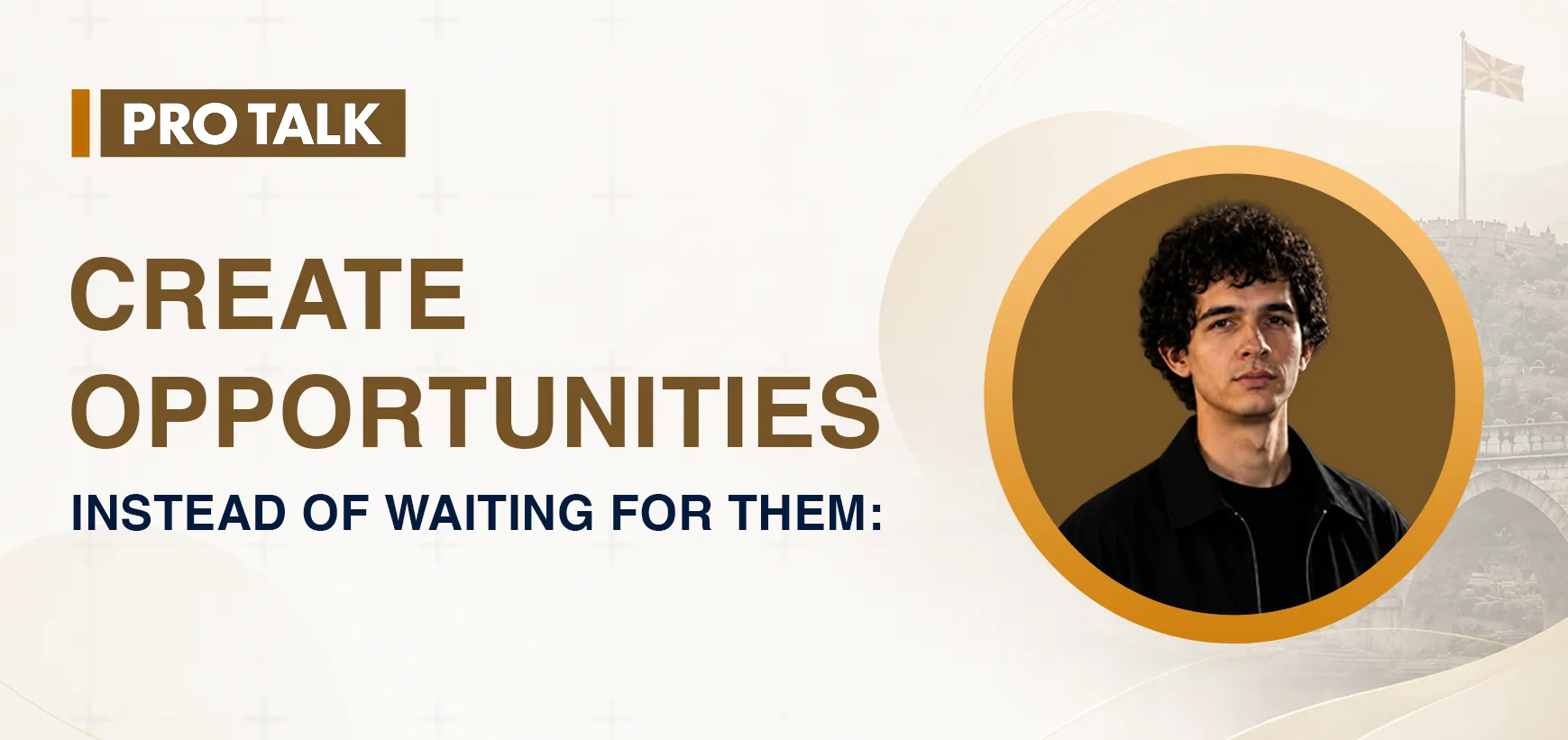






Cybersecurity reaches a point when planning, documentation and technical expertise stop being theoretical. Something has happened. A system may be at risk, people need answers quickly, and every minute matters.
For Valon Dauti, founder and CEO of Vexelon Cybersecurity in North Macedonia, one such moment came while his team supported a logistics company during a cybersecurity incident. The situation had the potential to affect operations and the company’s commitments to its customers.
Vexelon’s team responded within 17 minutes and contained the incident within 33 minutes. Valon reported that no operational disruption occurred.
On the surface, it sounds like a story about speed. Valon sees it differently. For him, the most important part was the preparation beforehand: the team understood its responsibilities, communication was clear, and people could make decisions under pressure.
That experience reflects how Valon thinks about cybersecurity, leadership and business. Good outcomes rarely begin when a crisis arrives. More often, they are built in the weeks, months and years beforehand.
From Engineer to Founder: Building Vexelon
Valon’s entrepreneurial journey did not begin with the goal of becoming a CEO. He studied computer science and engineering, drawn to the practical problems technology could help businesses solve.
Over time, that interest expanded beyond systems and software. He became increasingly interested in the people around the technology, the decisions businesses make, the risks they face, and how technical knowledge could be translated into something useful for clients.
That broader ambition eventually led to Vexelon Cybersecurity.
Valon set out to build Vexelon around a few clear principles:
- Strong technical capability
- Dependable client service
- People who take responsibility for their work
- Practical solutions without unnecessary complexity
- Long-term client relationships built on trust
Today, his role is very different from the technology professional he was when he started. His focus includes setting the company’s direction, developing client relationships, supporting the team and creating an environment where technical expertise can be translated into practical business value.
That transition has also been one of the hardest parts of his journey.
From Technical Expert to Business Leader
Many technically strong founders eventually reach a similar crossroads. The skills that help someone start a company are not always the same ones needed to lead it as it grows.
Knowing cybersecurity is one thing. Building an organization around it requires decisions about people, priorities, clients, finances, culture and standards. At some point, founders also have to accept that not every decision can continue to pass through them.
For Valon, that shift took time. In the early stages, it felt natural to stay involved in almost every detail because he cared deeply about the outcome. He knew the work closely and felt a strong responsibility for how it was delivered.
As Vexelon developed, he realized sustainable progress depended on a different approach. The business needed capable people who could take ownership, clear standards everyone understood, and enough trust to share responsibility.
The Shift in Valon’s Leadership Approach
| Earlier Founder Mindset | Leadership Mindset Today |
| Stay closely involved in every detail | Give capable people clear ownership |
| Solve problems personally | Build a team that can solve problems |
| Make most decisions centrally | Create standards people can work within |
| Focus mainly on technical delivery | Balance client needs, team priorities, finances and company direction |
| Try to have every answer | Listen, decide and stay accountable |
This is one of the less visible challenges of entrepreneurship. Founders may begin as the most involved person in the room, but growth eventually depends on whether the organization can function without every decision waiting for them.
Leadership Does Not Mean Having Every Answer
Another lesson was that leadership often requires making decisions before every fact is available.
A technical professional can investigate a problem, test assumptions and look for the most accurate answer. Business leadership is less predictable. Clients may need a decision immediately, a team may require direction, or an opportunity may disappear while everyone is still gathering information.
Valon learned to listen carefully, seek advice from people with different strengths and make the best decision possible with the information available. Uncertainty did not remove his responsibility for the outcome, but it changed how he approached leadership.
For him, leadership gradually became less about having every answer and more about helping people do their best work together. That distinction changes the founder’s role. Instead of being at the centre of every task, the founder begins creating a system where others can contribute, make decisions and take responsibility.
Keep Coming Back to the Real Problem
One principle has remained important as Vexelon has developed: stay focused on the problem that needs to be solved.
Businesses can become busy very easily. Meetings, reports, tools, deadlines, ideas and internal discussions can create a constant sense of activity, but activity does not always mean progress.
Valon tries to bring conversations back to four practical questions:
- What does the client actually need?
- What matters most right now?
- Who owns the next step?
- How will we know whether the work made a real difference?
These are simple questions, but they help people distinguish activity from results.
They are particularly relevant in cybersecurity, where clients do not necessarily need the most complex-looking solution. They need their actual problem understood and addressed in a way that protects the organization and supports its ability to operate.
A Simple Weekly Habit That Creates Accountability
For entrepreneurs, managers and teams, Valon recommends a straightforward weekly review.
At the end of each week, write down:
- What moved forward?
- What is still stuck?
- What decision or action would make the biggest difference next week?
The value is not in creating another long management report. The list should stay short, ownership should be clear, and each action should have someone accountable for following through.
Valon believes consistency often matters more than dramatic bursts of activity. A company that repeatedly identifies what matters, assigns ownership and follows through will usually make better progress than one that is constantly jumping from one new idea to another. Over time, teams recognize problems earlier and trust grows as people follow through on what they have agreed to do.
What the Incident Revealed About Preparation
The logistics-company incident offers a practical example of that approach.
The quick response was not simply a matter of speed. The team was able to act because people understood what needed to happen.
Cyber incidents often create uncertainty. Information may be incomplete, employees may be concerned about the wider business impact, and teams may see the same event from different perspectives.
Without preparation, valuable time can be lost deciding who should act, who should communicate and what needs to be protected first. Valon believes organizations should discuss these responsibilities long before an incident takes place.
Cybersecurity Is Now a Business Resilience Issue
Valon sees one broader change: cybersecurity can no longer be treated as solely an IT responsibility.
Modern organizations depend on networks of software platforms, cloud providers, suppliers, payment systems and other technology partners. A business can secure its own infrastructure and still be exposed through services outside its direct control.
Business leaders need to consider not only whether their systems are secure, but also what the company depends on and what could happen if one of those dependencies stopped working.
Key dependencies may include:
- Cloud infrastructure
- Payment gateways
- Logistics providers
- Identity and access systems
- SaaS platforms
- External IT providers
- Data hosting services
- Communication platforms
Cybersecurity increasingly overlaps with business continuity and organizational resilience.
Start With One Meaningful Goal
When discussing execution, Valon keeps returning to the importance of focus.
Most teams do not lack ideas. In many cases, the opposite is true. Businesses often try to launch a product, improve sales, introduce AI, redesign a website, hire people, enter a new market and improve internal processes at the same time.
The challenge is not a lack of ambition, but the difficulty of protecting attention.
Valon advises entrepreneurs and leaders to start with one meaningful goal and give it a clear owner. That person does not need to do all the work, but there should be no uncertainty about who is responsible for moving the goal forward.
Valon’s Practical Execution Framework
| Step | Action |
| 1 | Decide what matters most |
| 2 | Define the next meaningful step |
| 3 | Give the goal a clear owner |
| 4 | Set a simple measure of progress |
| 5 | Review what moved forward and what remains stuck |
| 6 | Follow through consistently |
Talk to Customers Before Investing Too Much
For entrepreneurs building a new product or service, Valon recommends speaking with customers before making a significant investment. The conversation should go beyond asking whether someone likes the idea.
Founders should ask:
- What problem are you trying to solve?
- How do you currently handle it?
- What frustrates you about the existing approach?
- How often does this problem occur?
- What would a better solution need to do?
- Would solving this problem be valuable enough to pay for?
People are often generous when reacting to ideas. Saying something interesting is easy. Changing behavior or spending money is a stronger signal.
Valon advises founders to look for patterns across conversations rather than treating the first enthusiastic response as proof that a market exists. Understand the problem first, then build around what you learn.
Document What You Learn
For professionals and students, Valon recommends a simple habit: keep a record of what you learn.
A short note about a project, difficult decision, mistake or successful outcome can become valuable over time. It lets people look back and see how their judgement has developed, rather than relying on memory.
A useful personal record could include:
- What project or challenge were you working on?
- What was your responsibility?
- What went wrong or became difficult?
- What decision did you make?
- What did you learn?
- What changed as a result?
This can make a person’s professional contribution easier to explain. Many people know they have worked hard but struggle to describe what they contributed during an interview, client conversation or performance review. Documenting the work makes those experiences more concrete.
AI Agents Are Creating New Questions Around Access and Responsibility
Artificial intelligence is another area Valon believes business leaders will need to examine carefully.
Much of the first wave of business AI focused on generating content, summarizing information and helping employees complete tasks faster. AI agents introduce a different level of responsibility because they can increasingly take action, rather than simply produce answers.
That creates opportunities for productivity while raising questions about access, authority and accountability.
If an AI agent can access internal systems, retrieve sensitive information, interact with applications or execute tasks, organizations need to be clear about what it is allowed to do.
Questions Businesses Should Ask About AI Agents
- Where are AI tools already being used?
- What information can they access?
- Who approved that access?
- What actions are they allowed to take?
- Can permissions be limited?
- How are actions logged?
- How would the organization identify misuse or mistakes?
- Who remains accountable for the outcome?
For Valon, these are business governance questions as much as technology questions. Companies that approach AI thoughtfully will be better positioned to use it with confidence and ensure governance keeps pace with adoption.
The Bigger Risk May Sit Outside the Company
AI is only one part of the picture.
Valon also expects organizations to spend more time understanding their dependence on external suppliers and technology providers. Companies rarely operate as isolated systems, and many rely on dozens of outside platforms without considering how central those services have become.
That dependence can improve efficiency, but it can also concentrate risk. If a critical provider becomes unavailable, the impact can quickly reach customers, operations and revenue.
Business leaders should therefore understand:
| Area | Question to Ask |
| Critical suppliers | Which partners would be difficult to replace quickly? |
| Data | Where is important information stored? |
| Access | Who outside the company can access critical systems? |
| Platforms | Which business processes rely on one provider? |
| Continuity | What happens if that service becomes unavailable? |
| Recovery | Is there an alternative process or provider? |
These questions belong in broader business planning.
Growth Is Not the Only Measure of Success
Founder stories are often reduced to growth figures, employee numbers, funding announcements or expansion into new markets.
Valon sees success more broadly.
Building a company is a long process, and there will be periods when progress feels slower than expected. During those phases, he focuses on the quality of the work, the people around him and whether the business is still moving in the right direction.
He also believes the way a company reaches its goals matters. A business can grow while losing the trust of employees. It can increase revenue while building poor relationships with customers. It can become larger without becoming stronger.
For Valon, a healthy definition of success includes:
- Quality of work
- Trust from clients
- Strength of the team
- Clear standards
- Long-term relationships
- Financial sustainability
- Pride in how results were achieved
Revenue and growth still matter, but they are not the complete story.
Building Vexelon One Decision at a Time
There is no neat ending to Valon’s story because Vexelon is still being built. That may be one of the most useful parts of it.
Entrepreneurship often looks simple in hindsight. Once enough time has passed, difficult decisions can be arranged into a clean story. Real life is less organized. Priorities change, unanswered questions remain, teams grow into new roles, and founders discover that the skills needed for the next stage can differ from those that got them started.
Valon’s approach has been to keep moving while remaining willing to learn. His message to other people building something is simple:
Take the next step, stay open to learning and do what you say you will do.
You do not need to understand the entire journey before you begin. What matters is developing enough judgement to identify the next useful step and enough discipline to follow through.
For Vexelon Cybersecurity, that means continuing to build its team, deepen client relationships and help organizations prepare for risks that increasingly extend beyond individual systems.
Valon wants to build a company that people can depend on. When nothing is going wrong, that may sound like a simple promise. When a real incident occurs and the clock starts running, it means much more.
About Valon Dauti
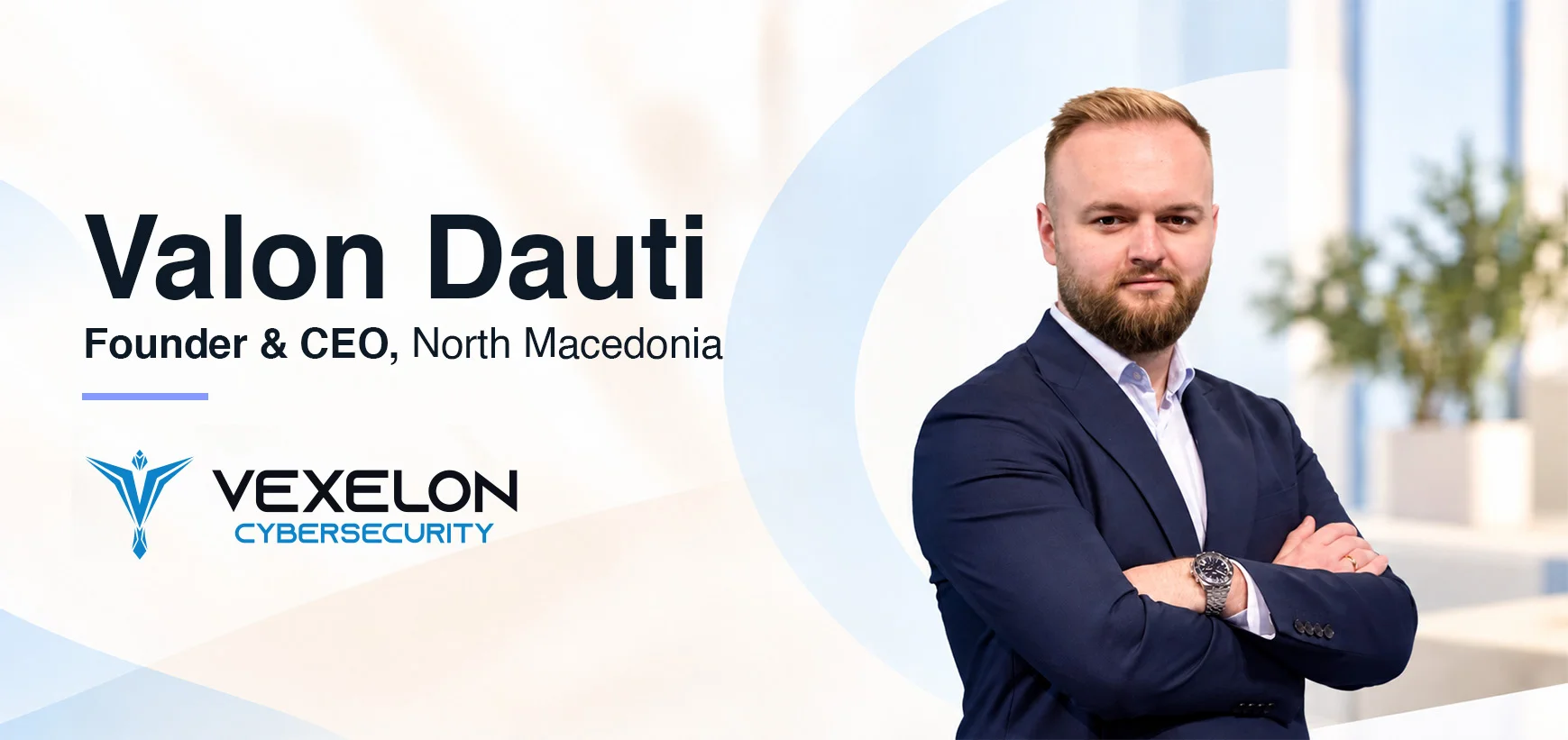
Valon Dauti is the Founder and CEO of Vexelon Cybersecurity, a cybersecurity company based in North Macedonia. He holds a Bachelor of Science in Computer Science and Engineering. His work brings together technology, entrepreneurship, team leadership and client relationships, with a focus on building a company that delivers practical value and earns lasting trust.

Company Details

Connect with Valon Dauti
Interested in working with or consulting with this expert? Submit your details below.