





- The First Lesson Was to Understand the Problem Before Building the Solution
- Building the Platform Taught Me That the First Idea is Rarely the Final One
- Limited Resources Have Forced Me to Decide What Actually Matters
- Do Not Confuse More Features With More Value
- Trust Is Part of the Product
- Waiting for Perfection Can Become Its Own Form of Delay
- My Family Business Experience Changed How I Think About Customer Care
- Solve One Problem Properly Before Trying to Solve Ten
- AI Can Help Small Founders Move Faster — but It Cannot Take Responsibility
- The Moving Industry Will Become More Digital
- Sometimes the Best Thing a Founder Can Do is Ask Better Questions
- I Am Not Trying to Pretend the Journey is Further Along Than It Is
- Growing Up in Malta Shaped the Way I See Opportunity
- What I Would Share With Another Young Founder
- Where LOMU Is Today
- What This Journey is Teaching Me About Entrepreneurship
- About the Author
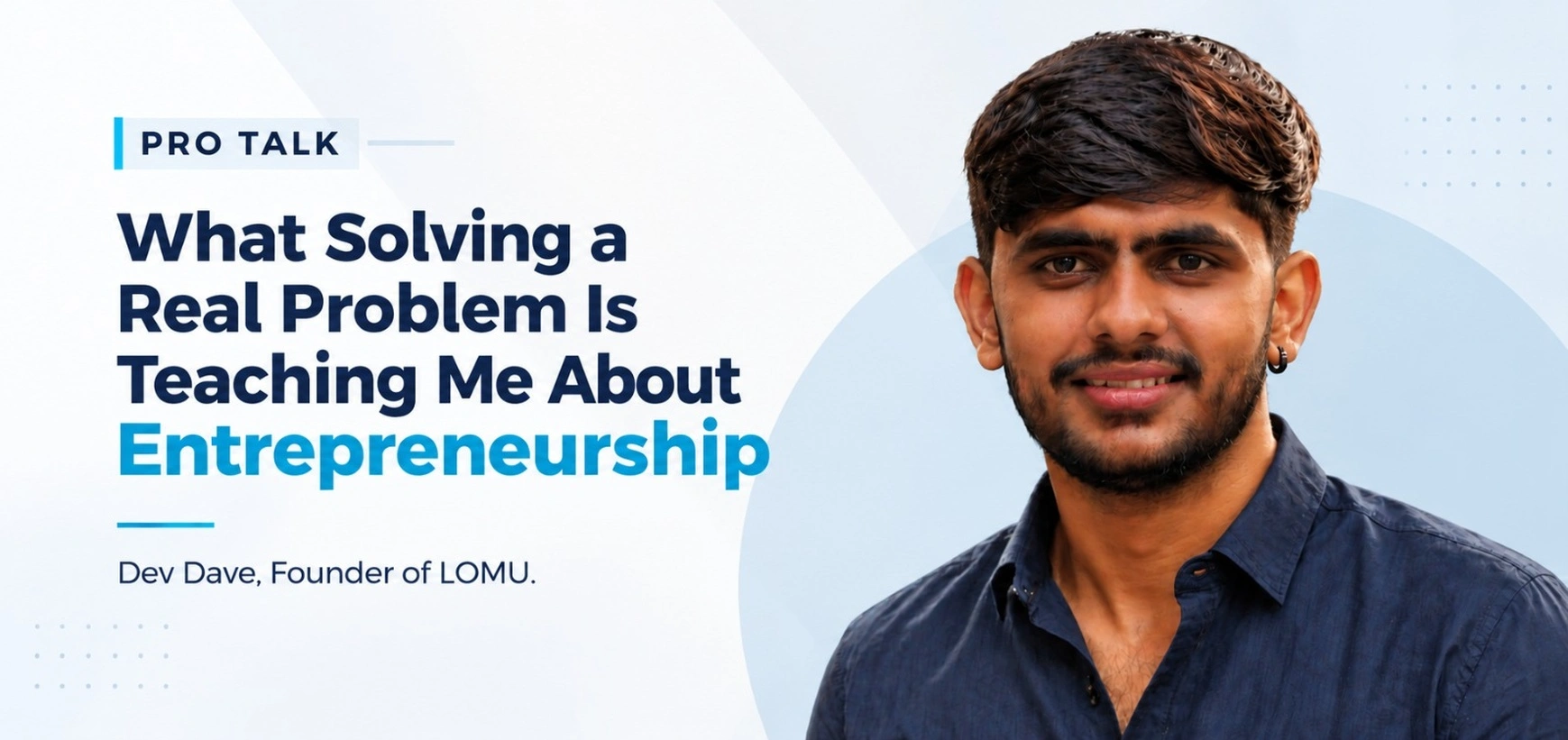
Dev Dave on building a moving platform in Malta: from knowing customers before building features to earning trust, using AI judiciously and making progress without waiting for perfection
By Dev Dave, Founder of LOMU
I’m just beginning my entrepreneurial journey and I think it’s important to say it out loud. I am not writing this as someone who has already built a huge company or discovered a formula for success. I am sharing what I am learning while trying to build something useful from the ground up.
I moved from India to Malta when I was around five years old and grew up here. Being around my family business gave me an early understanding of responsibility, resilience and the importance of earning people’s trust over time. At the same time, I became increasingly interested in technology, artificial intelligence and how digital tools could improve everyday services.
Those two worlds eventually came together in LOMU, a Malta-based platform designed to make moving requests clearer and more structured for customers and independent transport professionals.
The idea did not begin with me asking, “What kind of app should I build?” It began with a much more useful question: why does arranging a move still involve so much unnecessary back-and-forth?
The First Lesson Was to Understand the Problem Before Building the Solution
One of the most valuable things I have learned from being around my family business is that you should understand the real problem before trying to sell anyone a solution. That sounds simple, but when you are excited about a new idea or a piece of technology, it is very easy to start building before you have listened properly.
While observing Malta’s moving market, I noticed that important information was often spread across telephone calls, WhatsApp messages, photographs and follow-up conversations. A customer might explain part of the job over the phone, send photographs later and then remember an important detail about stairs, access, parking or another item that also needed to be moved.
For the transport professional, missing information can make it much harder to understand the job properly before preparing a quotation. The issue was not necessarily that people needed more technology. They needed a clearer way to organise the information they were already exchanging.
That became the thinking behind LOMU. The platform is designed to bring details such as the items being moved, photographs, property access, locations and preferred dates into one structured request.
This experience changed how I think about entrepreneurship. A business idea becomes much stronger when you can explain the problem before you explain the product.
Building the Platform Taught Me That the First Idea is Rarely the Final One
Ideas often look very clean when they are still in your head. Once you start building them, reality becomes much more complicated.
With LOMU, I had to think about the process from several sides. A customer wants something simple and convenient. A transport professional needs enough information to understand the job. A business user may have different requirements again. What looks logical from one perspective may create unnecessary friction for someone else.
That meant I could not design the platform only around what made sense to me. I had to keep looking at how people might actually use it and where they could become confused.
Some of the questions I began asking were:
- What information does the customer realistically know at this stage?
- What does the transport professional need before considering a quotation?
- Which questions reduce uncertainty?
- Which steps are genuinely necessary?
- Where are we adding complexity instead of removing it?
LOMU has now developed from an idea into a functioning Malta-focused platform with different journeys for customers, transport partners and businesses, alongside moving guides and a dedicated partner application process.
What I have learned is that building is really a process of correcting your assumptions. The first version gives you something to test. The useful version comes from understanding what needs to change afterwards.
Limited Resources Have Forced Me to Decide What Actually Matters
Building something without a large team means you cannot pursue every idea at the same time. There are always more features you could add, more improvements you could make and more directions you could explore.
At first, that can feel like a disadvantage. I have started to see it differently.
Limited resources force you to prioritise.
Instead of asking, “What else can we add?”, I try to ask whether something solves a problem that matters enough to deserve the time spent building it.
The process I currently follow is simple:
Observe → Define → Build Simply → Test → Listen → Improve
I look for a problem that appears repeatedly, try to define it clearly and then think about the simplest useful response. Once something exists, the next step is to listen carefully to what happens in practice and improve from there.
For another early-stage founder, I think this is much more realistic than trying to design the perfect product before anybody has used it.
Do Not Confuse More Features With More Value
Technology businesses can easily become obsessed with features. There is always something new you could build, particularly now that AI and modern development tools make experimentation faster.
But a longer feature list does not automatically create a better product.
Before adding something new, I now try to challenge myself with a few questions:
| Question | Why I Ask It |
| Does this solve a problem users actually have? | It keeps development connected to real needs |
| Does it make the process easier? | A feature should not create friction; it should remove it |
| Can I put the benefit simply? | If the value is hard to explain, it may not be clear enough |
| Is there an easier way to test the idea? | Testing early can save time and resources |
| What will tell me whether it worked? | A feature should have a useful outcome, not just exist |
This discipline is helping me separate what is interesting to build from what is genuinely useful to the customer.
That distinction matters in almost every business, not just software.
Trust Is Part of the Product
One of the things I underestimated at the beginning was how important trust would be.
Building a digital platform is one challenge. Asking people to change a familiar way of working is another. Customers and transport professionals may already be comfortable arranging things through phone calls and messages, even if the process is not always efficient.
When you introduce a new system, you are asking people to change a habit.
That means the value has to be clear, but it also means people need to feel comfortable using it.
For customers, that includes confidence in how their information is handled and whether the process will genuinely make their move easier. For transport professionals, it means knowing that the platform is intended to give them clearer information and support their work rather than add another layer of complication.
Growing up around a family business taught me that people remember whether you kept your word, communicated clearly and treated them fairly. Technology may change how a service is delivered, but those fundamentals do not disappear.
For me, that means trust cannot be treated as a marketing message. It has to be built into the way the service works.
Waiting for Perfection Can Become Its Own Form of Delay
When you care about what you are building, there is always another reason to postpone putting it in front of real people. You want to improve the design, add another function, cover another scenario or solve one more edge case.
I have had to become more comfortable with the fact that there will always be something to improve.
There is a difference between releasing something carelessly and accepting that no first version will answer every question. You can maintain high standards while still allowing real users to show you what needs to change.
This has been an important mindset shift for me. I would rather learn early that one of my assumptions was wrong than spend months perfecting something that people did not need.
For founders, especially those with limited resources, feedback is often more valuable than another month of guessing.
My Family Business Experience Changed How I Think About Customer Care
Long before I started working on LOMU, being around my family business showed me that customers do not judge a company only by what happens when everything goes smoothly.
They also remember how you behave when something goes wrong.
Did you communicate clearly? Did you take responsibility? Did you try to solve the problem fairly? Did you keep the customer informed?
These are small things, but they build or damage trust very quickly.
That lesson influences how I think about technology. A digital platform should make expectations clearer and communication easier. It should not be used as a reason to remove responsibility from the people involved.
Whatever industry you are in, I believe the customer still wants the same basic things: clarity, reliability and the confidence that somebody will take ownership when an issue appears.
Solve One Problem Properly Before Trying to Solve Ten
If I were sitting across the table from someone with a new business idea, one of the first things I would ask is: what is the one problem you are solving first?
Early-stage businesses can become too broad very quickly. It is tempting to describe your company as a marketplace, an AI platform, a logistics ecosystem or several things at once because it makes the opportunity sound bigger.
But if the customer cannot understand the first problem you solve, the larger vision does not help very much.
I find these questions useful when thinking about a new idea:
- What problem have I seen repeatedly?
- Who experiences it most often?
- How are they dealing with it today?
- Where does the current process break down?
- What is the smallest useful improvement I could create?
- How will I know whether people actually find it useful?
These questions force me to think about the person experiencing the problem rather than the technology used to solve it.
AI Can Help Small Founders Move Faster — but It Cannot Take Responsibility
This is an interesting time to build a business because small teams now have access to tools that would have been much more expensive or difficult to use only a few years ago.
AI can help with research, organisation, content, analysis, workflows and repetitive tasks. Cloud services and modern development platforms can also reduce the amount of infrastructure an early-stage founder needs to manage.
I see enormous value in that.
But I also think it is important not to confuse faster output with better judgement.
AI can help me organise information or explore ideas more quickly, but I still need to review the result. I still need to understand whether something is accurate, suitable and fair to the customer.
A simple way I think about it is this:
| Technology can support | People still need to own |
| Organising information | Judgement |
| Reducing repetitive work | Responsibility |
| Analysing structured data | Customer relationships |
| Speeding up routine tasks | Trust |
| Testing ideas more quickly | Quality control |
| Supporting communication | Difficult decisions |
I do not think the most interesting future is one where technology replaces everyone. I think it is one where good professionals use technology to spend less time on repetitive work and more time on decisions that require human understanding.
The Moving Industry Will Become More Digital
Over the next three to five years, I expect local service industries such as moving and transport to face much higher digital expectations.
Customers are already used to booking travel, ordering food and managing financial services through simple digital experiences. They naturally begin expecting similar convenience when using other services.
For the moving industry, this could mean clearer digital requests, better structured information, photo-supported job details and faster communication. Better data may also reduce some misunderstandings before a moving job begins.
However, I do not think convenience will remove the importance of trust and privacy.
Moving involves people’s homes, possessions, schedules and money. Customers still want confidence in the professional they are dealing with, while professionals need accurate information before accepting or pricing a job.
The opportunity is not to remove people from the process. It is to use technology to make the relationship between customers and professionals clearer.
Sometimes the Best Thing a Founder Can Do is Ask Better Questions
One thing I am beginning to appreciate is that entrepreneurship is not only about finding answers. Often, progress starts by improving the questions you ask.
When something is not working, it is tempting to immediately build another feature or change the marketing. But the real problem may be somewhere else.
Is the user confused?
Are we asking for information too early?
Is the benefit unclear?
Does the customer actually have the problem we think they have?
Are we trying to solve too many things at once?
These questions can be uncomfortable because they sometimes challenge work you have already done. But I would rather challenge an assumption than continue investing in the wrong direction.
For me, becoming comfortable with changing my own mind is part of becoming a better founder.
I Am Not Trying to Pretend the Journey is Further Along Than It Is
Social media can make entrepreneurship look very fast. A founder launches something, raises money, grows a team and appears successful within a few posts.
That is not what my own experience looks like.
I am 26, LOMU is still developing and I am still learning how to build the company properly. I do not consider myself to have reached success yet, and I think pretending otherwise would remove the most useful part of my story.
There have been things I got wrong. There have been ideas I changed. Some decisions took longer than expected, and some questions still do not have final answers.
But I can see progress.
I understand the problem better than I did when I started. The platform is more structured. I am asking better questions and making decisions with more context.
At this stage, those are meaningful measures for me.
Growing Up in Malta Shaped the Way I See Opportunity
Moving from India to Malta at a young age also shaped how I think about starting points and opportunity.
Malta is a relatively small market. Depending on how you look at it, that can seem limiting. I think it can also be an advantage when you are trying to understand a problem closely.
In a smaller market, you can often get nearer to the people actually using the service. You can observe how local companies work, understand habits and speak directly to customers and professionals.
That closeness is valuable when you are still testing assumptions.
A founder does not always need to begin by solving a global problem. Sometimes the best place to begin is a problem you understand well, in a market where you can learn quickly.
The bigger vision can come later.
What I Would Share With Another Young Founder
I would not give another entrepreneur a formula for success because I am still building my own business. What I can share are the principles that are helping me think more clearly.
If you are early in your own journey, these are the things I would keep in mind:
- Start with a problem you genuinely understand. Your own experience can give you an advantage that trend-following cannot.
- Speak to the people living with the problem. Do not build only from assumptions.
- Look for repeated patterns. One complaint can be an exception; repeated friction may be an opportunity.
- Build the smallest useful version first. You can add complexity later if people actually need it.
- Use technology to increase your capability, not replace your judgement.
- Document what you learn. Your notes today can become processes tomorrow.
- Do not mistake activity for progress. Ask whether the work is making something better for the user.
- Listen to feedback, but look for patterns before changing direction.
- Accept mistakes quickly. Defending a bad assumption usually costs more than changing it.
- Stay consistent after the excitement wears off. That is when the real work begins.
I am still applying these lessons myself. That is probably why I value them.
Where LOMU Is Today
LOMU has moved from an idea into a functioning Malta-focused platform with separate journeys for customers, transport partners and businesses, alongside practical moving information and a partner application process.
I am proud of reaching that stage, but I do not see the product as finished.
My focus now is on listening to the market, improving what already exists and understanding where the platform can genuinely make the moving process clearer.
I would rather build steadily around real behaviour than add features simply to make the platform appear bigger.
For me, the next stage is not about trying to prove that LOMU has all the answers. It is about making the product more useful one decision at a time.
What This Journey is Teaching Me About Entrepreneurship
The most significant lesson I have acquired thus far is that entrepreneurship is significantly less about possessing a single brilliant idea and more about maintaining focus.
You have to notice where people struggle. You have to listen carefully enough to separate the real problem from the symptom. You have to build something, accept that part of it may be wrong and then improve it without becoming emotionally attached to every decision you made.
You also need patience.
Progress is rarely one dramatic event. In my experience, it is usually a collection of small improvements that begin to matter because you continue making them.
My journey from India to growing up in Malta, learning from my family business and now building LOMU has reinforced something I strongly believe: your starting point does not have to determine where you can go.
I am still early in the journey, and there is still a great deal I need to learn. But I am becoming more comfortable with that.
For now, my focus is simple: understand the problem properly, build something useful, listen to the people using it and make the next version better than the last.
That is the kind of progress I want to keep building.
About the Author
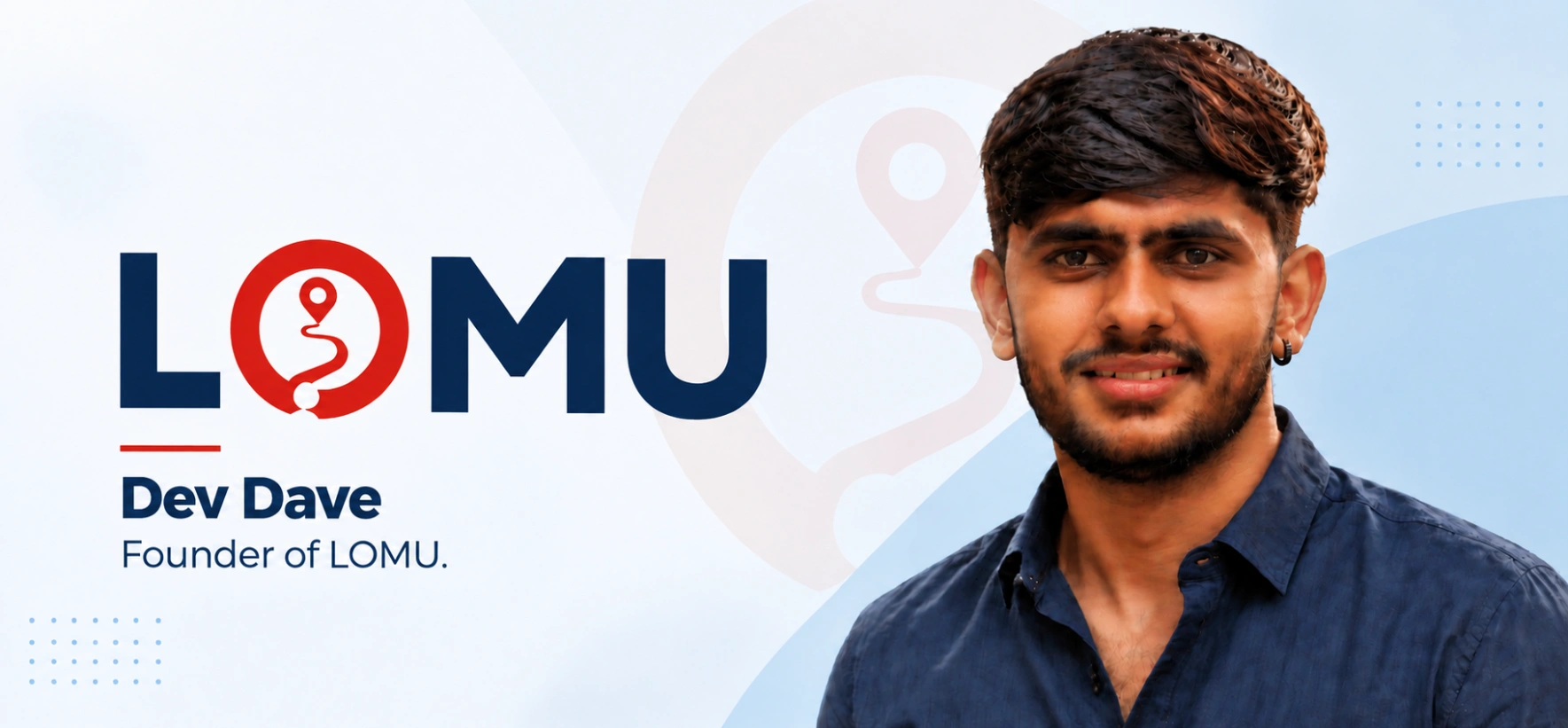
Dev Dave is a Malta-based entrepreneur and the Founder of LOMU, a digital moving platform operated by Dave Consultancy Limited. Born in India and raised in Malta from a young age, Dev has developed experience across entrepreneurship, family business, technology and AI-driven problem-solving.
Through LOMU, he is focused on improving the moving and transport experience in Malta by helping customers, independent transport professionals and businesses organise moving requests more clearly through structured information, photographs, locations, access details and preferred dates.
Dev’s wider interests include artificial intelligence, digital transformation, local service technology and startup development. His approach to entrepreneurship is centred on solving real customer problems, testing practical solutions, learning from user feedback and using technology to support better decision-making without losing the importance of trust, privacy and human judgement.
As he continues building LOMU, Dev is also exploring how AI and digital tools can help modernise local service businesses in Malta while keeping customer experience and practical value at the centre.
Connect with Dev Dave
Interested in working with or consulting with this expert? Submit your details below.