




- Does the Netherlands Have an Official Netherlands Digital Nomad Visa?
- Netherlands Digital Nomad Visa: Legal Visa Alternatives for Freelancers & Remote Founders
- Netherlands Digital Nomad Visa: Dutch Tax Laws & Financial Requirements for Remote Nomads
- Netherlands Digital Nomad Visa: Setting Up as a Remote Worker in the Netherlands
- Final Thoughts: Build a Relocation Plan Around Your Working Life
- Frequently Asked Questions About the Netherlands Digital Nomad Visa
A morning cycle beside a canal, a productive afternoon and a weekend train journey across Europe: the Netherlands makes a convincing case for working remotely. For freelancers and founders, the attraction goes beyond the scenery. You may be looking for a European business base, a professional community or simply a place where everyday life feels manageable.
But before comparing Amsterdam apartments, there is one question to settle: can you legally live there while continuing your work?
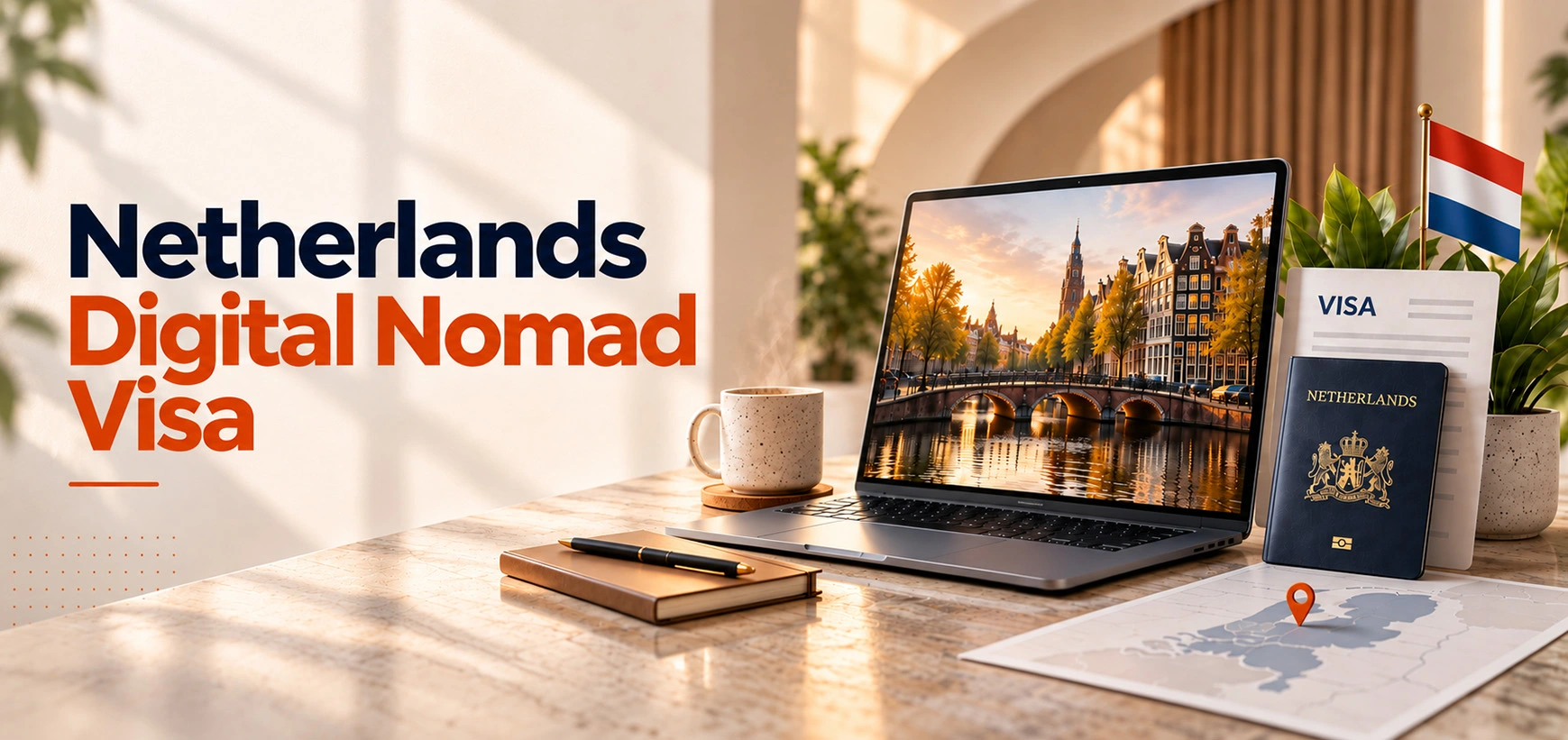
The Netherlands does not currently offer an official digital nomad visa. Its government business portal states this explicitly. There are other residence routes, but they serve specific purposes and come with their own conditions. A foreign salary or a portfolio of international clients does not automatically qualify you.
This Kolekr Insights guide explains the options, the financial considerations and the practical decisions that deserve attention before you move. The aim is to help you build a workable relocation plan without confusing a desirable destination with an accessible immigration route.
Does the Netherlands Have an Official Netherlands Digital Nomad Visa?
There is no dedicated Netherlands digital nomad visa application, published nomad income threshold or permit designed specifically for people working online for overseas employers.
That distinction matters when researching the country. An article may describe the Netherlands as “digital nomad friendly” while discussing a business residence permit. The lifestyle may suit remote workers, but immigration eligibility depends on the actual permit category.
Start with three questions: what nationality do you hold, are you genuinely self-employed, and how long do you intend to stay? These answers are more useful than your job title or whether your work happens through a laptop.
Netherlands Digital Nomad Visa: The Current Legal Reality for Remote Workers in Holland
For non-EU applicants, remote working arrangements need to fit an appropriate immigration route. Official guidance requires foreign self-employed professionals covered by these rules to hold a residence permit that authorises their work. The authorities can also examine whether an arrangement is genuine self-employment or employment in practice.
Consider a designer who chooses their clients, negotiates project fees and runs an independent business. Their circumstances differ from those of an employee working fixed hours under a manager, even if both work from home.
Renaming a salary “consultancy income” does not resolve that distinction. Before restructuring contracts, establish what your working relationship actually involves and which residence conditions would apply.
Tourist Schengen Rules Concerning Netherlands Digital Nomad Visa: Can You Work Remotely on a 90-Day Stay?
A Schengen short stay generally allows eligible visitors up to 90 days within any rolling 180-day period. The allowance covers the Schengen area collectively, so travelling from the Netherlands to another Schengen country does not restart it.
However, permission to visit does not automatically authorise work. The IND states that an employer may need a work permit when someone works during a short stay. Its guidance does not create a blanket exemption for remote employees simply because their employer is overseas.
For a planned working holiday, check your specific arrangement with the relevant Dutch authorities before booking. Describe the activities accurately: regular employment, freelance delivery and attending business meetings can raise different questions.
A scouting visit can still help you assess neighbourhoods, transport and housing. Plan it around activities permitted under your status rather than assuming a tourist admission covers a normal working schedule.
Netherlands Digital Nomad Visa: Legal Visa Alternatives for Freelancers & Remote Founders
The most useful alternatives are business routes. Their suitability depends on your nationality, the nature of your company and the evidence behind your application.
| Route | Who should investigate it? | Main question |
| DAFT | US citizens establishing a qualifying Dutch business | Does the proposed business meet treaty conditions? |
| Self-employed residence permit | Entrepreneurs and freelancers outside preferential routes | Can the business satisfy the applicable economic-interest assessment? |
| Startup residence permit | Founders developing an innovative business | Is the innovation credible, with suitable facilitator support? |
These are alternatives to explore, not interchangeable versions of a nomad visa. Official guidance treats entrepreneurship and innovative startups as distinct residence purposes.
If you are comparing European destinations, our Germany digital nomad visa guide details the residence options for freelancers and remote professionals.
Netherlands Digital Nomad Visa: The Dutch-American Friendship Treaty (DAFT) for US Entrepreneurs
DAFT gives qualifying US entrepreneurs access to a preferential immigration scheme when establishing their own business in the Netherlands. It is particularly relevant to Americans considering self-employment, rather than simply relocating an existing salaried role.
For most business forms, the IND specifies a minimum investment of €4,500. This is business capital, not an application fee or your personal living budget. For qualifying first-time treaty applications, registration and investment must be completed within six months of the decision letter’s date; renewal involves evidence of an active business and retained capital.
The practical question is whether you are prepared to operate a business, maintain records and support yourself through its activities. Someone attracted mainly by a temporary change of scenery should think carefully before taking on those commitments.
Netherlands Digital Nomad Visa: The Dutch Self-Employed Residence Permit & Points-Based System
The standard self-employed route assesses personal experience, the business plan and added value to the Netherlands. The IND describes qualifying scores of 30 points in each area, or 45 points for experience and 45 for the business plan. Freelancers must also have one or more Dutch commissions under the standard requirements.
This makes preparation important. A generic description of your services leaves obvious questions unanswered: who will buy them, why will they choose you, and how will the business remain financially viable?
Build your application around evidence. Relevant experience, credible forecasts, client commitments and a clear commercial proposition make your plans easier to assess. For a freelancer serving only overseas customers, the Dutch commission requirement deserves attention early.
Netherlands Digital Nomad Visa: The Startup Visa Pathway for Innovative Remote Business Owners
The startup residence permit supports innovative entrepreneurship. Applicants need an appropriate facilitator, a development plan, sufficient resources and an active role in the venture. Innovation can concern a new product, technology or way of organising business.
Think of the facilitator as part of the business relationship. Their experience, expectations and support should suit what you intend to build. Discuss costs, responsibilities and milestones before signing an agreement.
The permit lasts a maximum of one year and cannot be extended as a startup permit. Continuing afterwards requires another qualifying residence basis, such as the self-employed route.
That first year needs a realistic plan. Include product development, customer testing, finances and preparation for the next residence application.
Netherlands Digital Nomad Visa: Dutch Tax Laws & Financial Requirements for Remote Nomads
Immigration permission and tax obligations are separate questions. Establishing that you can live and work in the Netherlands does not tell you where every part of your income will be taxed.
Likewise, overseas clients do not necessarily keep your earnings outside the Dutch tax system. Review your personal position and business arrangements before moving, particularly if you retain property, employment or a company elsewhere.
Netherlands Digital Nomad Visa: Understanding Dutch Tax Residency & Paying Taxes on Foreign Income
In the Netherlands, your tax residence is based on your personal facts and circumstances. The Tax Administration considers factors such as where you spend your time, where your family lives, where you work and where you maintain healthcare arrangements. A day count alone should not be treated as a complete residency test.
If you live in the Netherlands, you generally need to declare your worldwide income, including income from abroad. However, declaring that income does not mean every amount will necessarily be taxed twice. Tax treaties and applicable relief determine the treatment.
For example, a consultant receiving payments into a foreign bank account still needs to examine their Dutch reporting obligations. The location of the account does not answer the underlying tax question.
Before departure, prepare a complete financial picture: salary, freelance profits, rental income, investments and company interests. Ask an adviser to review this against both countries’ rules. For employees, the employer should also assess the proposed overseas working arrangement before approving it.
Netherlands Digital Nomad Visa: Chamber of Commerce (KvK) Registration & Minimum Capital Rules
KvK registration records your business in the Dutch Business Register. It does not itself grant immigration permission. Keep registration, residence eligibility and tax obligations as separate items in your relocation checklist.
The one-off registration fee for a new business is €85.15 in 2026. Business capital requirements depend on the structure and any relevant immigration conditions; there is no universal “digital nomad deposit”.
For example, ordinary business-structure guidance provides options without minimum starting capital, while DAFT has its own investment condition. That distinction explains why two people establishing similar businesses may face different financial requirements.
| Financial item | What to budget for |
| Business registration | The applicable KvK fee |
| Immigration | Application costs and any professional assistance |
| Business capital | Requirements specific to your route and structure |
| Relocation | Travel, temporary accommodation and moving costs |
| Housing | Rent, deposit and separately charged services |
| Personal runway | Everyday expenses while income settles |
| Professional support | Accounting, tax review and administration |
Build your budget around the first several months, including delays. A business can have promising clients and still experience uneven cash flow when invoices, registration and housing arrangements overlap.
Netherlands Digital Nomad Visa: Setting Up as a Remote Worker in the Netherlands
There is evidence that remote work is well established locally. CBS reported that 80% of businesses in its 2025 survey scope enabled remote working, with the share broadly unchanged since 2022. This describes workplace practices, rather than immigration access.
For your own move, focus on the conditions that make an ordinary working week possible: a suitable home, reliable connectivity, manageable travel and enough separation between work and leisure.
Registration also matters. People expecting to live in the Netherlands for longer than four months must register as residents with the municipality, generally within five days of arrival. Registration provides a citizen service number, or BSN.
Ask about municipal registration before committing to accommodation. If you found your ideal room on the internet, it might be problematic if the room’s conditions are not compatible with residential use.
Netherlands Digital Nomad Visa: Finding Coworking Hubs, Co-Living Spaces, and Handling Housing Scarcity
Your coworking membership is more valuable than housing. CBS estimated that in 2025 there would be a shortage of almost 400,000 homes, or 4.8 per cent of the housing stock. These are dated national estimates, but they explain why accommodation can become a major relocation constraint.
Compare actual listings across Amsterdam, Rotterdam, Utrecht, The Hague and Eindhoven rather than assuming one city will automatically offer better value. Include commuting costs, available space and the surroundings you will use every day.
When assessing accommodation, ask:
- Does the arrangement allow municipal registration?
- Which utilities and services are included?
- What are the deposit and cancellation conditions?
- Is there a quiet, practical place to work?
- Can you verify the property and the person letting it?
Co-living may simplify an initial stay, but shared accommodation does not always suit frequent calls or focused work. Check the details behind the photographs.
For coworking, try a day pass before buying a membership. Test video calls, phone booths, opening hours and the atmosphere during busy periods. Your ideal workspace should support your routine; a visually impressive lounge is only useful if you can work comfortably there.
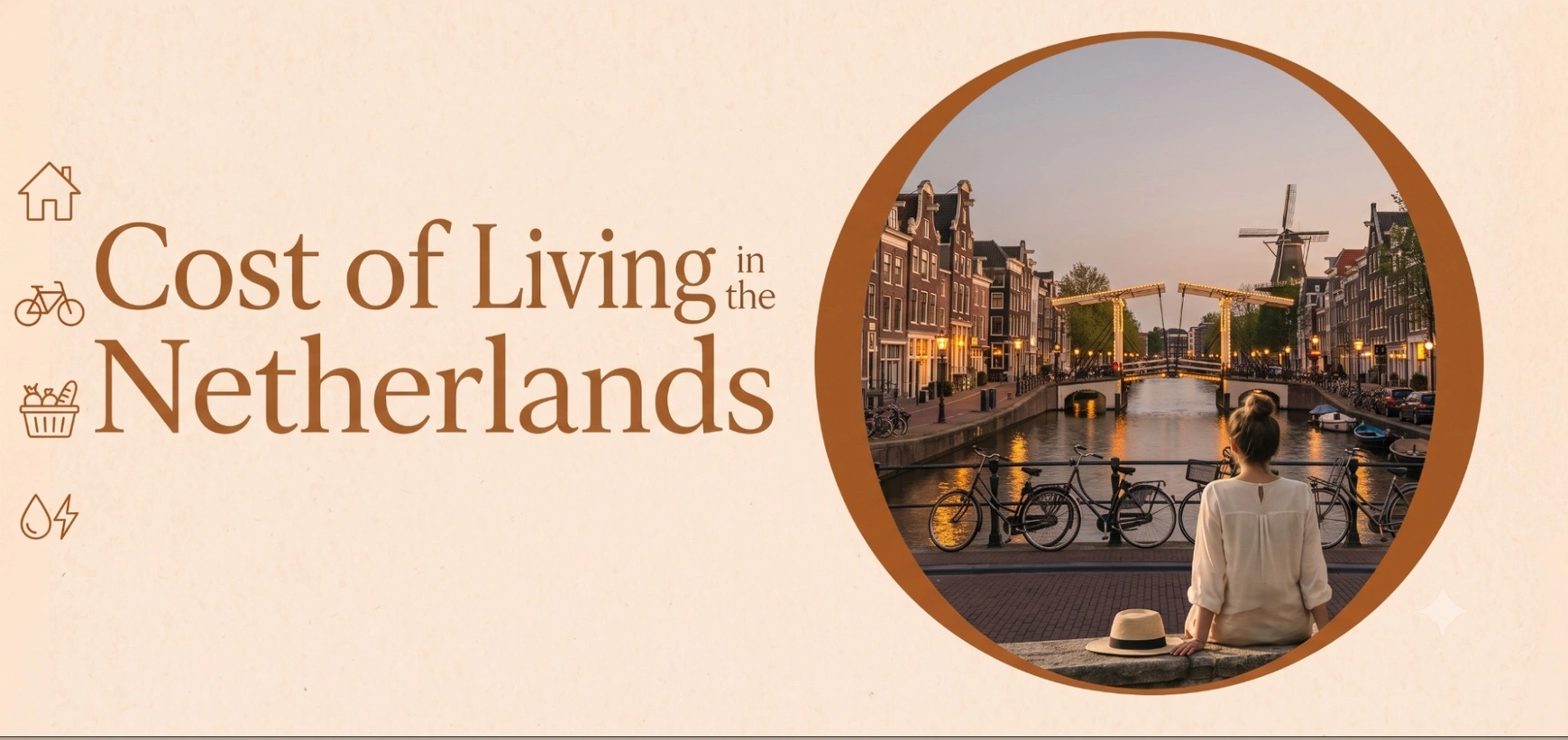
If you want a more in-depth look at housing, transport and everyday expenses, take a look at our guide on the cost of living in the Netherlands before you set your monthly budget.
Final Thoughts: Build a Relocation Plan Around Your Working Life
The Netherlands may suit a remote professional who wants a settled European base. The decision becomes clearer when you start with your legal route, then test the finances and housing against the life you actually want.
An American entrepreneur, an Indian freelancer and an overseas employee can have similar working routines while facing very different relocation options. Understand your own position before making commitments.
At Kolekr Insights, we examine European business and relocation choices through practical questions like these. A successful move needs more than an appealing destination. It needs a lawful working arrangement, a sustainable budget and a home where everyday life works.
Frequently Asked Questions About the Netherlands Digital Nomad Visa
1. Is a Netherlands digital nomad visa available in 2026?
No dedicated permit at present. For staff working remotely, look for residence categories that match their nationality and activities.
2. Can I work remotely on a Dutch tourist visa?
Don’t count on it. Work is not automatically permitted for short-stay admission and may require further approval. Before you travel, check your planned activities.
3. Is DAFT available to Indian citizens?
DAFT is the US treaty path. Indian applicants should explore another appropriate basis of residence such as self-employment or innovative entrepreneurship.
4. Does a startup permit guarantee a longer stay?
No. It lasts up to one year; continuing afterwards requires meeting the conditions of another residence category.
5. Will foreign freelance income need to be declared?
If you live in the Netherlands, worldwide income generally needs to be reported. The final tax treatment is subject to relief and treaty rules.