





From insurance claims and drug research to autonomous driving and cybersecurity, these European AI companies are showing where artificial intelligence is already creating practical business value.
Artificial intelligence is everywhere in business conversations, but much of the discussion still revolves around models, valuations and funding announcements. For companies actually trying to use AI, the more important question is much simpler: what problem does it solve?
Across Europe, a growing group of technology companies is applying AI to problems that existed long before generative AI became mainstream. Insurers want to settle claims faster. Global businesses need to communicate across languages. Pharmaceutical companies need better ways to analyse biomedical information. Developers need to build and secure software faster, while manufacturers and mobility companies are looking for ways to bring AI into the physical world.
That is the focus of this KOLEKR Insights list.
Rather than ranking companies simply by funding or valuation, we looked for European AI companies with a clear business problem, credible evidence of adoption and a practical reason for customers to use the technology.
European AI Companies Solving Real Problems
| Rank | Company | Country | Business Problem | Main AI Application |
| 1 | Wayve | UK | Making autonomous driving scalable | Embodied AI / autonomous driving |
| 2 | DeepL | Germany | Language barriers in international business | Translation and language AI |
| 3 | Tractable | UK | Slow vehicle insurance claims | Computer vision |
| 4 | Synthesia | UK | Expensive and slow video production | AI-generated enterprise video |
| 5 | Mistral AI | France | Customisable enterprise AI | Foundation models and industrial AI |
| 6 | Lovable | Sweden | Slow software development | AI software development |
| 7 | Quantexa | UK | Fragmented enterprise and risk data | Decision intelligence |
| 8 | Owkin | France | Slow biomedical research and drug discovery | Healthcare AI |
| 9 | Aikido Security | Belgium | Increasing software security complexity | AI cybersecurity |
| 10 | Axelera AI | Netherlands | Cost and power demands of AI computing | AI semiconductors |
These companies operate in very different industries, which is part of what makes the European AI ecosystem interesting. The strongest opportunities are no longer limited to general-purpose assistants. AI is moving into insurance, mobility, healthcare, finance, cybersecurity, industrial infrastructure and enterprise operations.
Wayve — Making Autonomous Driving Work Beyond One City
Country: United Kingdom
Sector: Mobility & Automotive AI
Autonomous driving has always faced a difficult scaling problem. A system that performs well in one carefully mapped city does not automatically understand unfamiliar roads, driving cultures or traffic conditions somewhere else.
London-based Wayve is approaching that problem with an AI system designed to learn driving behaviour and generalise across locations rather than relying entirely on highly detailed maps and location-specific engineering.
The scale of its testing makes it particularly interesting. During its AI-500 programme, Wayve reported testing across more than 500 cities and 1.45 million kilometres, giving the company experience across very different driving environments.
Wayve also raised $1.2 billion in Series D funding in February 2026, with participation from Microsoft, NVIDIA, Uber, Mercedes-Benz, Nissan and Stellantis.
What the business problem looks like
For vehicle manufacturers and mobility companies, autonomous driving only becomes commercially valuable when it can work across markets without requiring an enormous engineering project every time the vehicle enters a new city.
That is why Wayve’s real challenge is not simply making a car drive itself. It is making autonomous-driving technology adaptable enough to become commercially deployable at scale.
Key signals
- 500+ cities tested
- 1.45M kilometres reported
- $1.2B Series D in 2026
- Partnerships involving major automakers and mobility companies
KOLEKR view: Wayve is one of the clearest examples of European AI moving from software interfaces into the physical world.
DeepL — Making International Business Easier to Understand
Country: Germany
Sector: Language AI
Language remains a very practical barrier for companies operating across Europe. Sales teams, customer-service departments, legal teams and marketing departments regularly work across several languages, and traditional translation processes can become slow and expensive at scale.
DeepL started in Cologne in 2017 and has grown from a translation product into a wider language platform covering translation, writing and voice communication.
The company says its technology is now used by more than 200,000 business teams, alongside millions of individual users globally.
The value proposition is straightforward. A business expanding from Germany into France, Spain or Poland does not want every new language to create another operational bottleneck.
Where DeepL creates value
For international businesses, language AI can help reduce the cost and friction involved in translating internal documents, customer communication, product information and marketing content.
Europe is particularly well suited to this type of technology because companies often encounter language complexity much earlier in their growth journey than businesses operating inside one large single-language market.
Key signals
- Founded in Cologne in 2017
- 200,000+ business teams reported
- Translation, writing and voice products
- Strong relevance for cross-border European businesses
KOLEKR view: DeepL solves a problem that looks simple until a business starts expanding internationally. At that point, language quickly becomes an operational issue rather than a communication preference.

Tractable — Using AI to Speed Up Insurance Claims
Country: United Kingdom
Sector: Insurance Technology
Vehicle insurance claims involve a surprisingly large amount of manual work. Damage must be photographed, assessed, priced and approved before repairs or settlement can move forward.
Tractable applies computer vision to this process. Its AI analyses images of vehicle damage and helps insurers assess the severity of a claim and estimate repairs.
The important point is that the technology is already operating inside real insurance workflows.
In one documented deployment with Admiral Seguros in Spain, 12,000 touchless claims were processed using Tractable AI. The case study reported that 90% of estimates were handled without human appraisers and 98% were completed in under 15 minutes.
Tractable has also worked with insurers including PZU and Foyer across European markets.
Why insurers care
Insurance customers rarely care about the technical architecture behind a claims platform. They care about how quickly they can get an answer and move forward.
For insurers, reducing manual assessment can also lower operational workload and allow human specialists to focus on more complicated cases.
Key signals
- 12,000 touchless claims in a documented Admiral Seguros deployment
- 90% processed without human appraisers in that deployment
- 98% completed within 15 minutes
- Insurance deployments across multiple European markets
KOLEKR view: Tractable shows what commercially useful AI often looks like: an old process becomes faster without the customer needing to understand anything about the technology behind it.

Synthesia — Turning Business Video Into a Scalable Format
Country: United Kingdom
Sector: Enterprise Communication
Companies use video for employee onboarding, product education, compliance training and internal communication, but producing professional video repeatedly is expensive and time-consuming.
Synthesia uses AI avatars and synthetic voices to allow businesses to create videos without organising a traditional filming process every time something needs to be updated.
That becomes especially useful for international companies. Training material that changes regularly can be edited and translated without reshooting an entire video library.
The company reported in 2026 that its contracts worth more than $100,000 had tripled over the previous 12 months, while its platform was being used by a large share of Fortune 100 companies.
The bigger business opportunity
The strongest use case is not simply replacing presenters with AI avatars. It is making video behave more like editable digital content.
For HR, training and product teams, that could mean faster updates, easier localisation and lower production overhead.
Key signals
- Growing enterprise adoption
- Large contracts increased significantly
- Multilingual enterprise video
- Use cases across training, onboarding and internal communication
KOLEKR view: Synthesia becomes much more interesting when viewed as a productivity tool rather than an AI-avatar company.

Mistral AI — Building AI for European Enterprises and Industry
Country: France
Sector: Enterprise & Foundation AI
Mistral AI is one of Europe’s most prominent AI companies, but funding alone is not what makes it relevant to this list.
The more interesting question is whether powerful AI models can be adapted to the needs of European businesses operating in industries where security, customisation, infrastructure and control matter.
In September 2025, Mistral announced a €1.7 billion Series C at an €11.7 billion post-money valuation, led by semiconductor equipment manufacturer ASML. The companies also announced a strategic partnership focused on using AI in engineering and industrial environments.
That relationship gives Mistral a more concrete industrial story than simply competing in the consumer chatbot market.
Why this matters for European industry
Manufacturers, engineering firms, financial institutions and governments often require AI systems that can work with specialist information and tighter operational controls.
Mistral’s opportunity is therefore not only to build sophisticated models, but to make those models useful inside organisations with complex requirements.
Key signals
- €1.7B Series C
- €11.7B announced valuation
- Strategic relationship with ASML
- Focus on customisable enterprise AI
KOLEKR view: Mistral will become more interesting as the conversation moves away from “How powerful is the model?” towards “What can European companies actually do with it?”

Lovable — Reducing the Distance Between an Idea and Working Software
Country: Sweden
Sector: Software Development
Most businesses have more software ideas than engineering capacity.
A founder may want to test a new product. A marketing team may need an internal dashboard. An operations team may have a workflow that could be automated, but the project never becomes important enough to reach the top of a developer backlog.
Stockholm-based Lovable is trying to reduce that gap.
Its platform allows users to describe a web application using natural language and generate a working product that can include frontend interfaces, backend systems, databases and authentication.
In August 2026, reporting around its latest funding round valued the company at $13.3 billion following a $400 million Series C. More than 60 million projects had reportedly been created on the platform.
Why businesses are paying attention
The most important question is not whether AI will replace professional developers. That debate often misses the more immediate opportunity.
Tools such as Lovable could allow companies to build prototypes, internal applications and experiments that previously would never have received engineering resources.
Key signals
- Stockholm-based
- $400M Series C reported in 2026
- $13.3B reported valuation
- 60M+ projects reported
KOLEKR view: The biggest impact may come from expanding the number of people who can turn a business problem into working software.
Quantexa — Connecting the Data Businesses Already Have
Country: United Kingdom
Sector: Decision Intelligence & Financial Risk
Large organisations rarely suffer from a lack of data. Their problem is that information is often scattered across departments, systems and databases that do not naturally connect.
That makes fraud detection, customer due diligence, risk analysis and operational decision-making much harder.
Quantexa uses AI and contextual analytics to identify relationships between people, organisations, transactions and other data points.
The company reported that more than 25% of the world’s 50 largest banks had deployed its Decision Intelligence Platform. In 2026, it also announced a £175 million, 10-year partnership with HM Revenue & Customs in the UK.
Why this is an AI problem
Companies can buy increasingly powerful AI models, but those models still depend on the information beneath them.
If customer, transaction and risk data remain fragmented, the quality of AI-supported decisions will remain limited.
Key signals
- Strong banking and regulated-industry adoption
- Used by major financial institutions
- £175M HMRC partnership announced in 2026
- Focus on connected enterprise data and risk
KOLEKR view: Quantexa addresses a less glamorous but fundamental part of enterprise AI: making existing data understandable enough to support better decisions.
Owkin — Applying AI to Drug Research and Cancer
Country: France
Sector: Healthcare & Biotechnology
Drug development is slow because biological systems are complicated, clinical data is fragmented and researchers need to make difficult decisions with incomplete information.
Owkin applies AI to biomedical research, combining machine learning with multimodal patient and biological data.
The company was founded in 2016 by oncologist Thomas Clozel and machine-learning researcher Gilles Wainrib.
Its partnerships provide an important sign of real-world relevance. Owkin has worked with pharmaceutical companies including Sanofi and AstraZeneca, while its technology is also being tested within major healthcare and research environments.
Why the problem is important
Healthcare AI should be treated more carefully than many other categories. A productivity tool can be judged by time saved; medical technology ultimately needs to stand up to scientific and clinical scrutiny.
That makes partnerships with pharmaceutical companies, hospitals and research institutions particularly important signals.
Key signals
- Founded in 2016
- Partnerships with Sanofi and AstraZeneca
- Collaboration with major cancer and healthcare institutions
- AI focused on biomedical research and drug development
KOLEKR view: Owkin is tackling one of AI’s highest-value opportunities, but also one of its hardest: turning better data analysis into better science and eventually better patient outcomes.

Aikido Security — Helping Security Teams Keep Up With Faster Software Development
Country: Belgium
Sector: Cybersecurity
AI is making it easier for developers to produce software faster, but faster development creates a second problem: security teams must review and protect more code at the same speed.
Aikido Security brings different areas of application security into one platform, including code, cloud, runtime and software supply-chain risk.
The Belgian company has also expanded into AI-assisted penetration testing, where specialised AI agents can search for vulnerabilities and validate potential weaknesses.
In January 2026, Aikido announced a $60 million Series B at a $1 billion valuation and said more than 100,000 teams were using the platform globally.
Why this problem is growing
Software development is accelerating.
If security remains largely manual while code generation becomes increasingly automated, companies create a widening gap between how quickly software is built and how quickly it can be secured.
Key signals
- $60M Series B
- $1B announced valuation
- 100,000+ teams reported
- Customers include major international organisations
KOLEKR view: AI-assisted development is likely to create more demand for AI-assisted cybersecurity, not less.
Axelera AI — Reducing the Cost of Running AI in the Physical World
Country: Netherlands
Sector: Semiconductors & Edge AI
Every AI application eventually meets a physical constraint.
Models require processors, electricity and cooling. That becomes a particularly difficult problem when companies want AI running inside factories, cameras, robots or retail systems rather than only in large data centres.
Eindhoven-based Axelera AI develops specialised processors designed for AI inference, allowing models to run closer to where the data is generated.
In February 2026, the company announced more than $250 million in new funding, bringing total capital raised above $450 million. It also reported shipping technology to its 500th global customer, with applications across manufacturing, robotics, retail, agritech and security.
Why edge AI matters
Sending every camera feed or sensor reading to a distant data centre is not always economical or practical.
Running AI locally can reduce latency and bandwidth needs while making intelligent systems more useful in physical environments.
Key signals
- Founded in 2021
- Based in Eindhoven
- $250M+ funding announced in 2026
- $450M+ total capital raised
- 500+ customers reported
KOLEKR view: The future of AI will depend on infrastructure as much as software. If intelligence is going to move into factories, robots and machines, it needs computing that can move with it.
What These Companies Reveal About European AI
The most interesting part of this list is not which company sits at number one. It is the variety of problems being addressed.
Europe’s AI opportunity appears increasingly connected to industries where the continent already has expertise: automotive, pharmaceuticals, manufacturing, financial services, industrial technology and regulated enterprise markets.
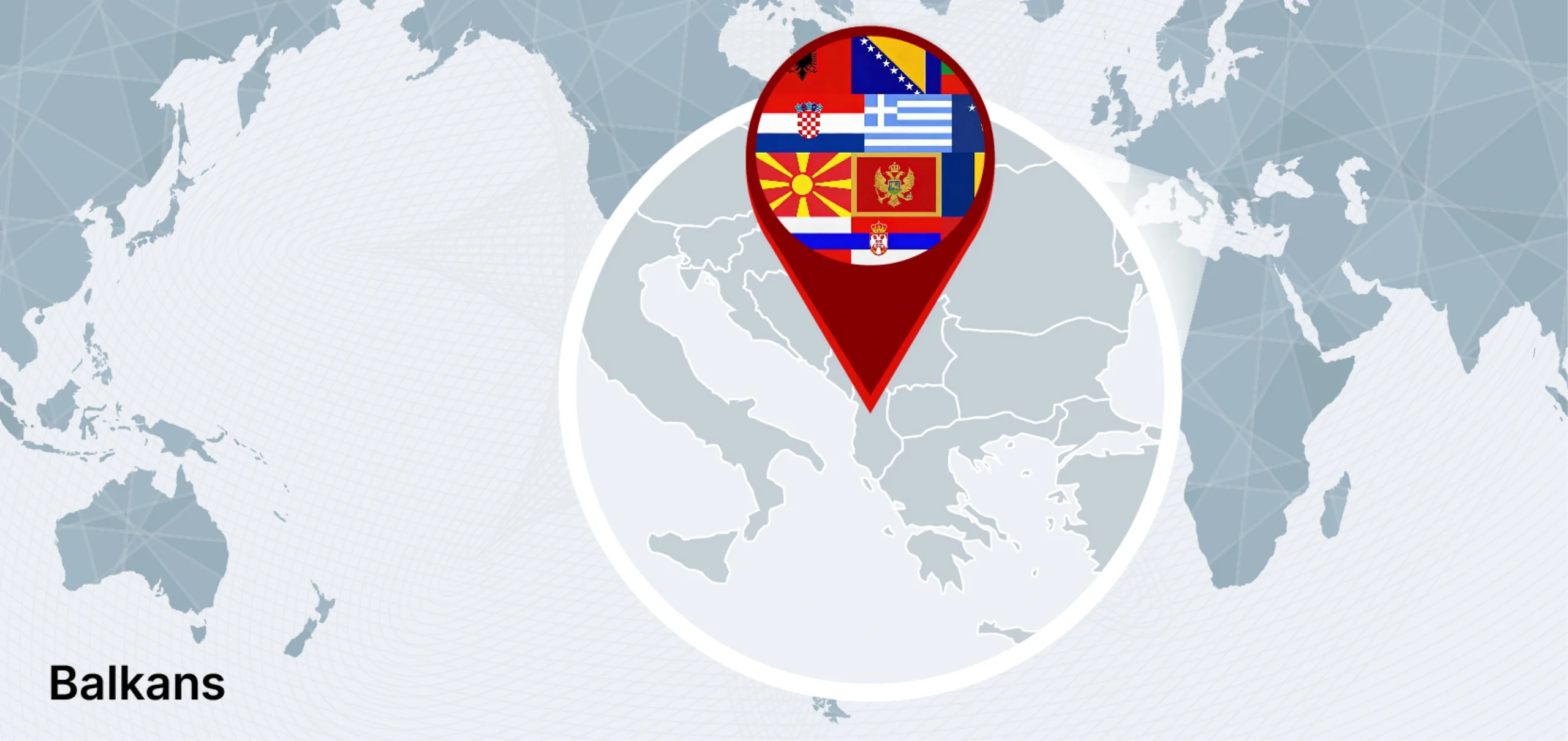
To get to know about the emerging AI startups in the area, you can explore our article on the Top AI Startups in the Balkans 2026.
AI Is Moving Beyond the Screen
Several companies on this list demonstrate how broad the AI market is becoming.
| AI Layer | Companies |
| Physical AI & Mobility | Wayve |
| Language AI | DeepL |
| Insurance AI | Tractable |
| Enterprise Content | Synthesia |
| Foundation Models | Mistral AI |
| Software Development | Lovable |
| Decision Intelligence | Quantexa |
| Healthcare AI | Owkin |
| Cybersecurity AI | Aikido Security |
| AI Infrastructure | Axelera AI |
This matters because the next stage of AI adoption is unlikely to be dominated by a single product category.
Some of the largest opportunities may emerge where AI becomes almost invisible inside an existing business process.
Five Business Problems AI Is Already Tackling
Looking across these companies, most of the strongest use cases fall into a few recognisable categories.
1. Processes that take too long
Insurance claims and video production are good examples. Businesses are using AI because existing workflows involve too many manual steps.
2. Information that is difficult to process
Quantexa and Owkin both work with complex data environments where humans struggle to connect all the relevant information efficiently.
3. Skills that are expensive or scarce
Lovable lowers the technical barrier to software creation, while DeepL reduces dependence on manual language workflows.
4. Systems that need to make decisions in real time
Wayve and Axelera AI operate where computing needs to interact with the physical world quickly rather than waiting for a centralised process.
5. Risks growing faster than teams can manage
Aikido Security reflects a wider problem in cybersecurity: more software means more potential vulnerabilities.
What Founders Can Learn From Europe’s Strongest AI Companies
The companies differ enormously, but their business logic has several things in common.
Start with the problem, not the AI
“Adding AI” is not a business model.
The stronger question is whether a customer has a recurring problem that is expensive, slow, risky or difficult to scale.
Look for measurable value
Businesses eventually want to know what changed.
Useful measures include:
- Time saved
- Cost reduced
- Claims processed faster
- Risk avoided
- Development capacity increased
- Revenue unlocked
- Manual work removed
- Accuracy improved
Industry knowledge matters
General-purpose AI is becoming widely available.
Understanding insurance workflows, biological research, automotive systems or financial risk is much harder to copy.
That industry expertise can become as important as the underlying model.
Funding is a signal, not proof
Several companies on this list have billion-dollar valuations.
That can indicate investor confidence and give a company resources to expand, but it does not automatically prove customer value.
For this reason, the ranking gives greater weight to real adoption and clearly identifiable business problems than to fundraising alone.
How We Selected the Companies
KOLEKR Insights assessed companies across five areas.
| Selection Factor | Weight |
| Importance and clarity of the problem solved | 30% |
| Evidence of real-world adoption | 25% |
| Business or operational impact | 20% |
| International scale and relevance | 15% |
| Technology differentiation | 10% |
Funding, valuation and investor backing were used as supporting context rather than the main ranking criterion.
We prioritised company disclosures, institutional sources and established reporting where additional verification was required.
Research updated: August 2026.
Final Ranking: European AI Companies Solving Real Business Problems
- Wayve — Autonomous Driving
- DeepL — International Business Communication
- Tractable — Insurance Claims
- Synthesia — Enterprise Video
- Mistral AI — Enterprise & Industrial AI
- Lovable — Software Development
- Quantexa — Fraud, Risk & Decision Intelligence
- Owkin — Biomedical Research & Drug Discovery
- Aikido Security — Cybersecurity
- Axelera AI — AI Computing
These are not necessarily the ten largest AI companies in Europe, nor are they simply the companies that have raised the most money.
They are here because each one connects artificial intelligence to a problem that businesses already recognise.
That distinction is becoming increasingly important.
The companies likely to create the most durable value from AI may not be those talking the loudest about artificial intelligence. They may simply be the ones that make an expensive, frustrating or complicated part of business noticeably easier.