





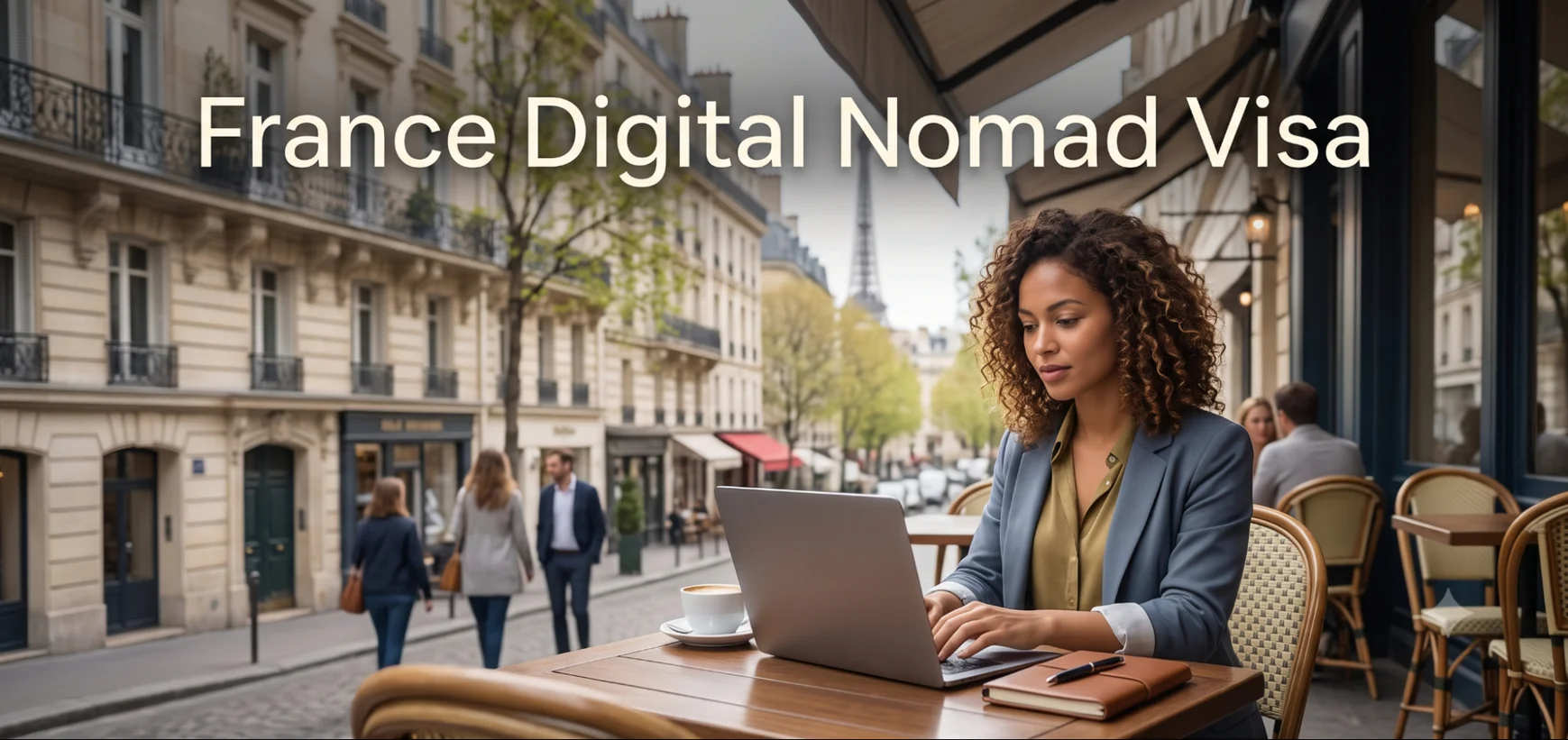
- France Digital Nomad Visa: Does France Offer an Official Digital Nomad Visa?
- France Digital Nomad Visa Alternatives: Legal Options for Remote Workers
- Cost of Living in France for Digital Nomads
- Monthly Cost of Living in Paris for Remote Workers
- Monthly Cost of Living Outside Paris
- Best French Cities for Digital Nomads
- France Digital Nomad Visa Income Requirements and Financial Planning
- France Digital Nomad Visa: Tax Obligations, Business Setup & Practical Living Guide
- France Digital Nomad Visa: Micro-Entreprise Registration for Freelancers
- France Digital Nomad Visa: Healthcare Requirements and PUMA Registration
- France Digital Nomad Visa: Housing Costs and Rental Reality
- Average Rental Costs in Popular French Cities
- France Digital Nomad Visa: Coworking and Remote Work Infrastructure
- France Digital Nomad Visa: Setting Up Your Life After Arrival
- France Digital Nomad Visa: Advantages and Challenges
- France Digital Nomad Visa vs Other European Remote Work Visas
- Frequently Asked Questions About France Digital Nomad Visa
- Final Thoughts: Is France Worth Considering for Remote Workers?
France has always attracted people who dream about a better work-life balance.
For some, it is the idea of starting the morning with a coffee at a small neighbourhood café in Paris. For others, it’s working from a sunny flat on the Mediterranean coast, spending weekends exploring historic villages, or building a European business network while keeping a remote career.
The rise of remote work has made this lifestyle possible for thousands of professionals worldwide.
However, there is one important detail many remote workers discover only after researching relocation:
France does not currently have an official France digital nomad visa.
France has not created a specific visa category for people who earn income remotely while living abroad, unlike Spain, Portugal, Croatia or Greece.
That does not mean, however, that remote employees can’t relocate to France.
Freelancers, entrepreneurs, and skilled professionals have a number of existing French residence options to choose from that allow them to live legally in France and develop their professional life in the country.
At KOLEKR Insights, we explore global business, mobility and lifestyle trends to empower entrepreneurs and professionals to find opportunities beyond borders. This guide explains the realistic options, costs, taxes and practicalities for anyone wanting to work remotely from France in 2026.
France Digital Nomad Visa: Does France Offer an Official Digital Nomad Visa?
The short answer is:
No, France does not currently offer a dedicated France digital nomad visa.
This often creates confusion because France is one of Europe’s most attractive destinations for remote professionals, yet it does not have a simple “apply online and work remotely” visa programme.
Instead, France evaluates applicants based on their professional situation.
A freelancer, entrepreneur, researcher, or highly skilled professional may qualify through different residence routes.
The French immigration system focuses on questions such as:
- What type of work will you perform?
- Are you financially independent?
- Are you creating economic value in France?
- Do you have professional experience?
- Can you support yourself without relying on public assistance?
For remote workers, choosing the correct legal route is more important than searching for a specific “digital nomad visa”.
France Digital Nomad Visa: Current Legal Landscape for Remote Workers
Remote work has changed how people think about international relocation.
A person can now work for a company in the United States, manage clients in Europe, or run an online business from almost anywhere.
However, immigration rules have not always evolved at the same speed.
A tourist entering France cannot simply assume:
“I earn money online, therefore I can work from France.”
Living in France and working from France are two separate legal considerations.
Before relocating, remote workers should understand:
| Area | What You Need to Consider |
| Visa status | Whether your residence permission allows professional activity |
| Income source | Foreign employer, freelance clients, or own business |
| Tax residency | Whether France considers you a tax resident |
| Healthcare | Insurance and social security requirements |
| Business registration | Whether you need French registration |
For many professionals, the right approach is not finding a “digital nomad visa”, but selecting the correct French visa category.
France Digital Nomad Visa: Visitor Visa Restrictions for Remote Workers
One of the most common mistakes remote workers make is choosing a visitor visa without understanding the restrictions.
A long-stay visitor visa allows people to live in France for an extended period, but it generally does not provide permission to carry out professional activities.
This creates a challenge for digital nomads because their lifestyle is based around working online.
For example:
A person who spends six months in France while managing a foreign business may still face questions about:
- Where the work is performed
- Whether they have permission to work
- Whether they have tax obligations
The safest approach is to select a visa route that matches your actual professional activity.
France Digital Nomad Visa Alternatives: Legal Options for Remote Workers
Although there is no official France digital nomad visa, several alternatives may work depending on your profile.
Comparing business establishment costs, laws, talent availability, and long-term growth potential is crucial for entrepreneurs who want to go beyond freelancing and establish a company in Europe. We examine how various European markets assist entrepreneurs and global companies in our guide on the Best Countries in Europe to Start a Business in 2027.
France Digital Nomad Visa Alternative: Profession Libérale Visa for Freelancers
The Profession Libérale route is one of the most relevant options for freelancers, consultants and independent professionals.
This is for individuals working alone providing professional services.
Common profiles are:
- Software developers
- Digital marketing specialists
- Designers
- Consultants
- Writers
- Business advisors
- Independent specialists
In general, to be successful in your application, you will need to demonstrate that your activity is genuine and financially viable.
Typical documents may include:
- Professional background
- Client contracts
- Business plan
- Income proof
- Financial resources
Estimated Initial Costs
| Expense | Approximate Cost |
| Visa application fees | €100–€200 |
| Document translation/legalisation | €100–€500 |
| Insurance | €50–€150/month |
| Business registration support (optional) | €200–€1,000 |
France Digital Nomad Visa Alternative: Talent Passport for High Earners
The Talent Passport scheme aims to attract skilled professionals from abroad.
Maybe it suits:
- Highly qualified employees
- Researchers
- Startup founders
- Innovative entrepreneurs
- Investors
This path is generally more suitable for professionals with stronger credentials or business plans.
It can provide a more structured path for founders building technology companies, agencies or international businesses.
France Digital Nomad Visa Alternative: Entrepreneur Visa for Business Owners
Entrepreneur residence options are available to entrepreneurs looking to set up business operations in France.
This can be suitable for:
- Agency owners
- Startup founders
- Consultants expanding into Europe
- Business owners opening French operations
Applicants usually need:
- Business plan
- Market opportunity
- Financial preparation
- Evidence of professional capability
Cost of Living in France for Digital Nomads
The biggest question most remote workers ask is:
The answer depends heavily on the city.
Paris and smaller French cities can feel like completely different countries when it comes to expenses.
Even while France offers a high-end European lifestyle, remote workers who are researching relocation choices frequently look into less expensive European locations as well. Romania has grown in popularity among remote workers due to its robust internet infrastructure, expanding technology environment, and cheaper cost of living. To compare another European location for remote work, read our comprehensive guide on Cost of Living in Romania: Monthly Expenses, Rent, Salaries & Living Costs.
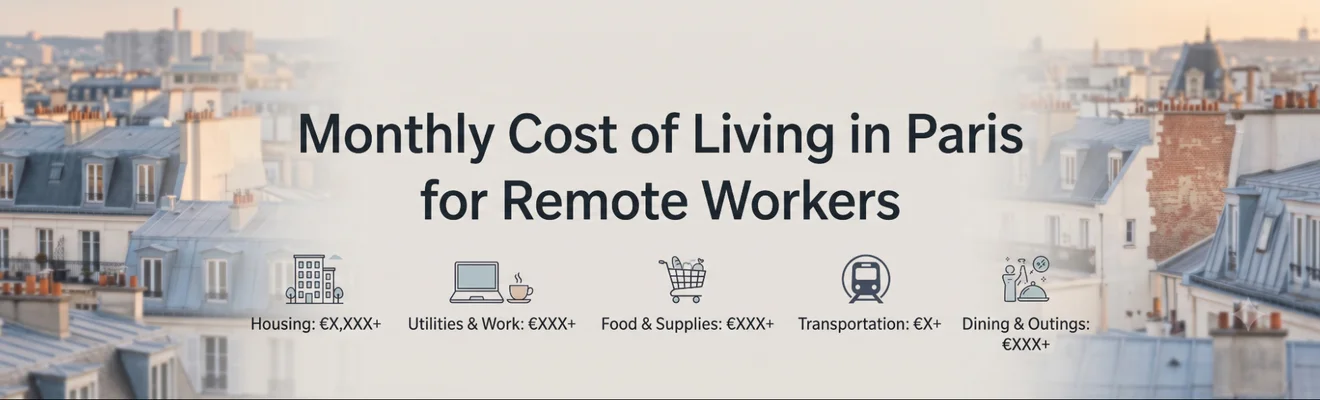
Monthly Cost of Living in Paris for Remote Workers
Paris offers unmatched networking opportunities, but it comes with a premium price tag.
| Expense | Monthly Cost |
| Studio apartment | €1,200–€1,800 |
| Groceries | €350–€500 |
| Restaurants & cafés | €200–€400 |
| Public transport | Around €86 |
| Internet + mobile | €40–€60 |
| Coworking membership | €200–€400 |
| Health insurance | €50–€150 |
| Entertainment | €200+ |
Estimated monthly budget: €2,100–€3,000
Monthly Cost of Living Outside Paris
Cities such as Lyon, Bordeaux, Toulouse, and Montpellier offer a more balanced lifestyle.
| Expense | Monthly Cost |
| Rent | €700–€1,200 |
| Food | €300–€450 |
| Transport | €40–€80 |
| Coworking | €150–€300 |
| Lifestyle expenses | €300–€500 |
Estimated monthly budget: €1,500–€2,200
Best French Cities for Digital Nomads
Paris — Best for Business Networking
Average monthly cost:
€2,500+
Best for:
- Entrepreneurs
- Investors
- International networking
- Startup ecosystem
Challenge:
Housing costs are significantly higher.
Lyon — Best Overall Balance
Average monthly cost:
€1,800–€2,300
Lyon combines:
- Strong economy
- Excellent food culture
- Lower costs than Paris
- Good transport connections
Nice — Best for Coastal Lifestyle
Average monthly cost:
€2,000–€2,700
Ideal for professionals who want:
- Mediterranean climate
- Outdoor lifestyle
- International community
Bordeaux — Best for Quality of Life
Average monthly cost:
€1,700–€2,200
Popular among:
- Freelancers
- Creatives
- Lifestyle-focused professionals
France Digital Nomad Visa Income Requirements and Financial Planning
France does not have a specific digital nomad visa and therefore no income requirement (unlike some other European countries).
However, applicants have to show financial stability.
A comfortable remote worker budget:
| Lifestyle | Recommended Monthly Income |
| Basic lifestyle | €2,000/month |
| Comfortable lifestyle | €3,000/month |
| Premium lifestyle | €4,000+/month |
A steady flow of contracts and income can strengthen an application for a freelancer.
Many professionals also maintain:
- Emergency savings
- Health insurance
- Client agreements
- Business documentation
France Digital Nomad Visa: Tax Obligations, Business Setup & Practical Living Guide
France Digital Nomad Visa: Understanding French Tax Obligations as a Remote Worker
Taxes are one of the most important topics remote workers should understand before moving to France.
Many professionals assume that working for a foreign company means they will not have French tax responsibilities.
That is not always true.
There are many variables in your tax situation, such as:
- How long you stay in France
- Where your principal residence is situated
- Where your economic interests are at their highest
- Your professional framework
- Existing tax treaties between countries
In most cases, if you stay for a significant period of time in France and you make your main home there, you could become a tax resident of France.
Once you are considered a tax resident, France can tax your worldwide income.
France Digital Nomad Visa: How Tax Residency Works
You are a tax resident in France if one or more of the following conditions is satisfied:
- They are headquartered in France
- They are mostly based in France
- They work professionally primarily in France
- Their main economic interests are in France
Every situation is different, especially for entrepreneurs and remote business owners.
Consider a software developer who works remotely for a US company, a freelancer for European clients, and a founder of an online business – all of these can have different tax implications.
Before you move, get professional tax advice to avoid unexpected liabilities.
France Digital Nomad Visa: Micro-Entreprise Registration for Freelancers
The Micro-Entreprise structure is one of the easiest ways for many self-employed people to work legally in France.
It is popular with:
- Consultants
- Designers
- Developers
- Marketing specialists
- Coaches
- Creative professionals
The system allows freelancers to register their activity and to run their business with a rather simple administration.
How Micro-Entreprise Works in France
Freelancer usually :
- Records of their professional activity
- Obtains a business identification no.
- Revenue statement for the period
- Pays social contributions on turnover
The accounting requirements are far less complex than traditional companies.
But freelancers need to keep good books and know what they are responsible for.
Micro-Entreprise Costs for Remote Workers
Example:
A freelance consultant earns:
€50,000 annual revenue
Possible costs include:
| Expense | Approximate Range |
| Social contributions (URSSAF) | Around 20–25% depending on activity |
| Income tax | Depends on personal situation |
| Accountant support (optional) | €500–€1,500/year |
| Business software/tools | €20–€100/month |
The upside is that it is easy.
The problem is that freelancers have to be careful with their prices because social contributions eat into their income.
France Digital Nomad Visa: Healthcare Requirements and PUMA Registration
The French health care system is world-famous.
Healthcare planning is an important part of the transition to moving to France for remote employment.
Many expats are required to have private health insurance before they can access the French healthcare system.
Healthcare Costs in France
| Service | Approximate Cost |
| Private health insurance | €50–€150/month |
| General doctor consultation | Around €25+ |
| Specialist consultation | Higher depending on speciality |
| Prescription medicines | Often partially covered |
If they fulfil residency conditions, long-term residents may be qualified for Protection Universelle Maladie (PUMA).
PUMA provides eligible citizens with access to France’s public healthcare system.
France Digital Nomad Visa: Housing Costs and Rental Reality
Accommodation is one of the main obstacles faced by newcomers.
Rental homes are in great demand in France, particularly in:
- Paris
- Nice
- Lyon
- Bordeaux
Landlords frequently ask for:
- Evidence of income
- Employment records
- Statements from banks
- Prior renting experience
- Details about the guarantor
International remote workers may find this challenging at first.
The usual method is:
- Short-term lodging rental for one to three months
- Visit neighbourhoods in person.
- Create local documentation
- Application for a long-term rental
Average Rental Costs in Popular French Cities
| City | One-Bedroom Apartment |
| Paris | €1,200–€1,800/month |
| Nice | €900–€1,400/month |
| Lyon | €800–€1,300/month |
| Bordeaux | €750–€1,200/month |
| Toulouse | €650–€1,000/month |
Prices vary significantly depending on location, size, and availability.
France Digital Nomad Visa: Coworking and Remote Work Infrastructure
The French coworking scene is expanding, particularly in major cities.
Employees who work remotely can choose from:
- Expensive coworking spaces
- Communities of startups and
- Separate creative areas
- Lounges
Monthly coworking costs usually range between:
| Type | Monthly Cost |
| Hot desk | €100–€250 |
| Dedicated desk | €250–€500 |
| Private office | €500+ |
Additionally, coworking spaces can be excellent venues for businesses to network.
Many foreign entrepreneurs use coworking spaces in places like Lyon and Paris to establish connections with:
- Investors
- Local company
- Independent contractors
- Startup founders
France Digital Nomad Visa: Setting Up Your Life After Arrival
Getting a visa is not the only step in relocating to France.
Generally, a seamless transition calls for:
First Month Checklist
- Make a reservation.
- If necessary, open a French bank account.
- Fulfill all residency requirements
- Set up health insurance
- Recognise your tax obligations
- Configure internet and mobile services
Cost of Initial Setup in France
A reasonable relocation budget:
| Item | Estimated Cost |
| Temporary accommodation | €1,000–€3,000 |
| Rental deposit | 1–2 months rent |
| Furniture/setup | €500–€1,500 |
| Insurance | €50–€150/month |
| Administration costs | €200–€500 |
Usually, an initial budget is:
€5,000 to €10,000, depending on your lifestyle and the city.
France Digital Nomad Visa: Advantages and Challenges
There are chances and difficulties in France, just like with any relocation choice.
Advantages of Living in France as a Remote Worker
1. High Quality of Life
France provides you with:
- Excellent medical treatment
- Sturdy public infrastructure
- Cultural encounters
- Travel to Europe is available
2. Global Business Environment
One of the biggest economies in Europe is that of France.
The top sectors are:
- Technology
- Luxury
- Finance
- Aerospace
- Healthcare
- Renewable energy
3. Excellent European Connectivity
Remote workers from France can easily access Europe.
International airports offer connectivity to the world, and high-speed trains link the major cities.
Challenges Remote Workers Should Consider
1. Administration Can Be Complex
For newcomers, French bureaucracy is frequently seen as one of the most difficult obstacles.
The paperwork, registration, and procedures may require patience.
2. Language Barrier
Although many professionals in cities speak English, French is still useful for:
- Communications from the Government
- Local services
- Developing relationships
3. Higher Tax Environment
France provides strong public services, but taxes and social contributions can be higher compared with some countries.
France Digital Nomad Visa vs Other European Remote Work Visas
| Country | Dedicated Digital Nomad Visa | Approx Income Requirement |
| Spain | Yes | Around €2,400+/month |
| Portugal | Yes | Income-based |
| Greece | Yes | Around €3,500/month |
| Croatia | Yes | Income-based |
| France | No official visa | Depends on route |
France’s advantage is not a simple visa process.
Its appeal comes from:
- Lifestyle
- Business ecosystem
- Location
- Long-term opportunities
Frequently Asked Questions About France Digital Nomad Visa
1. Does France have a digital nomad visa in 2026?
Well, there is no dedicated France digital nomad visa at the moment. Remote employees typically look into existing visa categories like Profession Libérale, Talent Passport or entrepreneur routes.
2. Can I work remotely for a foreign company while living in France?
That depends on your immigration status and tax situation. The person must have the proper legal permission to reside and to carry out professional activities from France.
3. How much money do I need to live comfortably in France?
A single remote employee usually needs:
- €1,500-2,200/month outside Paris
- €2,100-3,000/month in Paris
The more income you have, the more breathing space you have.
4. Which French city is cheapest for digital nomads?
Generally, cities like Toulouse, Montpellier and Bordeaux are cheaper than Paris but still have good infrastructure.
5. Can freelancers move to France?
Indeed. A freelancer may think about choices like Profession Libérale if they can demonstrate real professional activity and financial sustainability.
6. Is France good for remote workers?
For remote workers who value lifestyle, culture, healthcare, and European connectivity, France may be a desirable choice. However, it’s important to understand tax laws and visa requirements before moving.
Final Thoughts: Is France Worth Considering for Remote Workers?
France does not have an official France digital nomad visa, but it is still one of the most attractive countries in Europe for professionals who want to balance career growth with quality living.
The country has something many remote employees are looking for:
A place where work doesn’t entirely control life.
France offers different lifestyles to different professionals, from the Paris business networks to the quiet country towns to the Mediterranean coastlines.
Preparation is the key.
You can turn France from a short-term dream into a realistic long-term opportunity by choosing the right visa pathway, understanding taxes, planning your budget and learning how the local system works.
France is more than a destination for entrepreneurs, freelancers and professionals working across the globe.
It can be a place to make a career, grow a business and experience a different way of living.
KOLEKR Insights delivers practical global mobility and business intelligence stories to help professionals make the right decisions about opportunities around the world.