





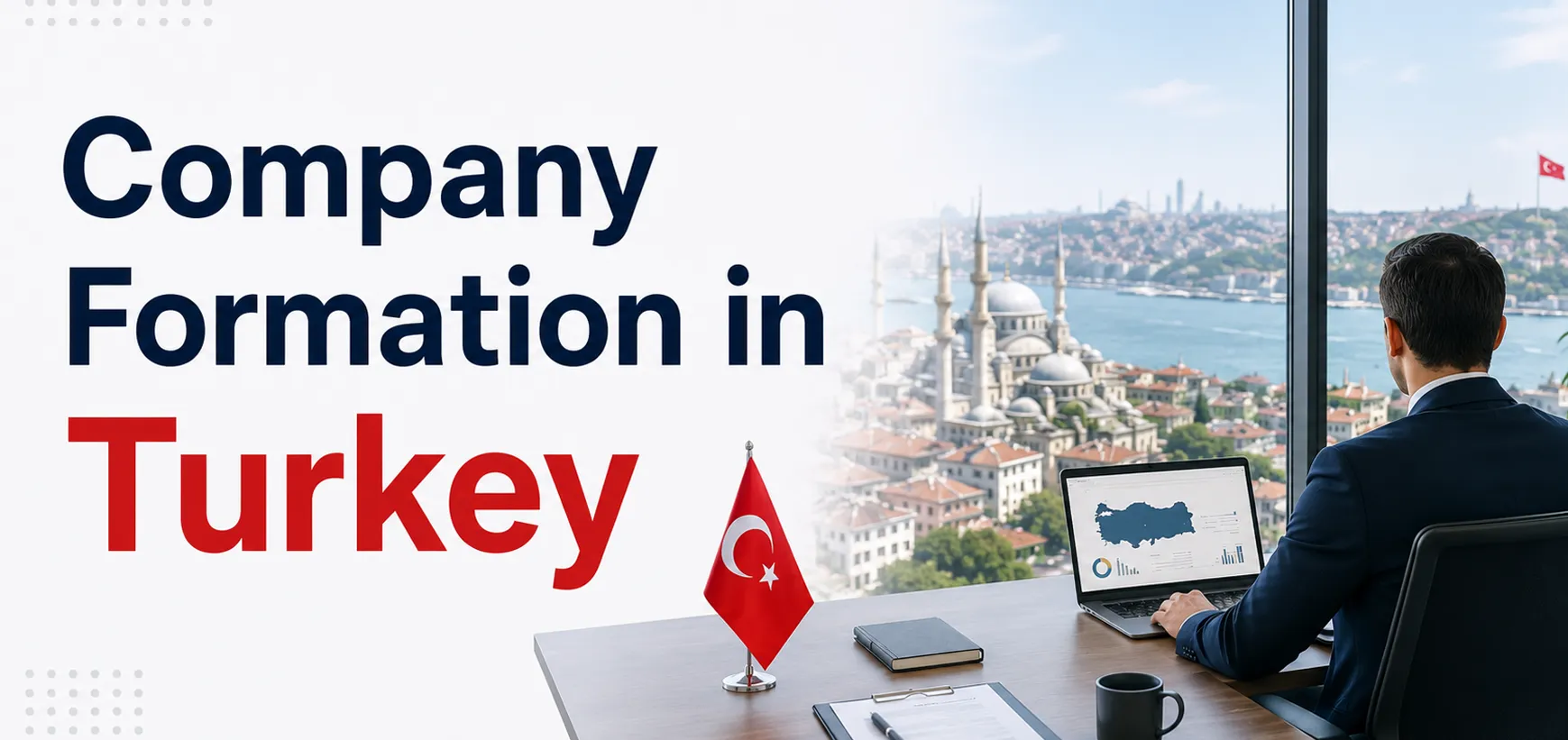
Company Formation in Turkey and the Turkish Business Ecosystem
The country continues to attract entrepreneurs from around the world because of its favourable geographic location, large domestic market, highly skilled labour force, and increasingly export-oriented economy.
Whether it is company formation in Turkey for manufacturing, technology, property development, logistics, or professional services, it will be important to know which legal form is suitable for your business needs.
Reports from the Turkish Statistical Institute and other external sources have shown that Turkey is among the best investment locations in the region due to its manufacturing abilities and investment incentives.
Why Entrepreneurs Choose Company Formation in Turkey in 2026
More and more foreign investors regard Turkey as a passageway to other markets.
These benefits are:
- Favourable geographical position bridging three continents
- Modern transport infrastructure
- Favourable labor costs
- Government incentives for foreign direct investment
- Growing startup environment
| Factor | Business Advantage |
| Population | 86+ million consumers |
| Location | Europe + Asia + Middle East access |
| FDI | Continued foreign investor interest |
| Manufacturing | Strong export ecosystem |
| Workforce | Skilled and competitive labour pool |
According to recent statistics provided by the Turkish Statistical Institute, Turkey’s economy is one of the biggest in the region and continues to attract billions of dollars of foreign direct investment yearly.
Overview of the Turkish Commercial Code for Company Formation in Turkey
This regulation governs commercial enterprises. The enactment reflects several business operations in line with European standards, thus making it possible to understand how easy it is to establish a Turkish company.
Company Formation in Turkey Statistics and Investment Trends
| Indicator | Latest Data |
| Population | 86+ million |
| Main Business Hub | Istanbul |
| Foreign-Owned Companies | 80,000+ |
| Annual Export Value | $250+ Billion |
| Major Investment Areas | Manufacturing, Technology, Logistics |
| Key Export Industries | Automotive, Machinery, Textiles |
| Foreign Investment Focus | Retail, Manufacturing, Technology |
Understanding Corporate vs Non-Corporate Entities for Company Formation in Turkey
Before company registration in Turkey, one must first grasp the difference between corporations and non-corporations.
Comparison of Legal Personality and Sole Proprietorship for Company Formation in Turkey
The legal personhood of corporations means that corporations can:
- Owning property
- Enter into contracts
- Be sued and sue
- Function without shareholders
On the other hand, sole proprietorships are inseparable from the owner.
Limited Liability vs Unlimited Personal Risk in Company Formation in Turkey
One benefit of corporations is that there is limited liability.
| Feature | Corporate Entity | Sole Proprietorship |
| Legal Identity | Separate | Owner |
| Liability | Limited | Unlimited |
| Tax Planning | More Flexible | Limited |
| Investor Attraction | High | Low |
| Continuity | Strong | Dependent on Owner |
A corporate business structure based on business registration in Turkey is favoured by many foreigners doing business in Turkey.
Deep Dive into the Limited Liability Company (Limited Şirket) for Company Formation in Turkey
Limited Liability Company (LLC) remains one of the most popular types of companies formed in Turkey.
Key Characteristics and Shareholder Requirements for Company Formation in Turkey LLC
An LLC in Turkey may be founded by:
- Between one and fifty people
- Individual and company shareholders
- Foreigners owning up to 100% of shares
The structure of the firm is fairly uncomplicated compared to other firms.
Minimum Capital Requirements for Company Formation in Turkey LLC Structure
The current legal framework requires a minimum share capital of around TRY 50,000.
Other costs include:
- Notary fee
- Registry fee
- Legal consultation fee
- Accounting fee
Such costs will be incurred in the company formation in Turkey.
Who Should Choose an LLC for Company Formation in Turkey?
The perfect organizational form for:
- Small and medium enterprises
- Family businesses
- Consulting services
- E-commerce firms
Foreign companies operating in the Turkish market
A majority of international businesspersons opt for an LLC organization when registering a company in Turkey.
Deep Dive into the Joint Stock Company (Anonim Şirket) for Company Formation in Turkey
Joint stock companies (JSCs) are for bigger ventures.
Governance Structure and Board Requirements for Company Formation in Turkey Joint Stock Companies
JSCs differ from LLCs because they have:
- A board of directors
- Formal governance process
- More regulations to comply with
Examples of JSCs include Turkey businesses or multinational corporations.
Capital Requirements for Company Formation in Turkey Joint Stock Companies
The minimum capital requirement for a JSC is always higher than that of an LLC.
Advantages include:
- Fundraising ease
- Possible IPO
- Improved investor confidence
Advantages of Joint Stock Structure for Company Formation in Turkey
Big investors prefer to invest in a JSC because of its:
- Investment value
- Easy transferability of shares
- Effective corporate governance
- Succession planning
There are many Joint Stock Companies among Turkish companies.

Alternative Structures for Company Formation in Turkey
The creation of an entity is not always required for foreign investments.
Setting Up a Branch Office for Company Formation in Turkey
A branch office enables the parent company to work directly in Turkey.
Some benefits include:
- Quicker access to the market
- Control from the headquarters
- Simpler managerial process
Establishing a Non-Commercial Liaison Office for Company Formation in Turkey
Liaison offices can undertake:
- Market research
- Business development
- Networking
They are, however, prohibited from making profits in Turkey.
Best Industries for Company Formation in Turkey in 2026
| Industry | Opportunity |
| Technology | SaaS, AI, fintech |
| Manufacturing | Automotive, machinery, textiles |
| Ecommerce | Online retail brands |
| Tourism | Hotels, travel services |
| Logistics | Import-export operations |
Can Foreigners Complete Company Formation in Turkey?
Also includes:
- 100% foreign ownership
- No need for a Turkish partner in many areas
- Foreign equity
| Requirement | Availability |
| Foreign ownership | Allowed |
| Local partner | Usually not required |
| Foreign shareholders | Allowed |
| Branch office | Available |
Comparative Analysis of Company Formation in Turkey: LLC vs Joint Stock Company
Tax Obligations and Corporate Liability Differences in Company Formation in Turkey
| Criteria | LLC | Joint Stock Company |
| Liability | Limited | Limited |
| Capital Requirement | Lower | Higher |
| Governance | Simpler | More Formal |
| Public Listing | Not Allowed | Allowed |
| Foreign Ownership | 100% Allowed | 100% Allowed |
| Investor Appeal | Moderate | High |
Ease of Share Transfers and Restructuring for Company Formation in Turkey
JSCs are more flexible in situations where:
- Investing money
- Selling shares of ownership
- Mergers & acquisitions
This is ideal for fast-growing companies in Turkey.
Company Formation in Turkey: LLC vs Joint Stock Company – Pros and Cons at a Glance
Infographic Summary of Company Formation in Turkey
| Feature | Limited Liability Company (LLC) | Joint Stock Company (JSC) |
| Setup Complexity | Easier | More Complex |
| Initial Capital Requirement | Lower | Higher |
| Administrative Burden | Minimal | Extensive |
| Corporate Governance | Moderate | Strong |
| Investor Attraction | Moderate | Excellent |
| Public Offering Potential | Not Allowed | Allowed |
| Share Transfer Flexibility | Limited | High |
| Suitable for SMEs | Excellent | Good |
| Suitable for Large Enterprises | Limited | Excellent |
| Foreign Ownership | 100% Allowed | 100% Allowed |
| Expansion Opportunities | Moderate | High |
The Step-by-Step Company Formation in Turkey Process
The establishment process of a business in Turkey includes these stages:
Required Documents for Company Formation in Turkey
Required documents usually consist of:
- Copies of passports
- Tax registration numbers
- Articles of association
- Registered office location
- Power of attorney (if any)
MERSIS Registration Process for Company Formation in Turkey
The registration process involves the following:
- Company Name Registration
- Articles of Association Drafting
- Declaration of Capital
- MERSIS Registration
- Chamber of Commerce Registration
- Tax Registration
- Social Security Registration
A large number of company setup in Turkey can be achieved within a few days, provided that all necessary documents are correctly compiled.
Trade Registry Approval for Company Formation in Turkey
The process of incorporation is managed by some official institutions that include:
- Ministry of Trade of the Republic of Türkiye
- Local Chambers of Commerce
- Central Registry System (MERSIS)
It is recommended that any potential investor check with these official institutions regarding procedures for incorporating their business in Türkiye.
Best Banks for Company Formation in Turkey for Foreign Entrepreneurs
Once the process of incorporation of the business in Turkey is complete, foreign investors require an account for their business to take care of all transactions and payments. Some banks may even demand documents of the company and its shareholders.
| Bank | Key Benefits | Suitable For |
| Türkiye İş Bankası | Strong corporate banking network and business solutions | SMEs and established companies |
| Garanti BBVA | Advanced digital banking and international services | Foreign investors and technology businesses |
| Akbank | Corporate banking and financial solutions | Growing businesses |
| Yapı Kredi | Business accounts and digital banking services | SMEs and international companies |
| Ziraat Bank | Large branch network and local accessibility | Businesses requiring wider banking access |
| QNB Finansbank | Business banking solutions for companies | Startups and service businesses |
Critical Decision Factors for Foreign Investors Before Company Formation in Turkey
Industry Constraints and Restricted Business Sectors for Company Formation in Turkey
While the country is open to foreign investments, certain industries will need:
- More licenses
- Regulations
- Permits
These include:
- Banking
- Insurance
- Broadcasting
- Aviation
Work Permits and Local Employment Regulations for Company Formation in Turkey
Foreign entrepreneurs will also need work permits based on their job position in the business.
Some other considerations that employers need to know include:
- Work contracts
- Social Security laws
- Payslip policies
- Health and safety norms
Company Formation in Turkey Costs and Initial Investment Requirements
| Expense | Estimated Range |
| Registration & government fees | Variable |
| Notary/document certification | €200–€500 |
| Legal assistance | €500–€2,000 |
| Accounting setup | €100–€500 |
| Office setup | €500–€5,000 |
| Initial operating reserve | €5,000+ |
Corporate Tax Obligations After Company Formation in Turkey
Tax planning is an essential part of Turkey company formation.
VAT Requirements After Company Formation in Turkey
| Tax Type | Rate |
| Corporate Income Tax | Approximately 25% |
| VAT | 1%, 10%, or 20%, depending on the sector |
| Withholding Tax | Variable |
| Stamp Duty | Applicable |
The investors need to constantly check updates about corporate tax Turkey, corporate income tax Turkey, and the corporate tax rate in Turkey because there can be changes in tax legislation.
Digital Tax Compliance Expansion for Company Formation in Turkey
Turkey has sped up the process of adopting:
- E-Invoicing system (E-Fatura)
- Electronic Ledger system (E-Defter)
- E-Archive systems
- Tax filing procedures on a digital platform
Foreign-owned Turkish companies will be expected to adopt digital accounting practices.
Tax Planning Strategies for Company Formation in Turkey
When considering registering a company in Turkey, the following considerations must be taken into account:
- Taxation incentives
- Free trade zones incentives
- Incentives for Research and Development
- Export-focused tax incentives
- Double taxation agreements
There are various double taxation agreements maintained by Turkey which may lower withholding taxes.
Tax Incentives for Company Formation in Turkey
Many industries remain in receipt of favourable incentives from the government, which include:
- Technological and software innovations
- Manufacturing
- Renewable energy projects
- Logistics industry
- Export-based production
- Research & Development operations
Such incentives will greatly contribute to lowering costs associated with company formation in Turkey.
Why This Matters for Foreign Investors Considering Company Formation in Turkey
Tax laws keep changing. Before your company registration in Turkey, it is essential to seek advice from a legal and tax expert to know all about the updated laws related to corporate tax Turkey, corporate income tax Turkey, and the corporate tax rate in Turkey.
Official Tax and Regulatory Sources for Company Formation in Turkey
The latest information on corporate tax Turkey, corporate income tax Turkey, and corporate tax rate in Turkey can be obtained from the following sources:
- Ministry of Trade of the Republic of Türkiye
- Turkish Revenue Administration
- Investment Office of the Presidency of the Republic of Türkiye
Such organizations provide updated information related to companies and investments by foreigners.
Accounting Requirements After Company Formation in Turkey
Businesses must maintain proper financial records and tax filings, as well as meet the obligations relating to digital accounting in Turkey. Foreign investors use the services of accountants or finance specialists in Turkey.
Monthly Bookkeeping Requirements for Company Formation in Turkey
| Topic | Details to Include |
| Monthly bookkeeping | Businesses must maintain regular records of income, expenses, invoices, payments, and financial transactions. |
| Invoice management | Companies must properly record sales and purchase invoices for tax reporting purposes. |
| VAT tracking | Businesses need to calculate VAT collected from customers and VAT paid on business expenses. |
| Expense recording | Operational expenses such as salaries, rent, suppliers, and services must be documented. |
| Bank reconciliation | Companies should regularly match accounting records with business bank transactions. |
| Financial monitoring | Proper bookkeeping helps owners understand profitability, cash flow, and business performance. |
Digital Accounting Compliance After Company Formation in Turkey
| Digital Requirement | Purpose |
| E-Invoicing (E-Fatura) | Allows companies to issue and receive invoices electronically while improving tax transparency. |
| E-Archive Invoice System | Used for digital invoice records, especially for transactions outside mandatory e-invoice requirements. |
| Electronic Ledger (E-Defter) | Enables businesses to maintain official accounting books digitally. |
| Digital Tax Filing | Helps companies submit tax declarations electronically. |
| Online Tax Systems | Allows businesses and accountants to manage government reporting digitally. |
Hiring Employees After Company Formation in Turkey
| Sector | Monthly Salary Range |
| Customer Support | €500–€1,000 |
| Marketing | €700–€1,800 |
| Designers | €800–€2,000 |
| Developers | €1,200–€3,500 |
Office Rent and Operating Costs After Company Formation in Turkey
| Office Type | Estimated Monthly Cost |
| Coworking desk | €100–€300 |
| Small private office | €300–€1,000 |
| Medium office in Istanbul | €1,000–€3,000 |
| Premium commercial office | €3,000+ |
Social Security and Payroll Requirements After Company Formation in Turkey
| Requirement | Details |
| Employer obligations | Social security contributions, payroll reporting |
| Employee registration | Required before employment |
| Salary reporting | Monthly payroll declarations |
| Employment contracts | Required for compliance |
| Workplace regulations | Health and safety compliance |
Best Cities for Company Formation in Turkey in 2026
| City | Why Choose This City for Company Formation in Turkey | Best Suitable Industries | Key Business Advantages |
| Istanbul | Istanbul is Turkey’s largest commercial and financial centre and the preferred destination for many foreign investors starting a business. | Technology, Finance, E-commerce, International Trade, Consulting | Access to global markets, international airport connectivity, strong investor ecosystem, large customer base, access to skilled professionals |
| Ankara | Ankara is the country’s administrative and technology hub, making it suitable for businesses connected with research, innovation, and government-related industries. | Technology, Defence, Research & Development, Engineering, Software | Strong R&D ecosystem, universities, government institutions, technology parks, skilled technical workforce |
| Izmir | Izmir is one of Turkey’s important industrial and export centres with strong manufacturing infrastructure and access to international trade routes. | Manufacturing, Export Businesses, Logistics, Industrial Companies, Food Processing | Port access, export opportunities, lower operating costs compared with Istanbul, industrial zones |
| Antalya | Antalya is a leading tourism destination and offers opportunities for businesses serving international visitors and hospitality markets. | Tourism, Hospitality, Real Estate, Travel Services, International Healthcare | Strong tourism demand, international visitors, hospitality ecosystem, foreign investment opportunities |
Challenges of Doing Business After Company Formation in Turkey
| Challenge | Explanation |
| Regulatory changes | Businesses need updated compliance knowledge |
| Currency fluctuations | Can affect operational planning |
| Banking procedures | Foreign companies may require additional checks |
| Language barriers | Local advisors may be required |
| Competition | Strong domestic and international players |
How Kolekr Insights Helps Foreign Investors with Company Formation in Turkey
It is important that any entrepreneur or investor who wants to engage with company formation in Turkey should have access to relevant information.Kolekr Insights provides a thorough analysis of the various issues concerning market research, compliance, and company registration through its detailed content, thereby making it easier for anyone looking to learn about business regulation.
These include:
- Regulations for business in Turkey and the various corporate forms
- Market entry information for foreign investors
- Current information concerning taxes and compliance
- Investment information in different industries
- Economic/business environment in Turkey
- Information about establishing and managing a business in Turkey
As such, the research provided by Kolekr will make it easier to navigate the complexities of registering a company in Turkey. From choosing which corporate form to register a company under to comparing destinations where to invest your money, Kolekr’s content makes it possible to make informed choices.
Final Thoughts: Building a Successful Business After Company Formation in Turkey
The Republic of Turkey is getting increasingly popular among startups, multinational firms, and entrepreneurs who want to have access to markets of Europe, Asia, and the Middle East.
Nevertheless, successful company formation in Turkey implies not only choosing an appropriate type of company and completing its registration. In order to ensure success in the long run, one needs to be aware of all business-related aspects, such as taxation, accounting, payroll, expenses, etc.
Successful entrepreneurs pay attention to:
- Choosing an appropriate type of company according to business goals
- Corporate tax, VAT, and other corporate taxes as well as benefits
- Keeping proper accounting
- Planning expenses, payroll and social security
- Choosing the best city according to the industry and strategic goals
- Making up a reasonable business plan
Foreign businessmen should think about cooperating with such specialists as:
- Local accountants
- Legal advisors
- Business consultants
- Specialists in the particular industry
Thus, proper planning allows avoiding mistakes and being able to control costs and other important issues.
Company formation in Turkey is just the beginning. Companies that know the market, plan finance and operate efficiently are more likely to take advantage of the opportunities offered by Turkey.
Frequently Asked Questions About Company Formation in Turkey
1. What Is the Cost of Company Formation in Turkey?
This cost varies depending on your legal entity, capital needs, fees from the legal team, and other costs associated with registering your company in Turkey.
2. Are you able to purchase a 100 per cent shareholding in a Turkish company as a foreigner?
Yes, a foreigner may obtain ownership of 100 per cent shares in a Turkish company in many industries.
3. What is the duration of registering a company in Turkey?
As a general rule, if you have all the necessary documents available, it will take between one and two weeks.
4. Which type of legal entity is used by businesses in Turkey?
One of the preferred types of businesses that investors use is limited liability companies (limited şirket).
5. What is the corporate income tax rate in Turkey?
On average, the corporate income tax in Turkey is around 25 per cent.
6. Is it possible to open an additional company in the form of a branch office in Turkey?
Yes, it is possible to open a branch office in Turkey.