






- From Finance to the Real Business Behind the Numbers
- When a Small Cash Flow Problem Becomes a Leadership Test
- Three Financial Lessons Every Entrepreneur Should Understand
- The Middle East Banking Lesson That Changed His Perspective on Timing
- What Founders Can Learn From Marko Jovanovic’s Career
- The Advice Marko Would Give to Aspiring Entrepreneurs
- About Marko Jovanovic
There was a moment during an international transaction in the Middle East when Marko Jovanovic had every reason to believe things were going according to plan. The money was available, the necessary approvals were in place, and the financial arrangements had been made. For someone who had spent years working in corporate finance, valuations, acquisitions and financial strategy, it should have been a fairly straightforward process.
Then the team missed the bank’s payment cut-off time.
Suddenly, millions of dollars were waiting to move, a senior executive wanted answers, and Marko found himself chasing a SWIFT confirmation to establish the payment’s value date. All the financial knowledge, careful planning and transaction experience in the world could not change one inconvenient reality: the bank operated on its own timetable.
The experience left him with a lesson that would be difficult to find in a traditional finance textbook.
“Cash is king, but the bank decides when the king can travel.”
It is the kind of observation that captures Marko’s approach to business. He takes financial discipline seriously, but he also understands how unpredictable real organisations can be. He has spent much of his professional life working through situations where spreadsheets provided only part of the answer, and where leadership required considerably more than being good with numbers.
Today, associated with Invigo Capital and Gulf International Pipe Industry (GIPI) in Oman, Marko brings experience across Europe, the United States and the Middle East to his work in finance, strategy and business transformation.
His journey offers an interesting perspective on entrepreneurship. Not everyone who creates value in a business starts it. Sometimes, the more difficult task is helping an existing organisation find its way through uncertainty.
From Finance to the Real Business Behind the Numbers
Marko’s career began in finance, a discipline that appears precise from the outside. Revenues, costs, margins, forecasts and investment returns all have their places in a financial model. In theory, the numbers should help explain how a business is performing and where it is heading.
What interested him increasingly, however, was what those numbers could not explain on their own.
Behind every financial statement were customers, employees, ambitions, difficult decisions and, occasionally, mistakes that had become expensive enough to demand immediate attention. Understanding why a business was struggling often required looking beyond the balance sheet.
“I often joke that I have spent most of my career being paid to solve problems that other people would rather avoid.”
That description is humorous, but it also reveals something important about his professional development.
As his career progressed, Marko moved from traditional finance into CFO and board-level responsibilities. His work brought him into acquisitions, financial restructuring, investment decisions and organisational transformation across different international markets.
Each situation came with its own challenges. A transaction might make financial sense but involve complicated stakeholder negotiations. An industrial business might have reliable customers and a commercially attractive product, yet experience pressure because cash was not arriving when it was needed. A restructuring plan might be technically sound but difficult to implement without the support of banks, suppliers and shareholders.
Working through these situations gradually changed his understanding of what makes a business successful.
Financial knowledge remained essential, but it was no longer enough.
“And one thing I’ve learned is that business school teaches you frameworks, but real business teaches you what happens when the frameworks stop working.”
For Marko, that distinction became central to his approach to leadership. Financial frameworks help decision-makers understand a problem. Experience teaches them what to do when the problem refuses to behave according to the framework.

An Entrepreneurial Journey That Did Not Begin With a Startup
Many entrepreneurial stories begin with someone identifying a gap in the market, developing an idea and building a company from scratch. Marko’s experience has been different.
He did not begin with a product prototype, a garage startup or a sudden ambition to become a founder. Instead, he encountered a recurring problem inside established organisations.
Some companies had excellent products, strong customer relationships and significant commercial potential. But they had found it difficult to translate those advantages into financial security or lasting growth.
The issue was not necessarily a lack of opportunity. Often, financial strategy, operational decisions and day-to-day execution were pulling in different directions.
For Marko, that disconnect was both frustrating and fascinating.
He recognised that helping an existing company regain financial control, improve the way it operated and make better strategic decisions could create substantial value. The work was entrepreneurial in its own right, even without the conventional founder title.
“I realised that fixing those problems could create just as much value as launching a completely new business.”
This perspective challenges a common assumption about entrepreneurship: that creating something valuable always requires starting something new.
In practice, established companies can face problems that demand just as much creativity, personal responsibility and willingness to take risks as building a startup.
Improving a struggling business may involve renegotiating financial arrangements, rethinking priorities, questioning established processes or persuading people to change decisions they have defended for years.
And unlike a new venture, an established organisation may already have employees, creditors, customers and shareholders depending on its continued operation.
Marko enjoys this particular challenge. He describes himself as someone who operates entrepreneurially within complex organisations, bringing financial discipline and a willingness to take responsibility for outcomes.
“For me, entrepreneurship is less about having a business card that says ‘Founder’ and more about having the courage to take responsibility for the outcome.”
It is a useful distinction for business leaders who spend their careers building, improving or transforming organisations they did not necessarily establish themselves.
Ownership of an idea is one thing. Ownership of the result is another.
When a Small Cash Flow Problem Becomes a Leadership Test
Few expressions in business are as deceptively reassuring as the words “small cash flow problem”.
Marko has heard variations of that phrase throughout his career. He has also learned not to accept the word small too quickly.
A temporary shortage of working capital can sometimes be resolved through routine financial management. But the same description may conceal a much more complicated situation involving several banks, overdue customer payments, anxious shareholders and suppliers whose own businesses depend on being paid.
The difference is not always obvious in the opening conversation.
“My biggest challenges have usually started with a very simple sentence: ‘We have a small cash flow problem.'”
His experience at Gulf International Pipe Industry in Oman offers an example of how demanding these situations can become.
Marko has been working at GIPI on liquidity pressures, bank negotiations, financial restructuring and organisational transformation. These roles required him to deal with the financial realities of an industrial business and the demands of stakeholders with conflicting priorities.
A lender wants to make sure it is managing its exposure responsibly. A supplier must be paid for sure. Shareholders want to protect their investment value. The business needs the employees to run the business.
All of these concerns are legitimate, but they do not always align.
Marko explains that the hardest part is rarely the arithmetic.
Determining how much money a company needs is a technical task. Getting different stakeholders to believe in the recovery plan, contribute to a workable solution and remain committed while conditions are difficult is a leadership challenge.
A credible plan must acknowledge what has gone wrong, what needs to change and what the organisation can realistically deliver.
This is where Marko believes financial leadership becomes much more than financial reporting. Confidence, in his experience, should not be confused with projecting certainty.
“I’ve learned that confidence isn’t pretending you have all the answers. It’s having the discipline to confront reality, make decisions, and take responsibility.”
That principle applies beyond finance. Whether a company is dealing with declining sales, an unsuccessful expansion, increasing costs or operational delays, leaders need to recognise problems before they become unmanageable.
Avoiding uncomfortable conversations can buy you some time, but it seldom improves the business underneath.
The Turning Point: A CFO Must Do More Than Explain the Numbers
At some point in his international career, Marko’s understanding of the CFO role changed.
Financial executives are often expected to explain performance. They prepare forecasts, report results, analyse variances and help the board understand why actual outcomes differ from expectations.
All of that work matters. But Marko came to recognise that a good explanation of poor performance does not, by itself, improve a business.
My biggest turning point was when I realised that being a CFO is not about explaining why the numbers are bad; it’s about making sure they get better. It is a straightforward statement with significant implications.
A CFO who focuses only on reporting may identify a cash flow problem after it has developed. A CFO who works closely with operations, commercial teams and senior management can help address the decisions contributing to that problem.
Consider a business that is recording healthy sales but consistently struggling with cash. The answer may not be to pursue additional revenue at any cost. This could mean looking at customer payment terms, inventory levels, supplier commitments, financing arrangements or the profitability of individual contracts.
The symptoms are revealed by the financial statement. Improving performance requires understanding the decisions and operational processes behind them.
Marko’s work across different countries exposed him to another uncomfortable truth: organisations do not always behave as expected, even when the strategic plan is carefully prepared.
Business plans look beautiful in PowerPoint, until reality opens Excel.
He has dealt with circumstances in which banks were unwilling to provide the expected support, available liquidity remained uncertain, and shareholders wanted immediate progress.
These are situations in which a leadership team cannot simply refer everyone back to the original business plan.
Priorities must be reconsidered. Difficult conversations need to happen. Decisions often have to be made before all the desired information is available. For Marko, this is where financial leadership becomes meaningful.
A spreadsheet can show several possible outcomes. It cannot make people trust a recovery plan, persuade a lender to reconsider a decision or resolve disagreements between stakeholders. Those responsibilities belong to the people running the business.
What International Business Taught Marko About Decision-Making
Working across Europe, the United States and the Middle East has given Marko experience of financial and organisational challenges in different commercial environments.
Yet, despite differences between industries, markets and organisations, he has repeatedly encountered the same underlying issues.
Companies need access to cash. Decisions require reliable information. Business plans must account for risks. And the people responsible for delivering results have to work together.
These requirements sound obvious until several of them become difficult at the same time.
A company can have a compelling long-term strategy but lack the immediate liquidity to execute it. A transaction can create attractive value on paper while presenting operational complications after completion. A management team may agree on its objectives while disagreeing strongly about how to achieve them.
International experience has reinforced Marko’s preference for combining analytical discipline with practical judgement.
He does not dismiss financial planning or business education. His point is that financial tools are useful only when leaders understand their limitations.
That is particularly important in situations involving acquisitions, restructuring and business transformation, where assumptions made early in the process may need to change as new information emerges.
One of his favourite habits is to ask a deceptively simple question before major decisions:
“What could go wrong?”
Marko jokes that the answer is usually longer than the business plan. Behind the humour is a disciplined approach to risk. Leaders need to know not only what benefits they hope to gain from an investment or strategic move, but also what will happen if their assumptions turn out to be wrong.
What if the cash arrives later than expected? What if financing is delayed? How would the business respond if a key customer changed its purchasing plans or an anticipated operational improvement took longer than expected?
These questions do not eliminate uncertainty. They make it easier to recognise which risks are manageable and which could threaten the business.
For founders and growing companies, this may be one of the most practical lessons in Marko’s career. Optimism helps people pursue opportunities. Understanding the downside helps them remain in business long enough to realise those opportunities.
Three Financial Lessons Every Entrepreneur Should Understand
When asked what he would tell aspiring entrepreneurs, Marko returns to three principles shaped by years of working with real businesses.
They are not complicated theories. They are practical reminders of what happens when ambition meets financial reality.
1. Cash Is King, but Profit and Cash Are Not the Same Thing
“Cash is king. Profit is an opinion. EBITDA stands for Earnings Before Interest, Taxes, Depreciation, and Amortisation. And EBITDA doesn’t pay salaries.”
Marko’s first lesson is deliberately blunt. Financial performance can look encouraging while an organisation is experiencing serious liquidity pressure.
A profitable company can still struggle to meet its obligations if customers pay late, too much money is tied up in inventory, or financing commitments fall due before sufficient cash arrives. Profitability matters, but it should not be confused with the availability of cash.
EBITDA is a helpful way for companies and investors to measure operating performance but does not directly show the amount of cash left over after working capital needs, capital expenditure, interest and other cash commitments.
For entrepreneurs, the practical implication is that cash flow should be watched, in addition to revenue and profit, especially when growing, investing or making major financial commitments.
2. A Beautiful Strategy Is Not the Same as a Working Business
Never confuse a beautiful strategy with a business that actually works. A well-designed presentation can communicate an ambitious plan. What matters is whether the organisation can put that plan into practice.
Businesses can invest considerable time in creating growth forecasts, developing financial models and establishing long-term targets. Those activities have value, but they need to be supported by realistic assumptions and operational capability.
Can the organisation deliver what it promises? Are its margins sustainable? Does it have sufficient working capital? Are the people responsible for implementation aligned on priorities?
Marko’s wider experience points to the importance of a strategy’s execution rather than how it’s communicated. For a founder, this could mean opting for a smaller, but financially viable opportunity, rather than a more ambitious expansion that exposes the business to too much risk.
3. Hire People Who Know More Than You Do
Hire people smarter than you, especially if they understand SAP.
Marko’s third lesson brings his characteristic humour into a serious leadership principle. No executive can understand every financial, operational or technological detail of a complex organisation.
As businesses grow, leaders become increasingly dependent on the quality of the people around them. Strong financial teams, reliable systems and colleagues with specialist expertise can help organisations spot problems early and make better decisions.
The reference to SAP may raise a smile among executives familiar with enterprise software, but the underlying message is clear.
A capable leader should not feel threatened by expertise. Building a strong business requires people who can challenge assumptions, explain what is happening and contribute knowledge that improves the quality of decisions.
The Middle East Banking Lesson That Changed His Perspective on Timing
Of all the moments Marko recalls from his international career, one banking incident stands out because of how ordinary the underlying problem was.
The transaction itself was significant. Millions of dollars were involved, and the necessary financial arrangements had been made. But the team missed the bank’s payment cut-off time.
In the case of the payment delay, the focus immediately shifted from the overall transaction strategy to finding out where the payment was and to establish its value date.
Marko found himself pursuing a SWIFT confirmation while dealing with the pressure of explaining the situation to his boss. He had studied corporate finance, valuation, mergers and acquisitions, and financial strategy. Yet, at that moment, the most important document was a single bank confirmation.
It taught him something that financial modelling can sometimes obscure: the execution details of a transaction can become more important than the elegance of the plan behind it.
The episode also gave him a memorable description of what a CFO’s job can require. “A CFO needs the analytical skills of an investment banker, the negotiation skills of a diplomat and the emotional stability of a Buddhist monk.”
There is a serious point behind that observation. Financial leaders need analytical ability, but they also require patience, communication skills and the capacity to remain composed when events move beyond their immediate control.
Marko has an equally memorable conclusion about formal education and practical experience.I learned how to create shareholder value. My bank taught me how to wait for it. It is difficult to imagine a more concise explanation of the difference between understanding a transaction and completing one.
Why Financial Discipline Needs an Entrepreneurial Mindset
Marko describes his present work as a combination of international finance, strategy, transformation and occasionally, as he puts it, performing miracles with cash flow.
The description reflects the complexity of his responsibilities, but it also highlights why he believes financial discipline and entrepreneurial thinking belong together.
Financial discipline provides structure. It helps an organisation understand its position, measure performance and assess risk.
An entrepreneurial mindset encourages leaders to identify opportunities, challenge the status quo and take ownership of improving results. Used together, these approaches can help a business move beyond identifying problems to addressing them.
For Marko, the most satisfying outcomes are not necessarily the most visible ones. He is proud to help businesses through challenging times, building relationships across international markets and helping organisations emerge stronger from difficult experiences.
His long-term ambition is equally grounded: to build stronger businesses and create lasting value. He also has one more personal professional goal. He hopes eventually to attend a board meeting where everyone agrees with the budget.
Anyone who has participated in a challenging annual budgeting process will understand why he considers that something worth looking forward to.
Leadership Lessons That Begin Outside the Boardroom
For all his international experience and board-level responsibilities, Marko does not have to look far for an example of effective negotiation.
His daughter, he says, has already mastered several essential leadership skills. She knows how to negotiate relentlessly, communicate expectations clearly and pursue immediate results. More impressively, she manages all of this without preparing a PowerPoint presentation.
It is a light-hearted observation, but it fits Marko’s broader belief that leadership cannot be reduced to formal qualifications, titles or presentations.
Professionally, he admires Warren Buffett for his patience, discipline and ability to make difficult financial decisions appear understandable. He also names The Psychology of Money by Morgan Housel as his favourite business book. Both preferences are consistent with his emphasis on judgement, patience and understanding how people behave around financial decisions.
Money is not simply a mathematical subject. The choices people make around it are shaped by expectations, experience, confidence, uncertainty and individual priorities. Those human factors become particularly important when executives are dealing with investment decisions, difficult
What Founders Can Learn From Marko Jovanovic’s Career
Marko’s experience provides a useful perspective for entrepreneurs who may be more comfortable discussing growth targets than the financial discipline required to achieve them.
His career illustrates why founders eventually need to think beyond their original product, customer base or commercial opportunity.
As a business grows, the decisions become more interconnected. Sales affect working capital. Financing affects investment capacity. Operational performance has an impact on profitability. Management decisions affect the confidence of employees, lenders, suppliers and shareholders.
A founder may have the best knowledge of the product, but to run a sustainable business you need a much broader knowledge of how these different responsibilities fit together.
There are several practical ideas that emerge from Marko’s story.
| Leadership lesson | What it means for founders and business leaders |
| Prioritise cash flow | Monitor when money enters and leaves the business, not only reported sales and profits. |
| Understand the downside | Consider what could go wrong before committing to major investments or expansion. |
| Connect strategy with execution | Make sure operational capabilities and financial resources support business plans. |
| Confront problems early | A realistic diagnosis creates a better starting point for difficult decisions. |
| Build relationships before a crisis | Credibility with banks, shareholders, employees and suppliers can matter when circumstances become difficult. |
| Surround yourself with expertise | Strong teams and reliable information systems improve decision-making. |
| Take responsibility for outcomes | Leadership requires acting on information, not simply explaining results. |
These lessons are especially relevant for entrepreneurs transitioning from an early to a more mature company.
In the very beginning, the founder may personally take care of sales, finances, operations and major decisions. As the company becomes more complex, that approach becomes increasingly difficult to sustain.
Financial controls, capable teams and clear accountability become more important. So does the ability to distinguish between opportunities that support sustainable growth and those that create more risk than the business can reasonably carry.
Marko’s career shows that entrepreneurial thinking remains valuable even after a company has become established. In some circumstances, it becomes more important because leaders have to find creative, responsible ways to improve organisations with existing commitments.
The Advice Marko Would Give to Aspiring Entrepreneurs
When Marko considers what aspiring entrepreneurs should understand, he does not recommend avoiding risk.
Risk is an unavoidable part of building a business, entering new markets and pursuing worthwhile opportunities. His advice is to understand what is at stake before making a commitment.
“Take risks, but always know your downside. Stay curious, surround yourself with great people and remember that optimism is essential, but it is not a financing strategy.”
It is practical advice from someone who has experienced the difference between an attractive business opportunity and the financial arrangements required to support it.
A positive outlook may encourage a founder to keep going through uncertainty. It cannot replace a credible financing plan, realistic cash flow forecasts or informed decisions about how much risk the organisation can afford.
Marko also recommends surrounding yourself with capable people and maintaining the curiosity to keep learning.
Both are important because business challenges change as organisations develop. The knowledge that helped establish a company may not be sufficient to manage an international operation, negotiate a complicated restructuring or evaluate a major acquisition.
And when difficult financial conversations become unavoidable, Marko offers one final piece of advice, delivered with the humour that runs throughout his story.
“If your banker starts an email with ‘Unfortunately,’ make yourself a strong coffee.”
About Marko Jovanovic
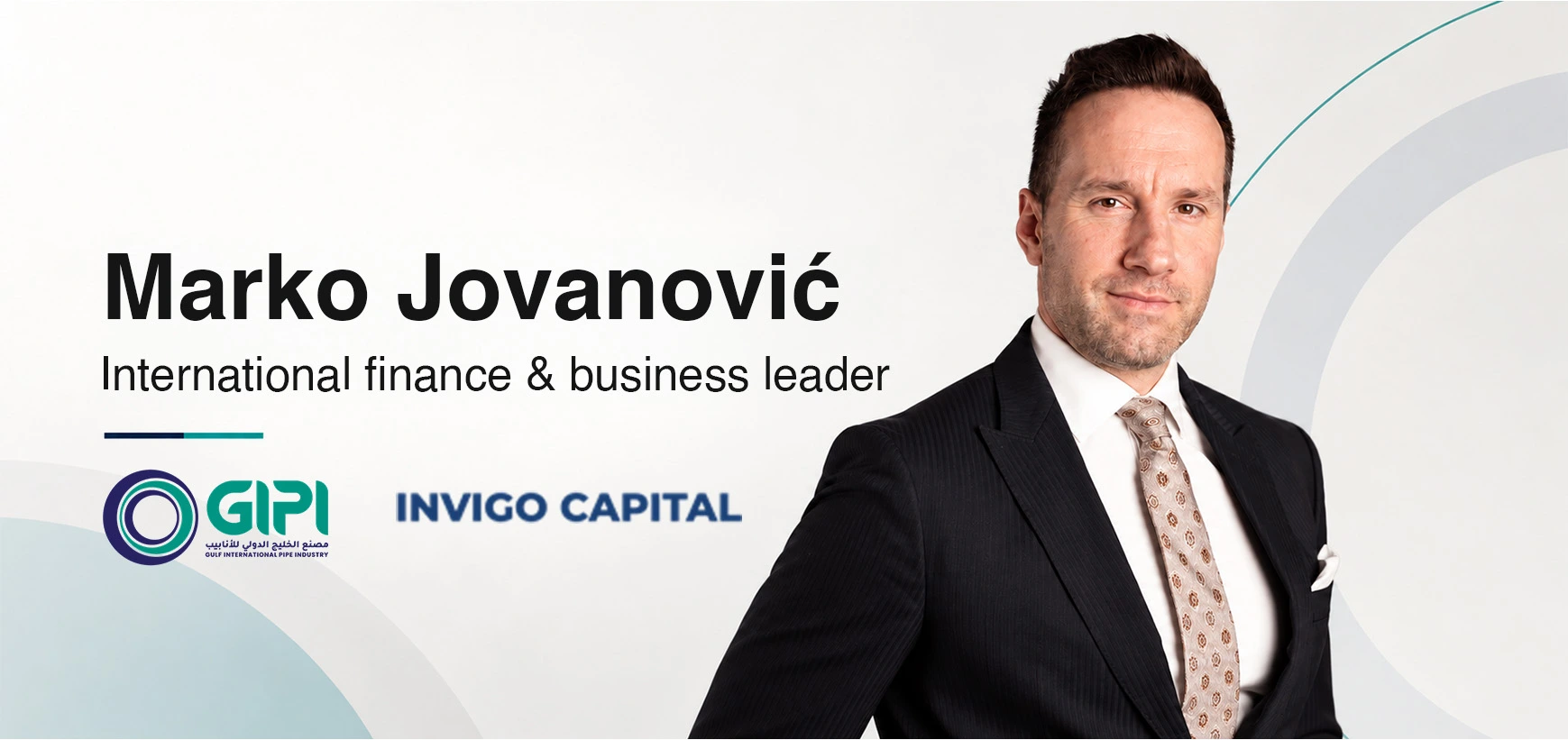
Marko Jovanovic is an international finance and business leader associated with Invigo Capital and Gulf International Pipe Industry (GIPI), Oman. His professional experience spans Europe, the United States and the Middle East, including CFO and board-level responsibilities, acquisitions, financial restructuring, investment decisions and organisational transformation.
His work focuses on the intersection of finance, business strategy, stakeholder management and operational execution. He brings an entrepreneurial perspective to established organisations, with particular experience in navigating financial challenges and helping businesses pursue sustainable, long-term value creation.

Connect with Marko Jovanovic
Interested in working with or consulting with this expert? Submit your details below.