





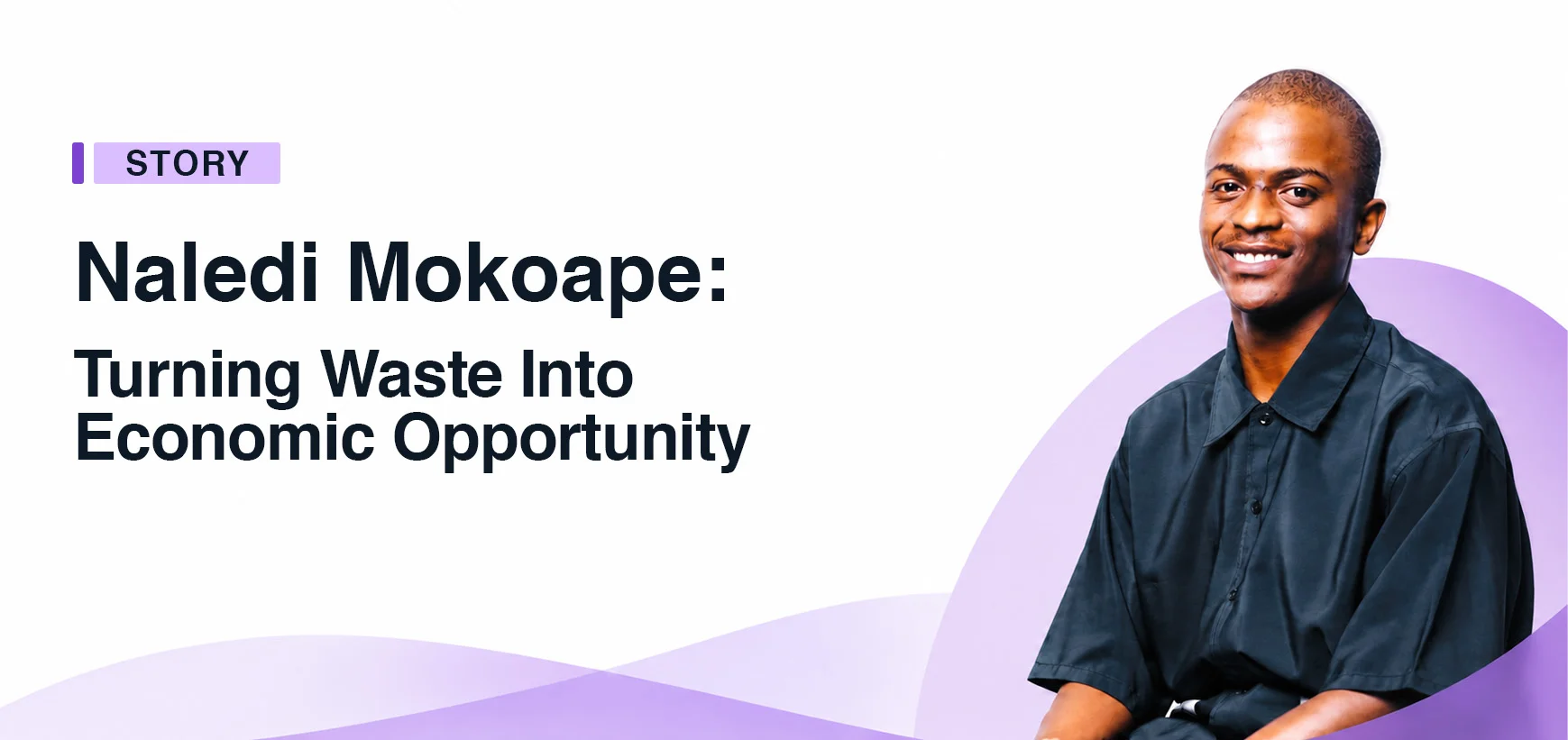
For most people, waste is something to throw away. For South African entrepreneur Naledi Boipelo Kutloano Mokoape, it represents something more valuable: an opportunity to create businesses, support livelihoods and bring more people into the economy.
As the founder and CEO of URUA Exposure Waste Management, Naledi is developing an enterprise that brings together waste recovery, digital innovation and community participation.
His ambition extends beyond conventional recycling. He wants to build a connected circular economy ecosystem where households, businesses, informal waste collectors and recycling networks can participate in the economic value of recovered materials.
It is a vision rooted in a practical question: What if the materials communities discard could also help create economic opportunities for the people living there?
From Business Student to Entrepreneur
Naledi’s interest in entrepreneurship developed during his time studying Business Management at North-West University in South Africa. While learning about business strategy and economic development, he became increasingly interested in the relationship between environmental challenges and economic inequality.
Across many South African communities, unemployment remained a persistent concern, while valuable recyclable materials were being discarded or left unmanaged. He began to see an opportunity to address these challenges through a business model that could create value from waste.
Rather than treating waste management as an isolated environmental service, Naledi started thinking about its wider economic potential. That thinking eventually led him to establish URUA Exposure Waste Management.
The transition from student to founder brought considerable uncertainty. Developing a business required him to move beyond identifying a problem and begin exploring how a commercially viable solution might work.
Identifying the Business Opportunity Behind Waste
The central idea behind URUA is straightforward: discarded materials have economic value, but capturing that value requires the right collection systems, market connections and incentives.
In many township and rural communities, informal waste collectors already contribute to recycling activities. Yet access to organised collection networks, reliable buyers and formal economic opportunities can be limited.
Naledi recognised that improving these connections could create value for several participants at once.
Households and businesses could participate in more structured waste recovery. Informal collectors could gain better access to recycling networks. Recycling operators and buy-back centres could benefit from more organised material flows. This became the foundation of URUA’s emerging circular economy model.
The business is being developed around the idea that waste recovery should not end with collection. It should create opportunities throughout the value chain.
Building URUA: More Than a Waste Management Company
URUA Exposure Waste Management is developing an integrated approach that combines physical waste management activities with community participation and digital infrastructure.
Its proposed ecosystem connects several parts of the recycling economy:
- Waste collection and resource recovery: Improving how recyclable materials are collected, sorted and directed into recovery networks.
- Community participation: Creating opportunities for households, township communities and local businesses to participate in recycling activities.
- Informal waste-picker integration: Exploring ways to connect collectors with structured networks, incentives and economic opportunities.
- Recycling partnerships: Developing relationships with waste generators, collection networks, recycling businesses and buy-back centres.
- Digital infrastructure: Exploring systems that improve transaction records, operational visibility and accountability.
- Blockchain mechanisms: Investigating how verified records and value-distribution mechanisms could support participation across the ecosystem.
These elements form URUA’s development strategy. They should not be understood as a claim that every proposed service or technology is already fully operational.
For Naledi, the objective is to develop a business where environmental responsibility and commercial sustainability work together.
How Blockchain and Digital Innovation Fit Into URUA’s Vision
Technology is becoming an important part of Naledi’s entrepreneurial thinking.
One area URUA is exploring is the use of blockchain-enabled transaction mechanisms within the waste recovery ecosystem.
The idea is not to introduce technology for its own sake. It is to address practical challenges associated with recording transactions, verifying participation and improving accountability.
For example, a future digital system could record when recyclable materials are collected, identify participating stakeholders and maintain a transaction history. Such infrastructure could help create more transparent relationships between waste collectors, recycling operators and other participants.
Blockchain-based mechanisms could potentially support verified records and future incentive or value-distribution models. However, these capabilities remain part of URUA’s broader development direction rather than established, fully deployed services.
Naledi has also explored a prototype aimed at connecting informal waste pickers with structured systems and incentives. His approach reflects an important distinction: digital innovation is intended to support the physical recycling economy, not replace it.
Creating Economic Opportunities Through Circular Business Models
For Naledi, environmental sustainability is only one part of the story.
He believes that the circular economy can become a platform for broader economic participation, particularly in communities where employment opportunities are limited. URUA’s model is being developed with several groups in mind.
Informal waste collectors could benefit from more structured participation and stronger connections to recycling markets. Households could become more active participants in resource recovery.
Local entrepreneurs could explore opportunities around collection, sorting, transportation and recycled materials. Buy-back centres and recycling businesses could benefit from better-coordinated relationships across the value chain.
Young people could also discover opportunities to build businesses around environmental services and resource recovery. These outcomes represent the impact URUA wants to create as its model develops.
The ambition is to demonstrate that waste management can support environmental protection while also contributing to local economic activity.
Entrepreneurial Recognition and Early Milestones
Building URUA has involved more than developing a business concept.
Naledi has actively pursued entrepreneurship programmes, innovation opportunities, mentorship and industry connections to strengthen his approach.
He has reported several milestones, including recognition through the ABSA/YAEI entrepreneurial competition, participation in the Emerging Innovators Programme 2026, and recognition associated with the F6S startup platform.
One particularly notable development was URUA’s reported seventh-place ranking in the waste management category on F6S in August 2026, which Naledi publicly shared.
These achievements have contributed to his development as an entrepreneur and helped bring attention to URUA’s emerging business model. They also reflect a wider part of his journey, learning to communicate an idea, respond to feedback and strengthen a business through external engagement.
For Naledi, recognition is valuable, but it is not the final objective.
Resilience, Leadership and the Reality of Building a Business
Like many founders, Naledi has faced obstacles while building URUA. Limited resources, funding constraints, difficulties establishing partnerships and the need to gain credibility have all shaped his entrepreneurial journey.
There have been periods when the business progressed more slowly than expected. Rather than interpreting setbacks as a reason to abandon the idea, he focused on strengthening its foundations.
He continued refining the business model, seeking mentorship and improving his understanding of the waste management industry.
One lesson has remained particularly important. A strong business idea means little without consistent execution.
Naledi’s approach to leadership has gradually evolved from developing an ambitious concept to understanding the discipline needed to build an organisation.
That includes recognising limitations, making informed decisions and adapting when new information becomes available. His experience also reinforced the importance of remaining committed to a problem while being flexible about the solution.
From South Africa to a Wider African Circular Economy
URUA’s immediate focus is South Africa, particularly opportunities connected to the North West Province. But Naledi’s long-term vision extends further. He wants to develop a scalable business model that could eventually expand into other African markets.
Across the continent, waste recovery, community livelihoods and economic development are interconnected challenges. Naledi sees an opportunity to build systems that bring these areas together.
His ambition is for URUA to become a significant circular economy enterprise capable of connecting physical waste management operations with digital infrastructure and community economic participation.
Achieving that vision will require stronger partnerships, sustainable commercial models, operational development and the continued testing of new technologies. For now, the focus remains on building the foundations needed to support future growth.
Lessons for Aspiring Entrepreneurs
Naledi’s journey offers useful lessons for people who want to start businesses around problems that affect their communities.
One is to begin with a problem worth solving. A business idea becomes more meaningful when it addresses a real need and creates value for the people it aims to serve.
Another is to seek feedback early. Mentors, industry professionals and potential customers can help founders identify weaknesses in their assumptions before investing further resources.
He also believes that entrepreneurs should not wait until every resource is available before beginning. Progress can start with research, small experiments, relationships and a willingness to learn.
For Naledi, entrepreneurship requires persistence, but persistence alone is not enough. It must be combined with adaptability, disciplined execution and a clear understanding of the value a business intends to create.
A Future Where Waste Creates Value
Naledi Mokoape’s entrepreneurial story is still being written.
URUA Exposure Waste Management remains an emerging enterprise, with important elements of its integrated business model and digital ecosystem under development.
But its direction is clear. Naledi wants to connect waste recovery, technology and community participation to create a system where recyclable materials can contribute to economic opportunity.
His vision challenges the traditional understanding of waste management as simply collecting and disposing of unwanted materials. Instead, he sees the potential for a wider economic ecosystem built around resources that already exist.
If URUA can successfully develop and scale its approach, it could contribute to a more inclusive model of circular economy entrepreneurship in South Africa and eventually beyond.
For Naledi, the goal is not simply to build a recycling business.
It is to help build an economy where waste has value, communities have opportunities and sustainability becomes part of economic development.
About Naledi Mokoape
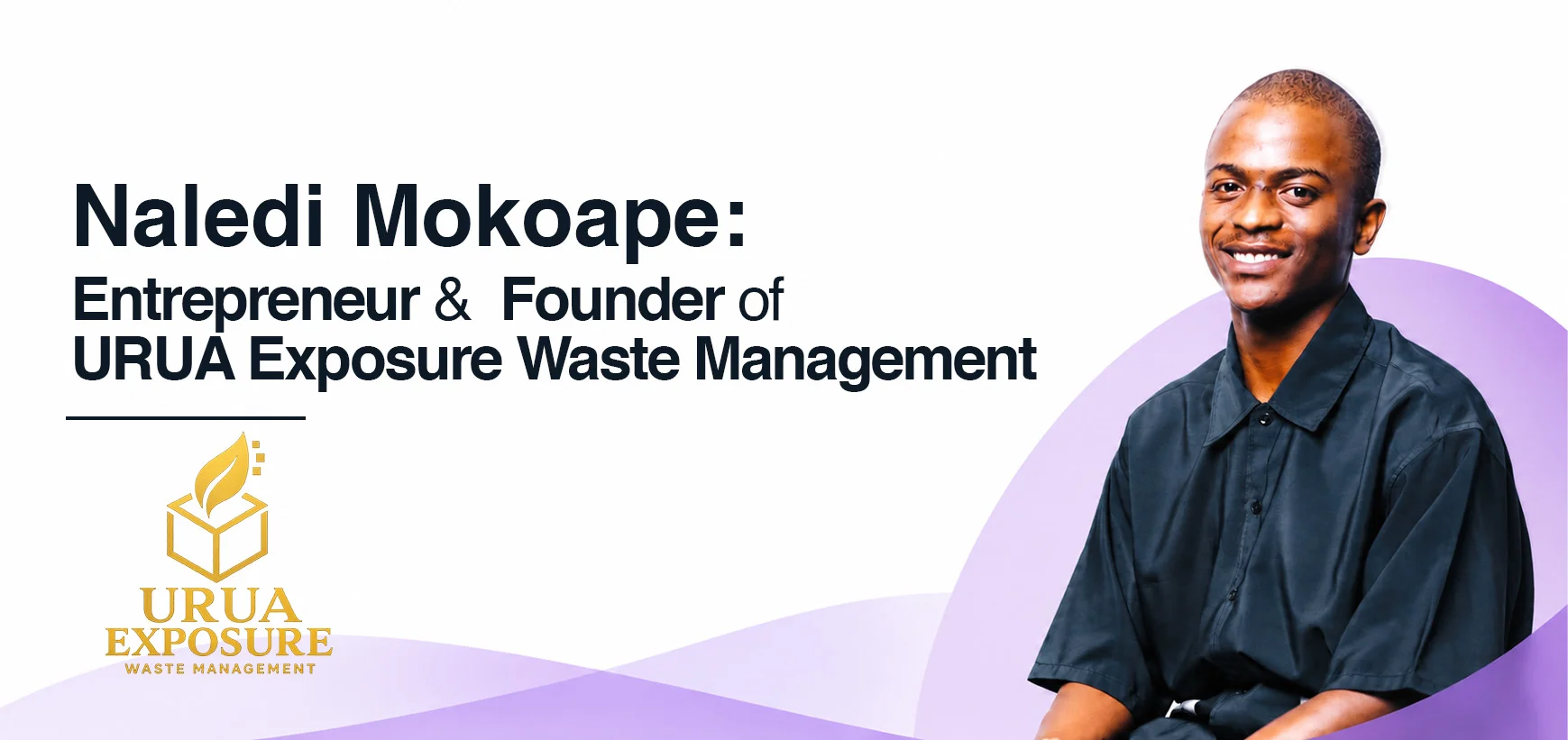
Naledi Boipelo Kutloano Mokoape is a South African entrepreneur and the founder and CEO of URUA Exposure Waste Management, an emerging enterprise focused on waste recovery, circular economy development and inclusive economic participation.
With an academic background in Business Management from North-West University, he is interested in the intersection of entrepreneurship, technology, environmental sustainability and economic development.
Through URUA, he is working towards an integrated waste management ecosystem that connects resource recovery, digital innovation and community participation. His long-term ambition is to develop a scalable African circular economy business that creates economic opportunities while addressing environmental challenges.


Connect with Naledi Mokoape
Interested in working with or consulting with this expert? Submit your details below.