






- The Idea Started With a Problem Most Drivers Recognise
- Why a QR Code Made Sense
- A Simple Experience Can Hide a Lot of Work
- Turning the Idea Into a Real Product
- What Building PingCar Taught Its Founder
- Solve the Problem Before Adding More Features
- Where PingCar Can Be Useful
- Privacy Is Becoming Part of the Product Experience
- Building for Different Languages and Markets
- What Comes Next for PingCar
There are moments when you need to contact the owner of a car, but there is simply no practical way to do it. Maybe the headlights are still on. Maybe a window has been left open. Perhaps the vehicle is blocking an entrance, or there is something near the car that the owner should know about.
The usual workaround is familiar: leave a phone number somewhere behind the windscreen. It solves the immediate problem, but it also creates another one. That number is no longer available only to the person who genuinely needs to contact you. It is visible to anyone passing by.
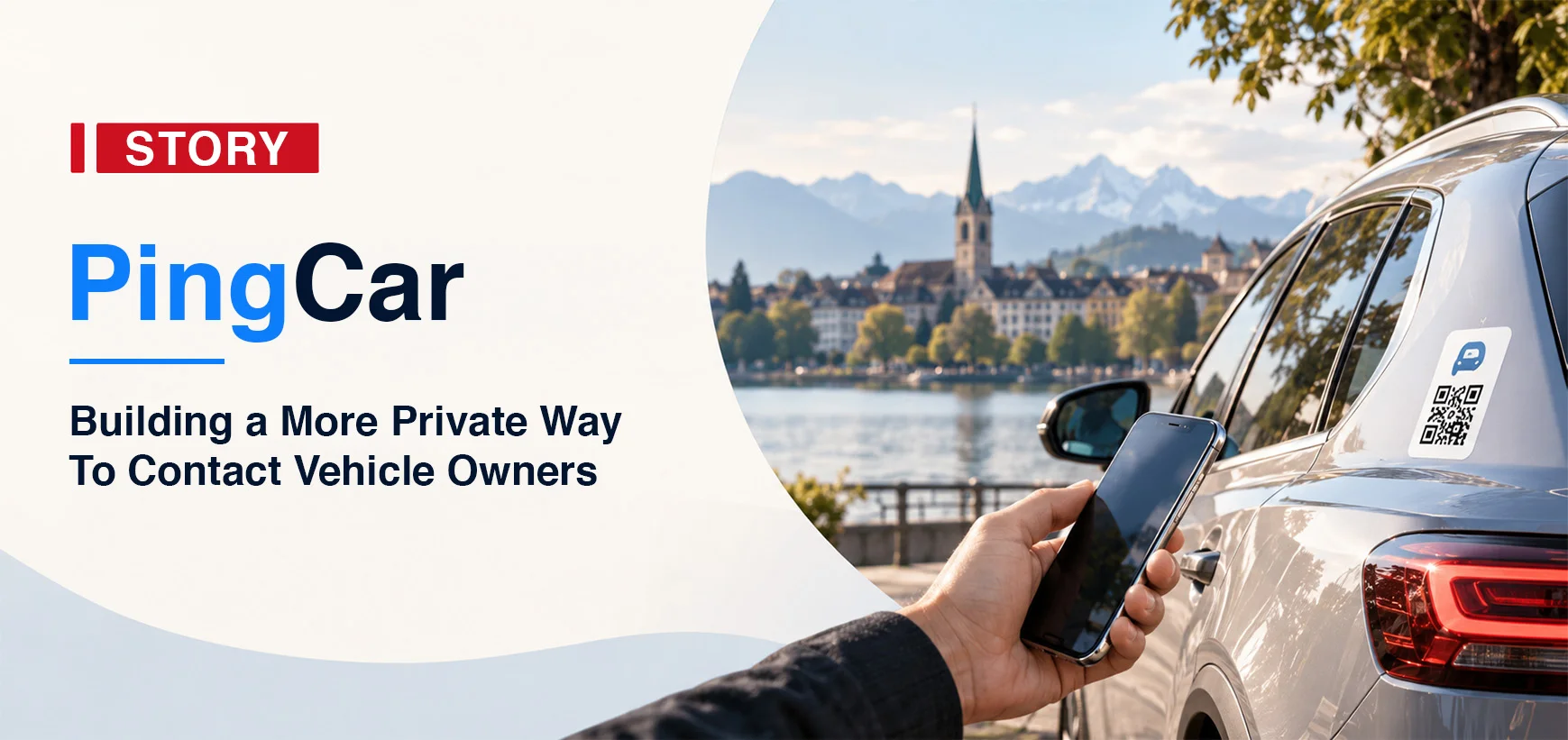
That small but very real gap is what led to PingCar, a Swiss-based digital platform built to help people contact vehicle owners without exposing their personal phone numbers.
Using QR technology, PingCar creates a direct communication link between a vehicle and its owner. Someone can scan the QR code, send a message through the platform, and alert the owner while keeping personal contact details private.
It sounds simple. Building it was not.
For this edition of KOLEKR ProTalks, we look at the idea behind PingCar, the founder’s journey from concept to working product, the challenges of building a privacy-first communication platform, and the lessons that came from testing, learning, and improving along the way.
The Idea Started With a Problem Most Drivers Recognise
Many startup stories begin with complex market research, investor decks, or a large technology vision. PingCar started with something much more ordinary.
The founder noticed that when people genuinely need to contact a vehicle owner, they usually have very few options. If the owner is not nearby and no contact number is displayed, there is often no direct way to reach them. If a number is displayed, the owner gives up part of their privacy in exchange for being reachable.
That trade-off felt unnecessary.
The founder began with a simple question: Can people communicate when they need to without exchanging personal contact details? That question shaped the direction of PingCar and eventually became the core of the product.
Why a QR Code Made Sense
The solution needed to be easy enough for almost anyone to understand quickly. QR codes fit that requirement because most smartphone users already know how to scan them.
With PingCar, the QR code becomes the point of contact. The person does not need to know the vehicle owner’s name, phone number, email address, or social profile. They simply scan the code and send a message through the platform.
That makes the interaction useful in situations where two people have no existing relationship.
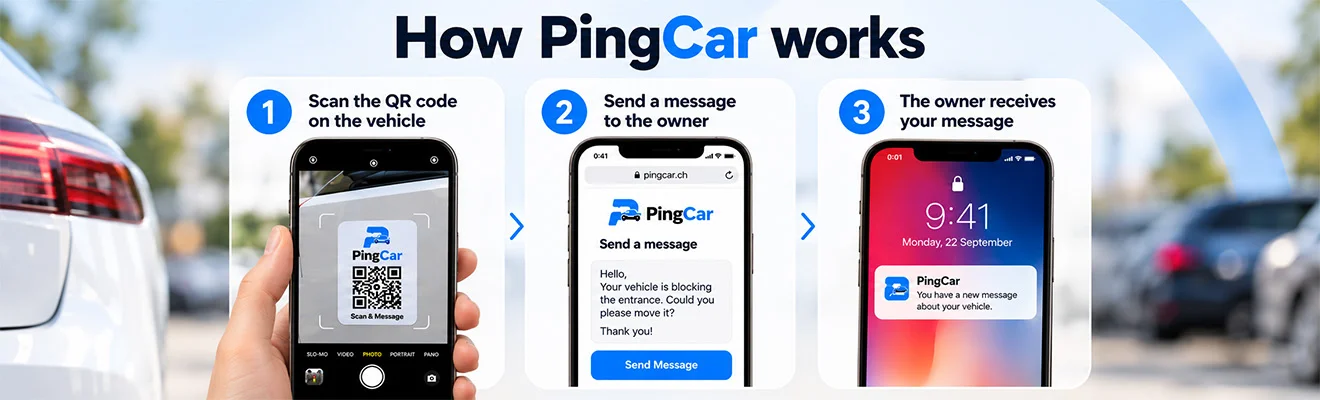
The idea is simple:
- The vehicle owner places a PingCar QR code on the vehicle
- Someone notices an issue or needs to contact the owner
- They scan the QR code with their smartphone
- A message is sent by PingCar
- The owner receives the notification without their personal phone number being displayed
For a product built around occasional, real-world situations, reducing friction matters. The user should not need a long explanation before understanding what to do.
A Simple Experience Can Hide a Lot of Work
The QR code itself may be simple, but the platform behind it required much more thought.
PingCar needed a reliable communication system. Notifications had to work properly. The founder had to think about privacy, different languages, potential misuse and how to make the whole experience intuitive for first-time users.
The product also had to answer practical questions. What happens if someone repeatedly scans the code? How should the owner be notified? How to cut down on spam? How can the platform cater to different users and languages without making it complicated?
These are the types of questions users may never encounter, but they influence whether a digital product is perceived as useful or frustrating.
Over time, PingCar was built around features such as:
- Secure messaging
- QR-code communication
- Owner alerts
- Languages supported
- Throttle to prevent abuse
- Ongoing Testing and Product Improvement
The founder’s experience highlighted an important lesson: It often takes a lot of work behind the scenes to make something feel simple for users.
Turning the Idea Into a Real Product
Having a good idea and building a working product are two very different things.
For PingCar, it was about creating the technology from the ground up, establishing the communication flow, testing the platform in real-world situations and enhancing the product whenever something didn’t function as intended.
This is one of the biggest challenges of the journey, according to the founder.
Product development rarely happens in a straight line. A feature may work technically but still feel confusing to users. Something that appears important in development may not be so useful in practice. Sometimes a small change is more beneficial than a big technical feature.
PingCar emerged from this process of testing and adjusting.
The founder didn’t try to build the perfect product from the start. Instead, he focused on building something that worked, and then learning from it and making it better.
What Building PingCar Taught Its Founder
One of the most important lessons from the PingCar journey is that founders have to be patient.
The first version of a product is rarely the last. Real users don’t behave the way teams sometimes expect, and that feedback is often more valuable than internal assumptions.
The founder learned that to build a product you have to be willing to change things, even if you’ve put a lot of effort into the original version.
It was an easy way:
Create something useful, test in the real world, listen carefully, and continue to improve.
That mentality kept PingCar focused on the problem, not sidetracked by unnecessary complexity.
Solve the Problem Before Adding More Features
Technology products can be overloaded with features. There is always another tool to add, another dashboard to build, or another automation that sounds impressive. But more features do not always mean a better product.
For the founder of PingCar, the more important question is whether a feature makes the original problem easier to solve. That original problem remains clear: someone may need to contact a vehicle owner, but the owner should not have to publicly expose personal contact information simply to be reachable.
The founder’s advice to other entrepreneurs reflects that thinking:
“Start by solving one clear and real problem, and keep the first version of the solution as simple as possible.”
It is a useful reminder, especially for early-stage founders. A first product does not need to solve everything. It needs to solve one problem well enough to prove that people actually find it useful.
Where PingCar Can Be Useful
The concept becomes easier to understand when placed in ordinary situations.
| Situation | Common Problem | How PingCar Can Help |
| Headlights left on | The owner may not realise the battery is being drained | A nearby person can send a message through the QR code |
| Window left open | The vehicle may be exposed to weather or theft | The owner can be alerted quickly |
| Vehicle blocking access | There may be no obvious way to contact the driver | The QR code creates a direct communication route |
| Damage noticed near the vehicle | The owner may need to know what happened | A message can be sent without exchanging phone numbers |
| Parking-related issue | The owner may be nearby but difficult to identify | PingCar gives people a way to reach them |
None of these situations is unusual. That is part of what makes the idea relevant.
PingCar is not trying to create a completely new behaviour. People already want to reach vehicle owners when something needs their attention. The platform simply offers another way for that communication to happen.
Privacy Is Becoming Part of the Product Experience
The idea behind PingCar connects with a much larger shift in digital behaviour. People are increasingly aware of how much personal information they share. Phone numbers, email addresses, locations, and profiles have become part of everyday digital life, but users are also becoming more selective about when that information should be shared.
PingCar approaches this from a simple position: if someone only needs to send you a message, they should not necessarily need access to your personal phone number.
That distinction matters.
It is an example of sharing only what is necessary for a specific interaction. The person gets a way to communicate with the owner, but they do not automatically receive the owner’s personal contact details.
This principle could become increasingly important as digital identity, privacy, and communication tools continue to develop.
Why Familiar Technology Can Be Better Than Complicated Technology
QR codes are not new, and that is one reason they work well for PingCar. People already understand them. Most smartphones can scan them directly. There is no new device to learn, no special hardware required, and no need to search for someone online.
For a service designed around quick communication, familiarity is useful.
A person may encounter PingCar for the first time while standing beside a parked vehicle. They may never have heard of the company before. The interaction therefore has to make sense almost immediately. This is also why the founder continues to emphasise simplicity.
The value of the product does not come from making the technology look complicated. It comes from making the problem easier to solve.
Communication Tools Need Boundaries Too
Any platform that creates a communication channel also has to think about misuse. Making it easier to contact someone should not mean making it easier to spam or repeatedly message them.
PingCar has included rate limiting as part of its platform development. The aim is to make legitimate communication easy while placing reasonable limits around misuse.
The goal should not always be maximum access. In some situations, the better approach is controlled access: enough to solve the problem, but not so much that privacy or user comfort is compromised.
Building for Different Languages and Markets
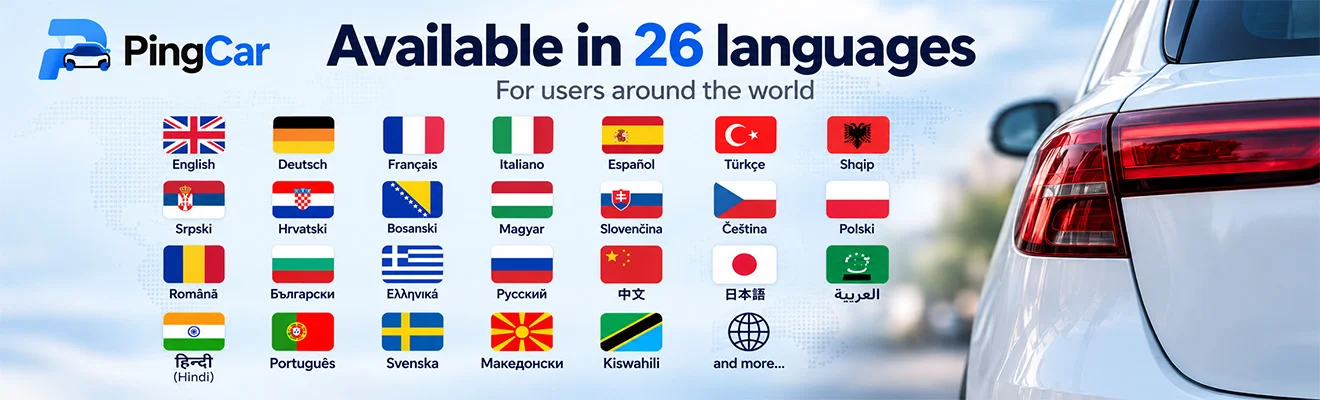
PingCar is based in Switzerland, where multilingual communication is a normal part of everyday life. That creates another practical challenge for a platform built around quick interaction.
If someone scans a QR code but cannot understand what happens next, the experience breaks down immediately. Language therefore becomes part of usability, not just translation. Multilingual support has been one of the areas PingCar has developed as the platform has evolved.
The underlying problem also extends beyond Switzerland. Vehicle owners in many markets face similar situations, but user habits, privacy expectations, and digital behaviour can vary from country to country.
That means expansion requires more than translating a few interface labels. The experience still has to feel clear and natural in each market.
Where AI May Fit Into the Future
The founder expects AI-assisted services, QR technology, digital identity, and mobile communication to continue shaping how people and businesses interact.
For PingCar, however, AI only makes sense if it solves something useful.
There are many areas where AI could potentially help communication platforms, such as:
- Message Classification
- Multilingualism
- Identifying abusive or suspicious behaviour.
- Smarter notification systems
- Helping people communicate clearly between languages
The key here is that AI should not be added just for the sake of AI. The better question is: does it improve user satisfaction without adding new privacy concerns or complexity?
For the PingCar founder, the future challenge will be finding the right balance between convenience, automation, and privacy.
Five Practical Lessons From the PingCar Journey
The founder’s experience offers several useful lessons for anyone building an early-stage product.
| Lesson | What It Means in Practice |
| Start with one clear problem | Avoid trying to solve too many things at once |
| Keep the first version focused | Build enough to test whether the idea is genuinely useful |
| Test with real people | User behaviour often reveals more than internal planning |
| Accept that things will change | Product development is usually iterative |
| Improve continuously | Small improvements over time can be more valuable than waiting for perfection |
These lessons sound simple, but they are not always easy to follow. There is pressure to move fast, build more features and look more sophisticated than you really need to be.
The PingCar approach has been different: stay close to the original problem and improve based on what the product actually needs.
Privacy and Convenience Do Not Have to Work Against Each Other
Many digital services have trained users to think that convenience requires giving away more personal information.
If someone wants to call you, you share your phone number. If they want to reach you online, you share an email address or profile. If they need to find you, you may share your location.
Platforms such as PingCar suggest another model. A person may be able to reach you without receiving permanent access to your personal information.
The QR code becomes the connection point. The platform handles the communication. The phone number remains private.
That is a relatively simple idea, but it has wider relevance as people become more conscious of their digital identity and how much information they share.
What Comes Next for PingCar
PingCar is still developing, and the founder does not present the product as something that has finished evolving.
The platform continues to be tested and improved around its core purpose: helping people communicate with vehicle owners while reducing the need to expose personal contact information.
Privacy, multilingual communication, QR technology, digital identity, and AI-assisted services are all areas the founder expects to remain relevant as the platform develops.
The important part is that future features remain connected to the original problem.
That philosophy has stayed consistent throughout the journey: solve something real, keep the experience simple, and let technology support the solution rather than dominate it.
The Founder’s Advice to Other Entrepreneurs
The founder’s advice is practical rather than dramatic.
Start small. Focus on a real problem. Build something useful. Test it with real people. Listen carefully to what they tell you and, just as importantly, pay attention to how they actually use the product. Do not wait for a perfect first version, because it probably does not exist.
The founder sums up the thinking simply: “Technology is only useful when it makes a real problem easier to solve.”
That line captures the PingCar story well.
About PingCar
PingCar is a Switzerland-based digital platform designed to make communication between vehicle owners and other people more private, simple and secure.
The idea is built around a common real-world problem: there are times when someone needs to contact a vehicle owner, but there is no convenient way to do it without exposing a personal phone number. PingCar uses QR technology to solve this.
A QR code placed on the vehicle allows someone to scan it and send a message to the owner through the platform, while the owner’s personal contact details remain private. The platform has been developed with features such as secure messaging, notifications, multilingual support and rate limiting, with a clear focus on making vehicle-related communication practical without compromising privacy.

Connect with PingCar
Interested in working with or consulting with this expert? Submit your details below.